Pesticide Residues: Organic vs Conventional
Which produce carries less pesticide exposure?
The Quick Answer
Organic produce consistently contains lower levels of pesticide residues compared to conventional produce, but both types meet safety standards set by regulatory agencies.
Organic is better if you want to minimize pesticide exposure and support farming practices that limit synthetic chemical use.
Conventional is better if you prioritize cost and recognize that residue levels are within government-set safety limits for human consumption.
Organic Produce — The Details
What it is: Produce grown without synthetic pesticides, herbicides, or fungicides, using natural pest management techniques like beneficial insects, crop rotation, and approved organic pesticides.
Pesticide use allowed: Organic farmers can use pesticides derived from natural sources (plant-based, mineral-based, or microbial) and a very small list of approved synthetic substances only when other strategies fail.
Residue levels: Organic produce contains pesticide residues only about one-third as often as conventional produce, and when residues are detected, they are typically at lower concentrations and less likely to involve multiple residues.
Cost: Typically 20-40% more expensive than conventional produce due to higher labor costs and lower yields from limited pest management tools.
Conventional Produce — The Details
What it is: Produce grown using both natural and synthetic pesticides, herbicides, and fungicides approved by regulatory agencies for maximum crop yield and efficiency.
Pesticide use: Conventional farmers use a full range of approved synthetic pesticides, which are subject to rigorous testing for safety and efficacy before approval by agencies like the EPA and FDA.
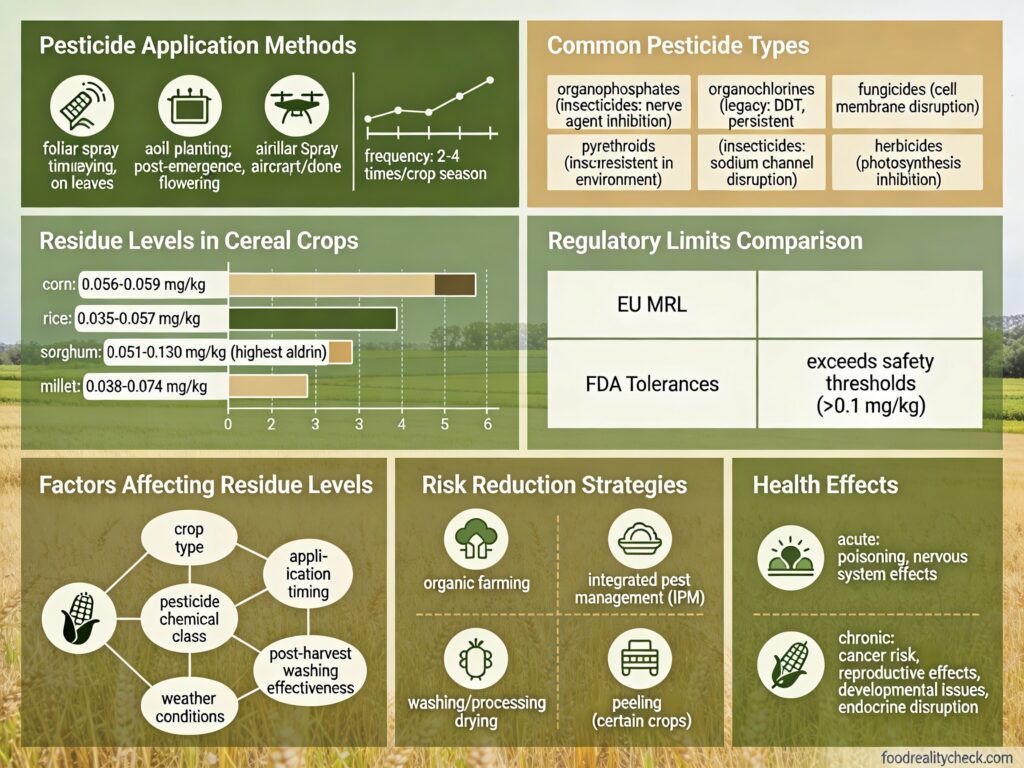
Residue levels: About 31-96% of conventional samples contain detectable pesticide residues (depending on detection sensitivity), but residue levels are required to remain below established safety thresholds.
Cost: Generally 20-40% cheaper than organic due to economies of scale, synthetic pesticide efficiency, and higher yields per acre.
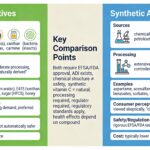
Head-to-Head Comparison
| Factor | Organic Produce | Conventional Produce |
|---|---|---|
| Frequency of Residues | 23-6.5% of samples contain detectable residues, depending on testing sensitivity | 31-96% of samples contain detectable residues, depending on testing sensitivity |
| Residue Levels When Present | Typically one-third to one-half as high as conventional; 83% below the “limit of quantification” (near-undetectable) | Higher residue concentrations; only 50% below limit of quantification |
| Multiple Residues per Sample | Much less likely to contain multiple residues | More likely to contain 2-3+ different pesticides per sample |
| Safety of Residue Levels | 98.7% of organic samples do not exceed legal safety limits | 96.2% of conventional samples do not exceed legal safety limits; levels are considered safe for consumption by regulatory bodies |
| Environmental Impact | Lower chemical runoff, reduced water contamination, better for aquatic ecosystems | Higher synthetic pesticide use linked to greater water pollution and reduced biodiversity |
| Cost | 20-40% more expensive | Standard pricing; 20-40% cheaper than organic |
The Reality Check: Why Organic Still Has Residues
Many assume organic produce is completely pesticide-free, but that’s not accurate. Research shows that about 15-35% of organic samples contain some pesticide residues because of:
• Legacy contaminants: Pesticides banned decades ago (like DDT) that persist in soil and groundwater, especially in root crops like potatoes and carrots.
• Environmental drift: Spray drift from neighboring conventional farms, contaminated irrigation water, or airborne residues.
• Post-harvest contamination: Residues transferred during storage and handling if facilities are shared with conventional crops.
• Allowed organic pesticides: Organic-approved pesticides (like copper sulfate) that leave detectable residues.
Pros & Cons
Organic Produce:
✓ Significantly lower pesticide residue levels and fewer multiple-residue exposures.
✓ Supports farming practices that emphasize soil health and biodiversity.
✓ May reduce exposure to some highly toxic synthetic pesticides.
✗ More expensive (20-40% price premium).
✗ Sometimes still contains residues from environmental contamination beyond the farmer’s control.
Conventional Produce:
✓ More affordable and widely available.
✓ Residue levels are regulated and deemed safe by EPA and FDA; no health risk at legal limits even for vulnerable populations.
✓ Better crop yields reduce overall agricultural land use.
✗ Higher frequency of detectable residues and multiple residues per sample.
✗ Greater potential for water pollution and ecosystem damage from synthetic pesticide use.
🏆 The VerdictOrganic produce wins if your priority is minimizing pesticide exposure and supporting environmentally conscious farming practices—and you have the budget for a 20-40% price premium.
Conventional produce wins if you prioritize affordability and are comfortable with regulatory assurance that residue levels are safe for human consumption.
For most people, the health risk from pesticide residues on conventional produce is extremely low at legal limits. If budget is a concern, buying conventional is a safe choice. If you want to minimize exposure, especially for children, and can afford it, organic—particularly for the “Dirty Dozen” crops (strawberries, spinach, lettuce, peaches, grapes)—offers meaningful reduction in residue levels.