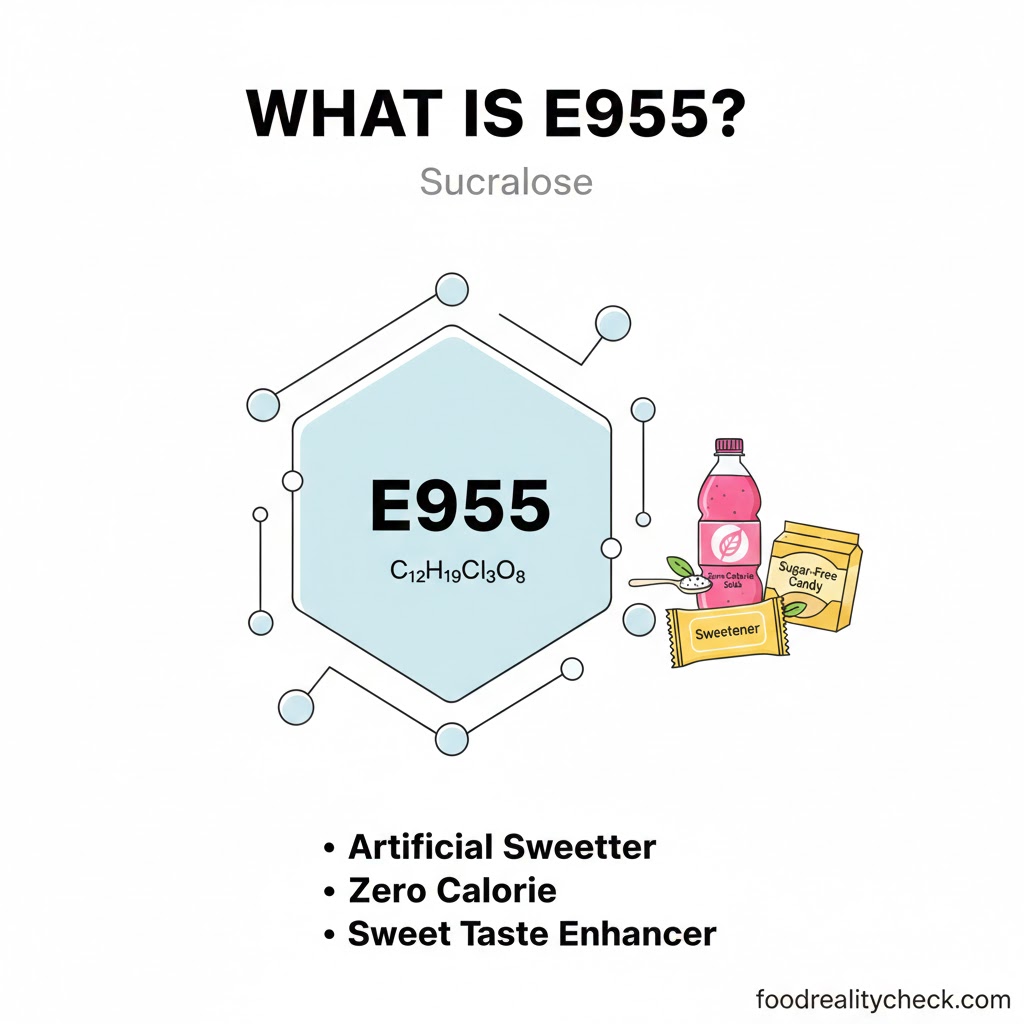
The Quick Answer
E955 is sucralose—a synthetic artificial sweetener sold under the brand name Splenda. It’s about 600 times sweeter than sugar while containing virtually zero calories.
While regulatory authorities approve it as “safe,” emerging scientific research from 2023-2025 reveals significant health concerns: DNA damage, leaky gut lining, increased cancer risk, microbiome disruption, weight gain, insulin resistance, and immune suppression.
Unlike some approved additives, sucralose is genuinely controversial among independent scientists. Multiple recent studies suggest the approved safety level may not protect against cumulative, long-term damage.
⚠️ Critical Health Warning
Sucralose may be more dangerous than we thought. Recent research has identified multiple health risks that weren’t apparent during the original FDA approval in 1999. If you consume diet sodas, sugar-free foods, or products with Splenda, you should understand these emerging findings.
📌 Quick Facts
- Category: Artificial non-nutritive sweetener (calorie-free sugar substitute)
- Source: Synthetic—chlorinated derivative of table sugar (sucrose)
- Brand Names: Splenda (most common), sucralose blends
- Sweetness: 600 times sweeter than sugar
- Calories: ~3.3 calories per gram (though typically used in such small amounts it’s effectively zero-calorie)
- Found in: Diet sodas, sugar-free foods, energy drinks, baked goods, ice cream, yogurt, medicines, supplements
- Regulatory Status: FDA approved (1999), EFSA approved, but growing scientific controversy
- Controversy Level: VERY HIGH—multiple health concerns from recent independent research
- Recommendation: Avoid if possible; choose safer alternatives
What Exactly Is Sucralose?
Sucralose is a chlorinated derivative of sucrose (table sugar). It’s created through a patented chemical process that selectively replaces three hydroxyl groups (-OH) on the sugar molecule with three chlorine atoms (-Cl).
Chemical formula: 1,6-dichloro-1,6-dideoxyfructose–4-chloro-4-deoxygalactose (C₁₂H₁₉Cl₃O₈)
In simple terms: It starts as regular sugar, but chlorine atoms are surgically swapped in place of three specific hydroxyl groups. This tiny molecular change makes it vastly sweeter (600x) and undigestible by the human body.
Key properties:
• Calorie-free: Your body cannot metabolize it, so it passes through with ~zero calories
• Heat stable: Remains stable when heated (though degrades above 120°C into potentially harmful compounds)
• pH stable: Doesn’t break down in acidic or alkaline environments
• Long shelf life: Doesn’t degrade over time in food products
• Synthetic: Doesn’t exist in nature; entirely human-created
Where You’ll Find E955
Sucralose appears in thousands of products:
• Diet and zero-sugar sodas
• Sugar-free energy drinks
• Sugar-free ice cream and frozen desserts
• Sugar-free yogurt and dairy products
• Sugar-free baked goods and desserts
• Sugar-free candies and sweets
• Sugar-free sauces, syrups, and condiments
• Sugar-free jams and spreads
• Nutritional and protein supplements
• Diet meal replacement shakes
• Sugar-free chewing gum
• Medicines and pharmaceutical products (liquid vitamins, cough syrups)
• Sports drinks and beverages
• Sugar-free salad dressings
• Low-calorie cereals and granola
• Sugar-free electrolyte drinks
If a product is labeled “sugar-free,” “diet,” “zero calorie,” or “reduced sugar,” it likely contains sucralose.
How Is Sucralose Made?
Sucralose production involves a complex multi-step chemical synthesis:
Step 1: Starting Material
High-purity sucrose (table sugar) is obtained as the precursor.
Step 2: Selective Chlorination
The sucrose molecule is treated with hydrogen chloride (HCl) gas or other chlorinating agents under controlled conditions. The chlorine atoms selectively replace hydroxyl groups (-OH) at specific positions (C1, C6 of the glucose portion, and C4 of the fructose portion).
Step 3: Protection & Deprotection
The process requires protecting certain hydroxyl groups while chlorinating others. This involves multiple chemical steps with protecting agents and reagents.
Step 4: Purification
The crude sucralose product is purified using crystallization, chromatography, or other separation techniques to remove impurities, including sucralose-6-acetate (a metabolite of concern).
Step 5: Final Product
Purified sucralose is crystallized, dried, and packaged. When sold as Splenda, it’s typically blended with bulking agents (dextrose, maltodextrin) because pure sucralose is so concentrated.
Note: The manufacturing process requires sophisticated chemistry and is patented by McNeil Specialty Products Co. The process generates chemical waste and byproducts that must be managed.
The Health Controversy: What Authorities Say vs. Recent Research
Official Regulatory Position
FDA: Approved sucralose as GRAS (Generally Recognized As Safe) in 1999 based on toxicology studies. The FDA deemed it safe at consumption levels up to the Acceptable Daily Intake (ADI) of 5 mg/kg body weight per day.
EFSA (European Food Safety Authority): Re-evaluated sucralose in 2015 and maintained approval, setting an ADI of 15 mg/kg body weight per day—higher than the FDA.
Their reasoning: Regulatory agencies noted that sucralose is not metabolized by human cells, so it passes through the digestive system and is excreted unchanged.
What Independent Scientists Are Finding (2023-2025)
The situation is alarming. Recent research contradicts the original safety assumptions:
DNA Damage (2023 – North Carolina State University)
A landmark 2023 study published in the Journal of Toxicology and Environmental Health found that sucralose-6-acetate—a metabolite formed from sucralose breakdown—causes breaks in human DNA. When researchers exposed human blood cells to sucralose-6-acetate, they observed direct DNA damage, a hallmark of genotoxicity and a mechanism of cancer development.
The critical finding: The amount of sucralose-6-acetate in a single serving of a sucralose-containing beverage was high enough to potentially cause DNA damage.
Leaky Gut & Intestinal Damage (2023 – North Carolina State University)
The same 2023 study exposed human intestinal tissue to sucralose-6-acetate and found that it:
• Damaged the tight junctions between intestinal cells, causing the gut barrier to become “leaky”
• Increased activation of genes associated with inflammation, oxidative stress, and cancer
• Allowed bacterial toxins and undigested molecules to pass through the gut barrier into the bloodstream, triggering systemic inflammation
Microbiome Disruption (2008, 2018, 2020 – Multiple Universities)
2008 (Duke University): Rats exposed to sucralose showed reduced beneficial gut bacteria, increased intestinal pH, and weight gain—even at levels below the FDA’s recommended ADI.
2018 (Multiple studies): Sucralose consumption altered gut microbiota composition in both animals and humans, reducing bacterial diversity.
2020 (Mice study): In pregnant mice, sucralose “inhibited intestinal development, induced imbalance of gut microbiota and low-grade inflammation, and disrupted gut barrier function” in offspring—suggesting potential long-term developmental harm.
Glucose Intolerance & Diabetes Risk (2018, 2022 – Multiple Studies)
2018 (Journal of Nutrition): Long-term sucralose consumption increased insulin secretion and developed insulin resistance in healthy subjects—the earliest sign of type 2 diabetes development.
2022 (Cell Journal): Sucralose and saccharin “not only caused blood sugar to rise like table sugar, but also caused changes in the microbiome,” contradicting the assumption that artificial sweeteners pass through the body with “no effect.”
2019 (Journal of Immunology Research): Even a single 48 mg sip of sucralose increased serum insulin levels and unbalanced immune cell populations in healthy young adults.
Cardiovascular Disease (2022 – BMJ Study)
French researchers found that sucralose consumption was linked to higher risk of cardiovascular disease, stroke, and coronary heart disease—comparable to risks from aspartame and acesulfame potassium.
Cancer & Leukemia (2016 – Ramazzini Institute)
A comprehensive 2016 study in mice found that sucralose increased the risk of hematopoietic tumors (leukemias). This finding was significant enough that the Center for Science in the Public Interest downgraded sucralose from “Caution” to “Avoid“.
Immune Suppression (Recent Studies)
Research indicates that sucralose can suppress immune function and impair immune response, potentially increasing vulnerability to infections.
Weight Gain Paradox (2017 – Canadian Medical Association Journal)
A meta-analysis of 30+ studies found that people consuming artificial sweeteners like sucralose had higher obesity rates—the opposite of what was expected. While correlation doesn’t prove causation, sucralose may alter metabolism in ways that promote weight gain.
⚠️ The Safety Disconnect
Why are regulators saying it’s safe while scientists are finding health risks?
• Original FDA approval was based on 1990s science and toxicology protocols that don’t assess modern concerns like microbiome damage or metabolite formation
• The FDA assumed sucralose passes through the body unchanged, but newer research shows it IS metabolized by gut bacteria into sucralose-6-acetate
• Regulatory studies used acute dosing protocols; cumulative, long-term effects weren’t properly assessed
• Gut bacteria vary between individuals, so some people may convert more sucralose to harmful metabolites
• The approved ADI is based on weight-based calculations that may not protect vulnerable populations (children, pregnant women, obese individuals)
Heat Degradation: Another Concern
Sucralose is marketed as “heat stable” for baking, but it’s not completely stable:
At temperatures above 120°C (248°F), sucralose degrades and releases harmful compounds including:
• Chloroglucose
• Chlorofructose
While regulatory agencies say these compounds are “not toxic in small amounts,” their long-term effects and potential to accumulate are not well understood. If you bake with sucralose-containing products, you may be creating additional potentially harmful compounds.
Reported Side Effects & Health Risks
From published research and consumer reports:
Gastrointestinal:
• Diarrhea and loose stools
• Bloating and gas
• Stomach cramps and pain
• Nausea
• IBS symptom exacerbation
• Crohn’s disease flare-ups (confirmed in animal studies)
Metabolic & Endocrine:
• Increased fasting blood glucose
• Elevated insulin levels (hyperinsulinemia)
• Insulin resistance development
• Type 2 diabetes risk increase
• Weight gain (despite being calorie-free)
• Obesity risk increase
Immune & Inflammation:
• Increased inflammatory markers (CRP, IL-6)
• Immune suppression
• Reduced ability to fight infections
Genetic & Cancer Risk:
• DNA damage and breaks
• Increased cancer risk (particularly leukemia in animal studies)
• Gene activation of pro-cancer pathways
Other Reported Effects:
• Headaches and migraines (in sensitive individuals)
• Neurological symptoms
• Cardiovascular effects (increased stroke risk)
⚠️ Who Should Avoid Sucralose?
Definitely avoid if you have:
• Type 2 diabetes or prediabetes
• Inflammatory Bowel Disease (Crohn’s, Ulcerative Colitis)
• Irritable Bowel Syndrome (IBS)
• Obesity or metabolic syndrome
• Family history of cancer or leukemia
• Cardiovascular disease or stroke history
• Immune system disorders
Consider avoiding if:
• You are pregnant or breastfeeding
• You have young children (gut microbiome still developing)
• You consume diet products daily
• You have digestive sensitivity
General recommendation: Avoid sucralose entirely if possible. Choose safer alternatives or consume sugar in moderation.
Safer Sweetener Alternatives
| Sweetener | Type | Safety Profile | Concerns |
|---|---|---|---|
| Stevia (E960) | Natural plant extract | ✓ Generally safe—no negative health effects | Some people report bitter aftertaste; digestive sensitivity rare |
| Erythritol | Sugar alcohol (natural) | ✓ Very safe—minimal absorption, minimal side effects | Can cause digestive issues in high amounts; costs more |
| Monk Fruit (E960) | Natural plant extract | ✓ Safe—limited long-term data but no known harms | Expensive; limited availability; may have slight aftertaste |
| Honey (natural) | Natural sugar with nutrients | ✓ Natural—contains beneficial compounds | Has calories (~16 cal/tsp); affects blood sugar; not for diabetics |
| Maple Syrup (natural) | Natural sugar with minerals | ✓ Natural—contains minerals and antioxidants | Has calories; affects blood sugar; expensive |
| Sucralose (E955) | Synthetic chlorinated sugar | ✗ Controversial—emerging health risks | DNA damage, leaky gut, diabetes risk, cancer risk, microbiome disruption |
| Aspartame (E951) | Synthetic amino acid derivative | ~ Approved but controversial | May affect mood disorders and immune function; contains phenylalanine |
| Acesulfame K (E950) | Synthetic potassium salt | ~ Approved but concerns | Potential hormone disruption; cancer concerns; less studied |
The Bottom Line
E955 (sucralose) is officially approved as “safe” by regulatory authorities, but emerging scientific evidence from 2023-2025 reveals multiple serious health risks that weren’t identified during the original 1999 FDA approval.
Key findings:
• DNA Damage: Metabolites of sucralose cause breaks in human DNA, increasing cancer risk
• Leaky Gut: Damages intestinal barrier and increases intestinal permeability
• Microbiome Disruption: Reduces beneficial bacteria and alters gut composition
• Diabetes Risk: Increases insulin resistance and blood glucose levels despite being calorie-free
• Weight Gain: Paradoxically associated with obesity, not weight loss
• Cardiovascular Risk: Linked to higher stroke and heart disease risk
• Cancer Risk: Animal studies show increased leukemia risk; DNA damage studies suggest human risk
• Immune Suppression: Reduces immune function and inflammatory response
Expert Recommendation: Unlike citric acid (E330) or agar (E406), which are genuinely safe, sucralose is a chemical compound with emerging evidence of harm. If you consume diet sodas, sugar-free products, or Splenda regularly, the recent research suggests you should strongly consider switching to:
• Natural alternatives: Stevia, monk fruit, erythritol
• Just less sugar: Small amounts of real sugar are safer than daily sucralose consumption
• No sweetener: Plain water, unsweetened tea, black coffee
The evidence is compelling enough that avoidance is the most prudent approach, especially for children, pregnant women, and people with metabolic or immune disorders.
I conceive this internet site has got some real superb information for everyone 😀