The Quick Answer
E412 is guar gum—a natural soluble dietary fiber extracted from the seeds of the guar plant (Cyamopsis tetragonolobus), which is primarily grown in India and Pakistan. It’s used as a thickener, stabilizer, and emulsifier in thousands of foods.
Unlike controversial additives, guar gum is a genuinely safe, plant-based fiber with proven health benefits including improved digestive function, prebiotic effects that feed beneficial gut bacteria, blood sugar regulation, and cholesterol reduction.
While excessive intake can cause temporary digestive discomfort (gas, bloating), this is a sign it’s working as a prebiotic—the effect diminishes within days as your gut adapts. It’s one of the safest and most beneficial food additives.
📌 Quick Facts
- Category: Thickener, stabilizer, gelling agent, emulsifier, soluble dietary fiber
- Source: Seeds of the guar plant (Cyamopsis tetragonolobus)—natural legume
- Found in: Ice cream, yogurt, salad dressings, sauces, soups, baked goods, meat products, low-fat foods
- Safety Status: FDA GRAS approved, EFSA approved, ADI “Not Specified” (highest safety rating)
- Dietary Status: 100% vegan, vegetarian, gluten-free, keto-friendly, kosher
- Chemical Name: Galactomannan (polymer of galactose and mannose)
- Controversy Level: NONE—universally considered safe
- Main Benefit: Prebiotic fiber supporting digestive and metabolic health
What Exactly Is Guar Gum?
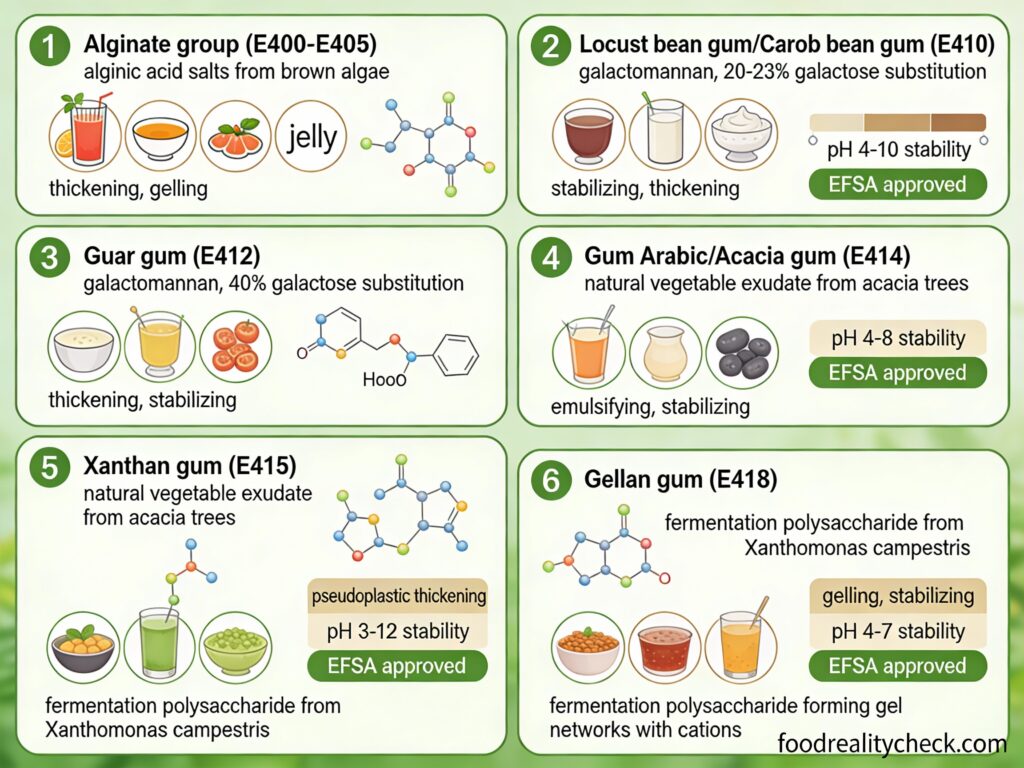
Guar gum is a galactomannan—a polysaccharide (complex carbohydrate) composed of galactose and mannose sugars in a ratio of approximately 1:4. It’s extracted from the endosperm (interior storage tissue) of guar plant seeds.
Chemical composition: High molecular weight hydrocolloidal polysaccharide with a backbone of β-(1→4)-D-mannopyranose units with α-(1→6)-D-galactopyranose branches. It also contains small amounts of proteins, lipids, and cellulose.
In simple terms: It’s a soluble dietary fiber that swells and thickens when mixed with water, similar to locust bean gum but from a different plant source. When you consume it, your gut bacteria ferment it, producing short-chain fatty acids (SCFAs) that feed beneficial bacteria.
Key properties:
• Natural plant fiber: Derived from legume seeds, same plant family as peas and beans
• Highly soluble: Swells 10-20 times its original size in water
• Prebiotic potential: Fermented by gut bacteria to produce beneficial SCFAs
• Viscosity creator: Creates thick gels even at low concentrations (0.5-1% in food)
• Neutral taste: Doesn’t affect flavor of foods
• Synergistic: Works better combined with other gelling agents (locust bean gum, agar)
Where You’ll Find E412
Guar gum appears in a wide range of foods:
• Ice cream and frozen desserts
• Yogurt and cultured dairy products
• Salad dressings and sauces
• Mayonnaise
• Soups (instant and canned)
• Processed and cured meats
• Cheese products
• Gravies and meat sauces
• Puddings and custards
• Baked goods
• Low-fat and diet foods
• Chocolate and cocoa products
• Beverages (some smoothies, coffee drinks)
• Nutritional supplements and protein powders
• Pet foods
• Xanthan gum substitute in gluten-free baking
Any food that needs a smooth, creamy, or stable texture likely contains guar gum.
How Is Guar Gum Produced?
Guar gum extraction is a simple mechanical process requiring no synthetic chemicals:
Step 1: Harvesting
Guar pods are harvested from the guar plant (Cyamopsis tetragonolobus) when mature. The plant thrives in arid climates, primarily grown in India and Pakistan.
Step 2: Seed Extraction
The guar pods are mechanically threshed to separate and collect the seeds. The pod shells and other plant material are removed.
Step 3: Cleaning & Drying
Seeds are cleaned to remove dirt and debris, then dried to a stable moisture content for storage.
Step 4: Mechanical Splitting
The dried seeds are mechanically cracked or split. The seed coat (hull) is separated from the interior endosperm through friction or impact.
Step 5: Grinding
The separated endosperm is finely ground into a powder using mechanical mills. This crude guar gum powder contains the galactomannan and other seed components.
Step 6: Purification (Optional)
For higher-purity products, the powder may be further processed using water extraction and enzymatic treatment (with specific enzymes that reduce the protein content), followed by precipitation and drying.
Step 7: Final Milling & Quality Control
The guar gum is milled to the desired particle size and tested for viscosity, purity, and microbiological safety before packaging.
Note: The entire production process uses only mechanical and optional water/enzymatic methods. No synthetic chemicals or solvents are used. It’s one of the most natural food additives available.
Functions of E412 in Food
Guar gum serves multiple practical functions in food manufacturing:
As a thickener: Increases viscosity and creates smooth, creamy mouthfeel. Used at very low concentrations (0.2-1%) to create desired thickness without affecting taste.
As a stabilizer: Prevents separation of oil and water in emulsified foods like mayonnaise, salad dressings, and sauces. In frozen foods, it prevents ice crystal formation and maintains smooth texture during storage.
As an emulsifier: Helps suspend fat droplets in water-based products, creating uniform texture and extending shelf life.
As a texture modifier: Combined with other hydrocolloids (locust bean gum, agar, carrageenan), it creates specific textures—smooth, creamy, or slightly grainy.
As a bulking agent: In low-fat or diet foods, adds volume and creates satiety without calories.
As a dietary fiber: Unlike synthetic thickeners, guar gum contributes to dietary fiber intake and provides prebiotic effects.
Is E412 Safe?
Yes. Guar gum is safe when consumed at typical food levels.
Regulatory Approvals:
• FDA: Generally Recognized As Safe (GRAS) since 1977. Approved as an emulsifier, stabilizer, and thickener with no numerical limits.
• EFSA (European Food Safety Authority): Approved as E412. In its 2017 re-evaluation, concluded: “There is no need for a numerical ADI for guar gum (E 412), and that there is no safety concern for the general population at the refined exposure assessment for the reported uses of guar gum as a food additive.”
• JECFA (Joint FAO/WHO Committee): Assigned an ADI of “Not Specified”—the highest safety rating.
Why is the safety so strong?
1. Natural plant fiber: Guar is a legume (related to beans and peas) that humans have safely consumed for centuries in traditional cuisines.
2. Not absorbed or metabolized: Guar gum passes through the digestive system largely intact, being fermented by beneficial gut bacteria rather than absorbed.
3. Extensively tested: Decades of regulatory and independent testing show no toxic effects.
4. No bioaccumulation: Doesn’t accumulate in tissues; completely excreted.
5. EFSA recommendation: In 2024, EFSA re-evaluated guar gum and maintained approval, though it recommended stricter limits on toxic element contaminants (lead, cadmium, arsenic) to protect infants—not because guar gum itself is toxic, but to ensure the source material is of highest purity.
Health Benefits of Guar Gum
🌟 Digestive, Metabolic & Health Benefits
- Prebiotic effects: Fermented by gut bacteria to produce short-chain fatty acids (butyrate, propionate, acetate) that feed beneficial bacteria and support colon health
- Improves digestive health: Increases stool bulk, promotes regular bowel movements, and alleviates constipation
- Supports IBS management: Research shows guar gum (especially partially hydrolyzed forms) reduces IBS symptoms including bloating, pain, and diarrhea
- Regulates blood sugar: Slows gastric emptying and glucose absorption, reducing post-meal blood sugar spikes—beneficial for diabetics
- Improves insulin sensitivity: May enhance long-term metabolic control and reduce type 2 diabetes risk
- Reduces cholesterol: Binds bile acids and reduces fat absorption, lowering LDL cholesterol and improving cholesterol ratios
- Promotes weight loss: Creates satiety and fullness, reducing overall calorie intake while containing zero calories itself
- Anti-inflammatory: Butyrate produced from guar gum fermentation reduces intestinal inflammation and supports immune tolerance
Research highlights: A 2023 study in Gut Microbes found that guar gum consumption modified the microbiota composition, promoting growth of beneficial bacteria like Agathobaculum butyriciproducens and Lachnospira pectinoschiza. Digestive sensations (bloating, flatulence) were transient and resolved with continued consumption as the gut adapted.
Side Effects & Digestive Response
Guar gum is well tolerated, but temporary digestive effects can occur when first consuming it or at excessive doses:
Transient side effects (temporary, resolve within 3-7 days):
• Increased gas production and flatulence
• Bloating and abdominal distension
• Abdominal cramping or discomfort
• Loose stools or diarrhea
• Borborygmi (stomach gurgling sounds)
What’s happening: These symptoms occur because gut bacteria are actively fermenting the guar gum to produce short-chain fatty acids. This is actually a sign the prebiotic is working. A 2023 study found that gas evacuations increased initially (10.5 evacuations/day vs. 7.7 baseline) but completely reverted to baseline levels within 2 weeks. Digestive sensations improved significantly after continuous consumption, with increased well-being and mood.
Important warning: Guar gum swells excessively:
Guar gum can swell 10-20 times its original size in water. Without adequate fluid intake, it can cause:
• Choking
• Esophageal blockage
• Intestinal obstruction
• In severe cases, surgical intervention
In the 1990s, an FDA-approved weight loss product containing high-dose guar gum was withdrawn from the market after it caused serious blockages and, in some cases, death. This underscores the critical importance of consuming guar gum with plenty of water (at least 8 ounces per dose).
Medication interactions:
Guar gum can slow absorption of certain oral medications (metformin, penicillin, digoxin) by delaying gastric emptying. If taking medications, separate guar gum consumption by at least 1 hour before or 4 hours after medications.
Rare allergic reactions:
While allergies are extremely rare in food consumption, occupational exposure to guar gum dust has triggered anaphylaxis in a small number of workers. A French case report documented a 52-year-old man with severe anaphylactic shock (hives, vascular edema, shortness of breath) after consuming meat substitutes containing guar gum. Provocation testing confirmed guar gum as the cause. However, such severe reactions are extraordinarily rare.
⚠️ Critical Safety Note: Adequate Water IntakeWhen consuming guar gum, always drink plenty of water (at least 8 ounces with each serving). Guar gum swells dramatically in the stomach and can cause blockages if consumed without sufficient fluid. This is especially important for:
• Supplements or concentrated guar gum products
• People with swallowing difficulties
• Those with intestinal narrowing conditions
• Older adults at higher choking risk
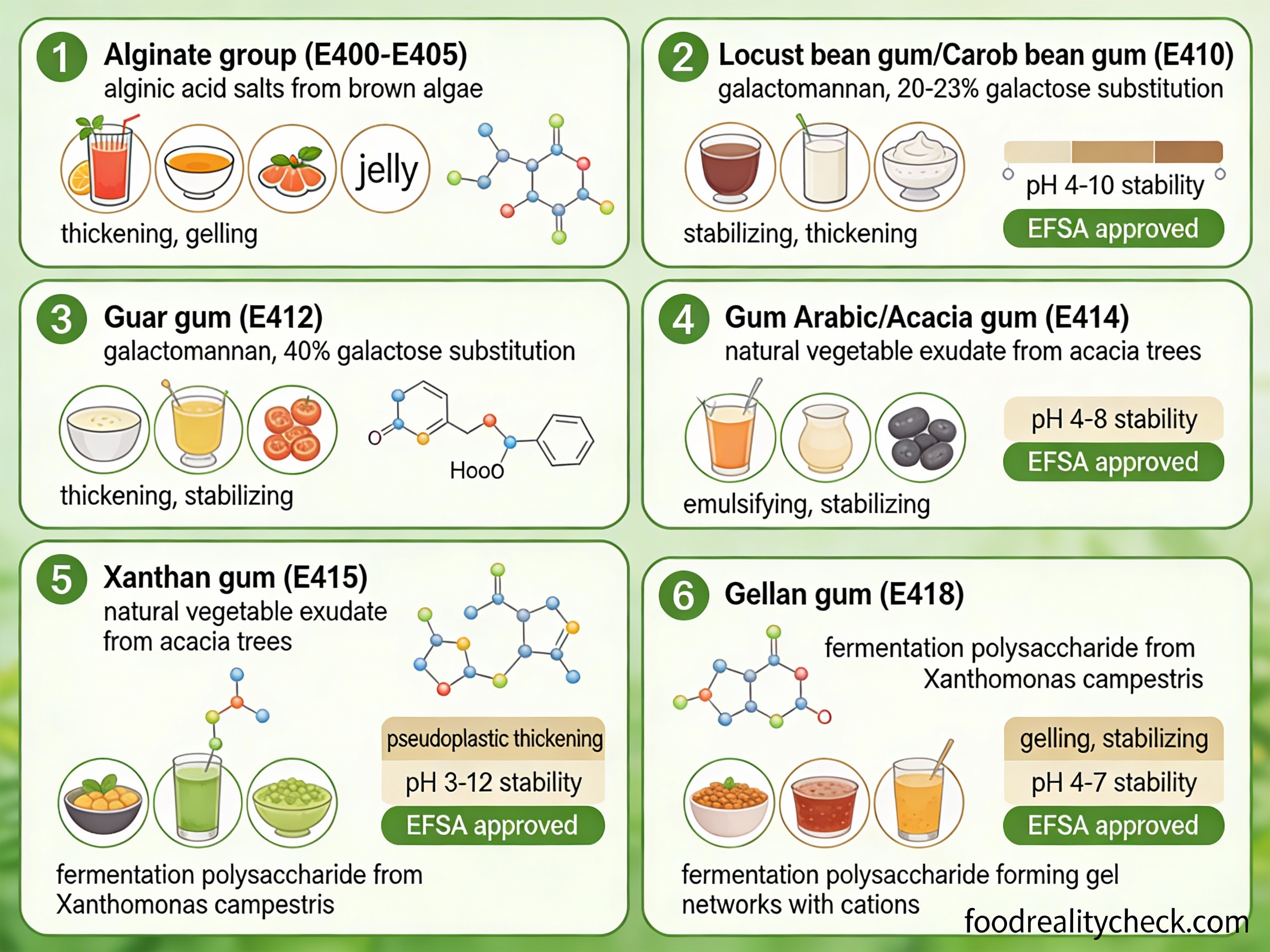
Guar Gum vs Locust Bean Gum vs Other Thickeners
| Thickener | Source | Safety | Health Benefits | Digestive Effects |
|---|---|---|---|---|
| E412 Guar Gum | Guar plant seeds (legume) | ✓ Safe—ADI “Not Specified” | ✓ Prebiotic, fiber-rich, blood sugar/cholesterol support | Transient gas/bloating (2-7 days), then beneficial |
| E410 Locust Bean Gum | Carob tree seeds | ✓ Safe—ADI “Not Specified” | ✓ Prebiotic, fiber-rich, supports digestive health | Similar to guar gum; fewer initial side effects |
| E407 Carrageenan | Red seaweed | ~ Approved but controversial | ⚠️ May damage gut barrier, increase inflammation | May cause or worsen GI problems |
| E406 Agar | Red seaweed | ✓ Safe—ADI “Not Limited” | ✓ High fiber, digestive support, safe history | Laxative effect; minimal bloating |
| Xanthan Gum | Bacterial fermentation (Xanthomonas) | ✓ Safe—GRAS approved | ~ Some prebiotic effects; limited research | Generally well tolerated; minimal GI effects |
| Cornstarch (natural) | Corn kernels | ✓ Safe | ~ Pure carbohydrate; no health benefit | No fiber effects; affects blood sugar |
Who Should Avoid or Limit Guar Gum?
Guar gum is safe for most people. Consider avoiding or limiting if you have:
• History of intestinal obstruction: Guar gum’s swelling effect could trigger blockage; avoid unless approved by doctor
• Esophageal strictures or narrowing: The swelling could worsen obstruction
• Severe IBS with obstruction risk: Consult gastroenterologist before use
• Difficulty swallowing (dysphagia): Choking risk from viscous gel
• Taking medications requiring absorption: Guar gum slows absorption of metformin, penicillin, digoxin (separate by 1-4 hours)
• Guar gum allergy: Extremely rare, but avoid if known sensitivity
• Pregnant or breastfeeding: While food-grade amounts are safe, consult healthcare provider about supplemental doses
Best practice: Start with small amounts and increase gradually with plenty of water. Temporary bloating/gas indicates the prebiotic is working—it will resolve as your gut bacteria adapt.
The Bottom Line
E412 (guar gum) is a safe, natural, plant-based fiber thickener with proven health benefits. It’s one of the few food additives that offers genuine nutritional value through prebiotic effects and soluble fiber content.
Key takeaways:
• Universally safe: ADI “Not Specified”—the highest safety rating; approved by all major authorities
• Natural plant fiber: Extracted from legume seeds using simple mechanical methods
• No controversy: Zero scientific debate about its safety in foods
• Health benefits: Prebiotic effects, supports digestive health, regulates blood sugar, reduces cholesterol, aids weight management
• Initial side effects are temporary and beneficial: Gas/bloating indicates gut bacteria fermentation—resolves within 2 weeks
• Requires adequate water: Critical safety precaution to prevent blockage (always drink 8+ ounces of water)
• Vegan and clean: Plant-based, no synthetic chemicals, non-GMO options available
Practical recommendation: Guar gum is one of the safest and most beneficial food additives available. Unlike controversial additives like carrageenan or sucralose, guar gum genuinely supports digestive and metabolic health. The temporary digestive discomfort when first consuming it is a sign the prebiotic is working—your gut bacteria are actively benefiting. If you can tolerate the initial adaptation period (2-7 days of mild bloating), guar gum is an excellent ingredient to have in processed foods.