The Quick Answer
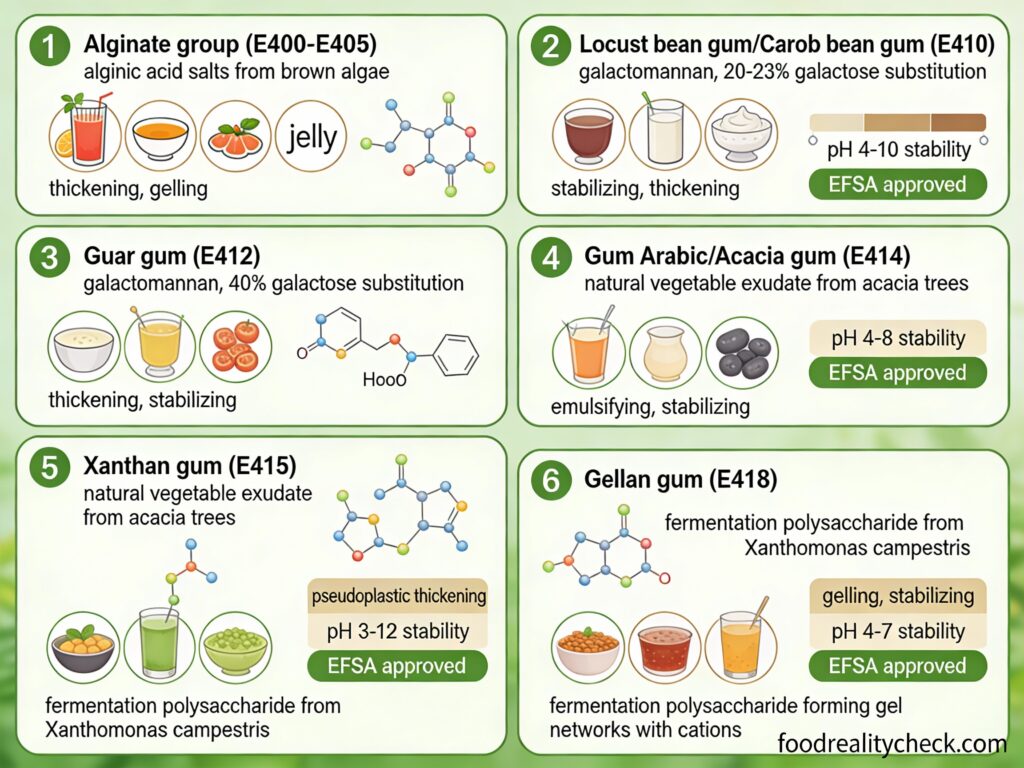
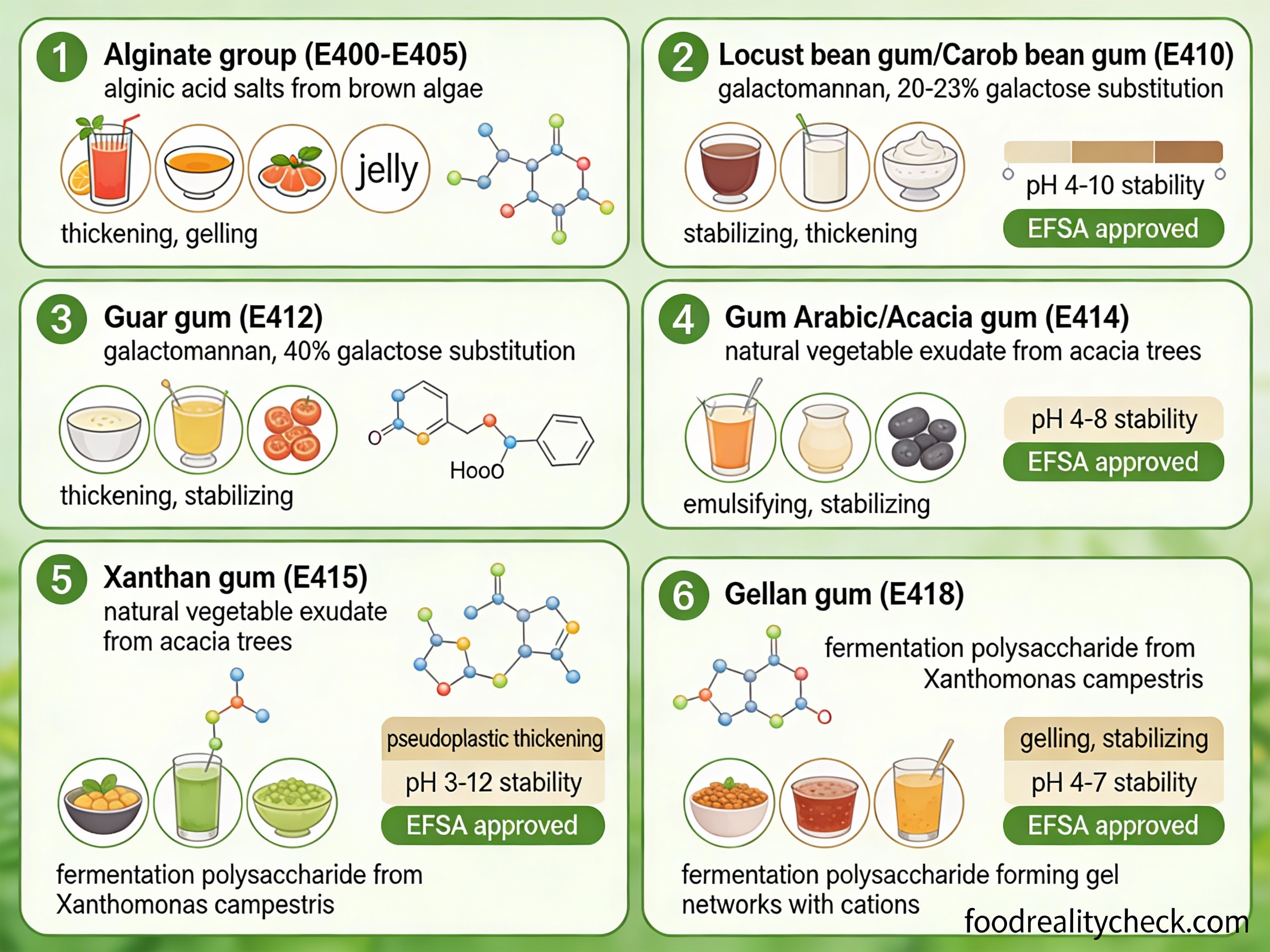
E415 is xanthan gum—a high-molecular-weight polysaccharide produced through fermentation of a carbohydrate (glucose or sucrose) with the bacterium Xanthomonas campestris. It’s used as a thickener, stabilizer, and emulsifier in thousands of processed foods.
Unlike plant-based gums, xanthan gum is created through bacterial fermentation—similar to how yogurt or kombucha are made. It’s approved as safe by all major food authorities and is particularly valued in gluten-free baking and acidic foods.
While generally safe at food levels, emerging research suggests that regular xanthan gum consumption might alter gut microbiota composition and potentially promote growth of harmful bacteria strains—an area requiring further investigation.
📌 Quick Facts
- Category: Thickener, stabilizer, emulsifier, soluble fiber, suspending agent
- Source: Bacterial fermentation of carbohydrates with Xanthomonas campestris
- Found in: Salad dressings, sauces, gluten-free baking, ice cream, gravies, diet foods, soups
- Safety Status: FDA GRAS approved (since 1969), EFSA approved, ADI “Not Specified” (highest safety rating)
- Dietary Status: Vegan, vegetarian, gluten-free, suitable for most diets
- Chemical Name: High molecular weight extracellular polysaccharide
- Controversy Level: MODERATE—emerging research on gut microbiota effects warrants monitoring
- Unique Property: Only synthetic/fermented gum (not plant-derived like guar, locust bean, tragacanth)
What Exactly Is Xanthan Gum?
Xanthan gum is a biopolymer produced through bacterial fermentation—specifically, fermentation of simple carbohydrates with the bacterium Xanthomonas campestris. It’s the only major food thickening gum that’s not directly extracted from plant seeds or plant exudations.
Chemical composition: The primary structure consists of a pentasaccharide repeat unit composed of glucose, mannose, and glucuronic acid. The polysaccharide chains are typically 1-20 million Daltons in molecular weight.
In simple terms: Bacteria are fed sugar and produce a viscous, slimy substance as a byproduct—the same way your gut bacteria ferment fiber. This gum is then purified and dried for food use.
Key properties:
• Bacterial fermentation product: Unlike plant gums, it’s created by living microorganisms
• Pseudoplastic behavior: Changes viscosity depending on how fast it’s stirred or mixed
• Acid stable: Maintains viscosity in acidic foods (dressings, sauces)
• Synergistic: Works exceptionally well combined with other gums (guar gum, locust bean gum)
• Temperature stable: Functions across a wide temperature range
• Non-viscous at high shear: Thick when sitting still, becomes runnier when stirred—ideal for smooth mouthfeel
Where You’ll Find E415
Xanthan gum appears in a wide variety of foods:
• Salad dressings and vinaigrettes
• Sauces and gravies
• Mayonnaise
• Ice cream and frozen desserts
• Gluten-free baked goods and flour blends
• Low-fat and diet foods
• Yogurt and dairy products
• Soups (canned and instant)
• Syrups and condiments
• Nut butters and seed butters
• Beverages (some smoothies, juices)
• Meat products and sausages
• Puddings and custards
• Nutritional supplements and protein powders
• Cosmetics and personal care products
• Pharmaceutical preparations
Xanthan gum is particularly common in salad dressings and gluten-free products, where its ability to maintain viscosity in acidic conditions and work without gluten protein makes it invaluable.
How Is Xanthan Gum Produced?
Xanthan gum production is a biofermentation process:
Step 1: Substrate Preparation
A simple carbohydrate (glucose, sucrose, or corn syrup) is dissolved in water to create a nutrient broth.
Step 2: Bacterial Culture
The bacterium Xanthomonas campestris is added to the carbohydrate solution. The culture is maintained under controlled conditions (temperature, pH, oxygen).
Step 3: Fermentation
The bacteria multiply and metabolize the carbohydrate, producing xanthan gum as an extracellular polysaccharide. Fermentation typically takes 48-72 hours.
Step 4: Pasteurization
Heat is applied to kill the bacteria and stop the fermentation process.
Step 5: Isolation
Xanthan gum is precipitated from the fermentation broth using ethanol or isopropanol. The precipitate is separated and recovered.
Step 6: Drying & Milling
The wet xanthan gum is dried using spray drying or drum drying to remove moisture. The dried material is milled into a fine powder.
Step 7: Purification & Quality Control
The powder is tested for viscosity, purity, microbiological safety, and absence of residual solvents. Only food-grade material is approved for use.
Note: The production process is similar to making beer, yogurt, or other fermented foods, but under more controlled industrial conditions. No synthetic chemicals are used to create the gum itself, though solvents may be used in isolation and purification.
Functions of E415 in Food
Xanthan gum serves multiple critical functions in food manufacturing:
As a thickener: Increases viscosity efficiently at low concentrations (0.05-1%). Its pseudoplastic properties create smooth texture during chewing while remaining pourable.
As a stabilizer: Prevents separation of oil and water phases. Particularly valuable in acidic foods (dressings, sauces) where other thickeners might fail.
As an emulsifier: Helps disperse fat droplets in water-based products, creating uniform texture and preventing ingredient separation during storage.
As a suspension agent: In beverages and sauces, keeps particles (herbs, spices, fruit pulp) evenly distributed rather than settling.
As a binder: In gluten-free baking, xanthan gum replaces some of the structural role of gluten, creating proper dough consistency and product texture.
As a bulking agent: In low-fat or diet foods, creates volume and mouthfeel without calories.
As dietary fiber: While typically used in small amounts, it contributes to soluble dietary fiber intake.
Is E415 Safe?
Yes, xanthan gum is approved as safe by all major food authorities. However, emerging research on gut microbiota effects warrants monitoring.
Regulatory Approvals:
• FDA: Generally Recognized As Safe (GRAS) since 1969. Approved without numerical ADI limits.
• EFSA (European Food Safety Authority): Approved as E415. In 2017, after reviewing carcinogenicity, genotoxicity, and safety data, concluded: “There is no need for a numerical ADI for xanthan gum (E 415), and that there is no safety concern for the general population.” Maximum use level set for infants at 1000 mg/L in infant formula.
• JECFA (Joint FAO/WHO Committee): Assigned an ADI of “Not Specified”—the highest safety rating.
Why is the regulatory assessment strong?
1. Long track record: FDA approval since 1969 (over 50 years of safe use).
2. Low absorption: Not absorbed intact; fermented by gut bacteria.
3. Extensive testing: Decades of toxicology studies show no toxic effects.
4. Low exposure: Used at very low concentrations (typically <1 gram per serving).
5. Occupational safe history: Workers handling the powder (higher exposure) have no reported systemic health effects beyond respiratory irritation from dust.
Health Benefits of Xanthan Gum
🌟 Documented & Emerging Health Benefits
- Blood sugar regulation: Slows gastric emptying and carbohydrate absorption, reducing post-meal glucose spikes—studies show significant reductions in blood sugar levels after consuming rice with added xanthan gum
- Weight management: Creates satiety by delaying stomach emptying and increasing fullness sensation, supporting appetite control
- Cholesterol reduction: A 1986 study found 10% cholesterol reduction in participants consuming high doses; potential mechanism through bile acid binding
- Improved digestion: As a soluble fiber, increases stool bulk and frequency, supporting regular bowel movements and constipation relief
- Accessibility aid: Used medically in swallowing aids for elderly and neurological patients with dysphagia (difficulty swallowing)—thickens liquids to safe consistency
- Saliva substitute: Used for patients with dry mouth (xerostomia) due to cancer treatment or Sjögren’s syndrome
- Potential cancer effects: Animal studies suggest tumor-growth inhibition, though no human evidence exists
Side Effects & Emerging Gut Health Concerns
At typical food levels, xanthan gum is well tolerated. However, emerging research identifies potential concerns with regular consumption:
Transient digestive side effects (from food-level consumption, rare):
• Gas and flatulence
• Bloating
• Loose stools or diarrhea (laxative effect)
• Abdominal cramping
These effects: Occur primarily at doses above 15 grams per day—typical food consumption is less than 1 gram daily. Side effects are mild and transient.
Emerging Concern: Altered Gut Microbiota
Recent research suggests xanthan gum may alter gut bacteria composition in concerning ways:
2024 Research Findings: Studies have found that xanthan gum consumption may:
• Increase harmful bacteria growth: Promotes growth of Ruminococcus gnavus, a pathogenic strain associated with increased severity of colitis and inflammatory bowel disease
• Promote intestinal inflammation: Animal studies show potential to trigger or worsen intestinal inflammation
• Alter bacterial diversity: Changes the balance of gut microbiota composition
• Affect immune function: May influence immune tolerance and intestinal barrier integrity
Important context: These findings are from animal studies and require confirmation in humans. The changes are modest and may not be clinically significant for most healthy individuals. However, people with existing inflammatory conditions (colitis, Crohn’s disease, IBS) may be more susceptible to harmful effects.
⚠️ Caution for Sensitive IndividualsWhile regulatory bodies maintain xanthan gum is safe, emerging microbiota research warrants precaution for:
• People with inflammatory bowel disease (Crohn’s, Ulcerative Colitis)
• Those with active colitis or intestinal inflammation
• Individuals with IBS experiencing flare-ups
• People with compromised gut health from antibiotics or other causes
Consider limiting xanthan gum-containing products if you have existing digestive conditions, and monitor for symptom changes.
Occupational exposure concern:
Workers handling xanthan gum powder have reported flu-like symptoms, nose and throat irritation, and respiratory problems from dust inhalation. However, food consumption poses no such risk.
Xanthan Gum vs Plant-Based Gums: Key Differences
| Gum | Source | Production | Gut Health Profile | Best For |
|---|---|---|---|---|
| E415 Xanthan | Bacterial fermentation | Synthetic fermentation | ~ Emerging concerns about harmful bacteria promotion | Gluten-free baking, acidic foods, medical thickening |
| E412 Guar Gum | Legume plant seeds | Mechanical extraction | ✓ Beneficial—prebiotic, supports good bacteria | General thickening, prebiotic benefits |
| E410 Locust Bean Gum | Carob tree seeds | Mechanical extraction | ✓ Excellent—prebiotic, anti-inflammatory | General thickening, digestive support |
| E413 Tragacanth | Astragalus shrub roots | Natural exudation collection | ✓ Unknown, but traditional use supports | High-heat/acid products, confectionery |
| E407 Carrageenan | Red seaweed | Water extraction | ✗ Damages gut barrier, promotes inflammation | Not recommended—health risks documented |
Who Should Avoid or Limit Xanthan Gum?
For most healthy people, xanthan gum in foods is safe. However, consider limiting if you have:
• Inflammatory Bowel Disease (Crohn’s, Ulcerative Colitis): Emerging research suggests potential to promote harmful bacteria; consider avoidance
• Active colitis or intestinal inflammation: May worsen inflammation based on animal studies
• IBS with sensitivities: May trigger or worsen symptoms in sensitive individuals
• Acute appendicitis or suspected bowel obstruction: Bulk-forming fiber could complicate conditions
• Fecal impaction or severe constipation: May worsen impaction if not managed with adequate fluids
• Pregnancy or breastfeeding: While generally safe, consult healthcare provider about supplement doses (food-level amounts are fine)
General recommendation: For people with digestive conditions, plant-based gums (guar, locust bean) appear safer based on current research. For healthy individuals, xanthan gum at food levels is well tolerated.
The Bottom Line
E415 (xanthan gum) is approved as safe by all major regulatory authorities and has a strong safety record spanning over 50 years. However, emerging research on gut microbiota effects suggests potential concerns for regular consumers and especially for people with inflammatory conditions.
Key takeaways:
• Regulatory approval strong: ADI “Not Specified”; approved since 1969; no toxic effects documented
• Unique production: Only major food gum created through bacterial fermentation (not plant-extracted)
• Excellent functional properties: Superior acid stability and synergistic effects with other gums
• Emerging gut concerns: Recent research suggests potential to promote harmful bacteria strains and intestinal inflammation
• Minimal side effects at food levels: <1 gram daily is unlikely to cause problems for most people
• Plant-based gums may be safer: Guar gum and locust bean gum show prebiotic benefits without the microbiota concerns
• Caution for sensitive individuals: Those with IBD, colitis, or IBS should monitor consumption and consider alternatives
Practical recommendation: While xanthan gum is not inherently dangerous at food levels, the emerging research on its effects on gut bacteria—particularly its tendency to promote harmful strains associated with colitis—warrants caution, especially for people with digestive conditions. For healthy individuals, occasional consumption is likely safe. For those with inflammatory digestive conditions, plant-based gums (guar, locust bean) appear to be safer choices with documented prebiotic benefits rather than potential harms.