What is E460 (Cellulose)?
Complete guide to this natural dietary fiber with excellent safety profile and genuine health benefits
The Quick Answer
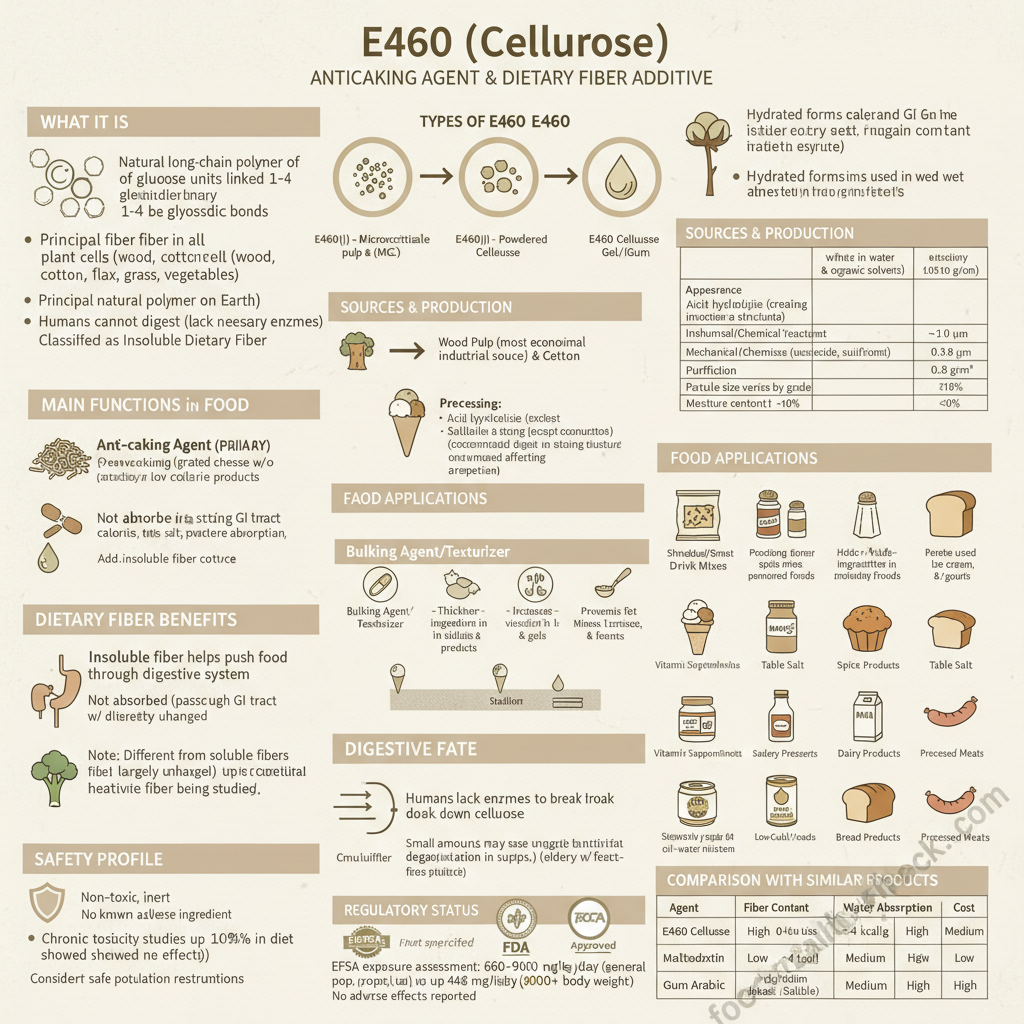
E460 is cellulose—a naturally occurring fiber from plant cell walls, available in multiple food-grade forms including microcrystalline cellulose (E460(i)), powdered cellulose (E460(ii)), and various chemically modified versions. It’s used as a thickener, stabilizer, anti-caking agent, and dietary fiber in thousands of processed foods.
Unlike controversial additives, cellulose is one of the safest and most beneficial food additives available. Regulatory authorities assign it an ADI of “Not Specified”—the highest safety rating. The unmodified forms (E460(i) and (ii)) are essentially the same fiber found in vegetables, fruits, and whole grains—just in concentrated form. Even when chemically modified (E460(iii)-(vi)), cellulose forms show no adverse effects at typical food levels.
Cellulose offers genuine health benefits as dietary fiber, supporting digestive health, satiety, and cardiovascular function. It’s one of the few additives where food-grade and whole-food forms are essentially equivalent in health effects.
📌 Quick Facts
- Category: Dietary fiber, thickener, stabilizer, anti-caking agent, bulking agent
- Source: Plant cell walls (wood pulp, cotton fibers, plant derivatives)
- Found in: Shredded cheese, ice cream, yogurt, baked goods, sauces, low-fat foods
- Safety Status: FDA GRAS approved; EFSA approved; ADI “Not Specified” (highest safety rating)
- Chemical Type: Natural polymer; glucose polymer (C₆H₁₀O₅)ₙ
- Controversy Level: NONE—universally considered safe and beneficial
- Key Benefit: Dietary fiber with same health properties as plant fiber in whole foods
- Versatility: Available in unmodified and chemically modified forms; all safe
What Exactly Is Cellulose?
Cellulose is the primary structural component of plant cell walls—a linear polymer of glucose molecules linked together. Food-grade cellulose is extracted from plant sources (primarily wood pulp and cotton fibers) and processed into various forms for food use.
Chemical composition: Cellulose is a polysaccharide (C₆H₁₀O₅)ₙ composed of long chains of glucose units linked by beta-1,4-glycosidic bonds. Unlike starch (which uses alpha bonds), these beta bonds make cellulose indigestible by human enzymes—which is why it’s a dietary fiber rather than a digestible carbohydrate.
In simple terms: It’s the same fiber in lettuce, carrots, whole wheat bread, and apples—just extracted and concentrated. Your body can’t digest it, so it passes through unchanged, adding bulk to stools and feeding beneficial gut bacteria.
Key properties:
• 100% plant-based fiber: Derived directly from plant cell walls
• Indigestible: Human enzymes can’t break it down; passes through intact
• Fermentable (partially): Gut bacteria can ferment unmodified cellulose, producing short-chain fatty acids
• Water-binding: Absorbs water, increasing stool bulk and creating satiety
• Zero calories: Not absorbed; contributes no energy
• No taste or odor: Doesn’t affect flavor of foods
• Stable: Heat-stable; doesn’t break down during cooking or storage
💡 Important Distinction: E460 vs Modified CellulosesE460 includes multiple forms:
• E460(i) – Microcrystalline cellulose (MCC): Natural cellulose processed mechanically; partially fermentable
• E460(ii) – Powdered cellulose: Natural cellulose mechanically processed; similar to MCC
• E460(iii)-(vi) – Modified celluloses: Chemically modified (methylcellulose, ethylcellulose, etc.); not fermentable but completely safe
All forms are safe. The distinction matters because unmodified forms may have modest prebiotic effects, while modified forms simply provide fiber without fermentation.
Where You’ll Find E460
Cellulose appears in a wide variety of foods:
• Shredded cheese (anti-caking)
• Ice cream and frozen desserts
• Yogurt and cultured dairy products
• Low-fat and diet foods
• Salad dressings and sauces
• Mayonnaise and creamy condiments
• Baked goods and bread
• Canned soups and broths
• Dried spice blends (anti-caking)
• Meal replacement shakes
• Low-calorie or reduced-fat products
• Candy and confectionery
• Processed meats and sausages
• Pharmaceutical capsules
• Dietary supplements
How Is Cellulose Produced?
Cellulose production is a straightforward mechanical and/or minimal chemical process:
Method 1: Microcrystalline Cellulose (MCC) – E460(i)
Step 1: Source Material
Pure cellulose is obtained from wood pulp or cotton fibers using conventional pulping processes.
Step 2: Acid Hydrolysis
The cellulose is treated with dilute hydrochloric acid or sulfuric acid. The acid hydrolyzes (breaks) some of the amorphous (disorganized) regions of cellulose while leaving the crystalline regions intact.
Step 3: Neutralization & Washing
The acid is neutralized and the product is washed to remove impurities and remaining acid.
Step 4: Drying & Milling
The material is dried and milled into fine particles, creating the white powder known as MCC.
Method 2: Powdered Cellulose – E460(ii)
Similar to MCC but with less intensive hydrolysis, resulting in slightly larger particles.
Method 3: Modified Celluloses – E460(iii)-(vi)
Unmodified cellulose is treated with various chemicals (methanol, ethanol, sodium hydroxide, etc.) to add functional groups that modify its properties. These create:
• Methylcellulose (E461): Cellulose + methyl groups
• Ethylcellulose (E462): Cellulose + ethyl groups
• Hydroxypropyl cellulose (E463): Cellulose + hydroxypropyl groups
• And others (E464-E469)
Note: All production methods are mechanical and chemical modifications only. No synthetic compounds are created; existing cellulose is simply processed or chemically modified to change its properties.
Functions of E460 in Food
Cellulose serves multiple critical functions:
As an anti-caking agent: Cellulose absorbs moisture, preventing powdered foods (shredded cheese, spice blends) from clumping. One of the most important anti-caking applications.
As a thickener and stabilizer: Increases viscosity and creates smooth texture in sauces, dressings, and ice cream.
As a bulking agent: In low-calorie and diet foods, adds volume and creates satiety without calories.
As a dietary fiber source: Unlike most additives, contributes to dietary fiber intake with genuine prebiotic and digestive health benefits.
As a moisture binder: Prevents water loss in baked goods and yogurt.
As a freeze-thaw stabilizer: Controls ice crystal formation in frozen desserts.
Is E460 Safe?
Yes. Cellulose is one of the safest food additives available, with universal regulatory approval and extensive positive research.
Regulatory Approvals:
• FDA: GRAS (Generally Recognized As Safe) approved
• EFSA: Approved in 2018 re-evaluation; concluded “no need for a numerical ADI” and “no safety concern at the reported uses and use levels”
• JECFA (WHO/FAO): ADI “Not Specified”—the highest possible safety rating; established in 1997
• Food Standards Australia New Zealand (FSANZ): Approved
Why is the safety so overwhelming?
1. 100% plant-derived: Cellulose is literally the same fiber in all plant foods
2. Indigestible and inert: Passes through the body unchanged; not absorbed or metabolized
3. Decades of safe use: Cellulose has been used in foods since the 1960s with no documented adverse effects
4. Extensive testing: No carcinogenicity, no reproductive toxicity, no genotoxicity identified
5. High safety margin: Studies tested doses far exceeding food levels (up to 35g/person of MCC or powdered cellulose) with no adverse effects
6. Intestinal flora fermentation: Even when fermented, produces beneficial short-chain fatty acids
7. Zero bioaccumulation: Doesn’t accumulate in tissues; excreted intact in feces
Health Benefits of Cellulose
🌟 Documented Dietary Fiber & Health Benefits
- Soluble dietary fiber: Contributes to daily fiber intake with same nutritional value as plant fiber
- Digestive health: Increases stool bulk, promotes regular bowel movements, alleviates constipation
- Satiety and weight management: Absorbs water, creates fullness sensation, supports weight control without calories
- Cardiovascular health: Soluble fiber is associated with improved cholesterol profiles and heart health
- Blood sugar regulation: Slows gastric emptying, moderating blood glucose spikes
- Prebiotic effects (unmodified forms): Partial fermentation by gut bacteria produces short-chain fatty acids (butyrate, propionate, acetate) that feed beneficial bacteria
- Colon cancer risk reduction: Dietary fiber consumption is associated with reduced colon cancer risk
- Metabolic health: Fiber-rich diets support metabolic syndrome prevention and healthy body weight
Research basis: The health benefits of cellulose are well-established because they’re the same as the benefits of dietary fiber in general. Decades of nutritional research confirm that adequate fiber intake—whether from whole foods or cellulose additives—supports digestive, cardiovascular, and metabolic health.
Side Effects & Digestive Considerations
Cellulose is extremely well tolerated with minimal side effects:
Transient digestive effects (primarily from sudden excessive intake):
• Bloating and abdominal distension (temporary)
• Gas or flatulence (sign of bacterial fermentation; resolves as body adapts)
• Loose stools or mild diarrhea (from water-binding effect)
• Mild abdominal discomfort
• Rare: nausea or constipation (depends on individual factors)
These effects occur primarily when:
• Fiber intake is suddenly increased (body needs adaptation)
• Inadequate water intake accompanies increased fiber
• Individual sensitivity exists to increased fiber
Standard recommendations to prevent side effects:
• Increase fiber intake gradually
• Drink adequate water (at least 8 glasses daily when consuming fiber)
• Exercise regularly (supports digestive function)
• Most side effects resolve within 3-7 days as the body adapts
At typical food levels: Cellulose from processed foods (shredded cheese, yogurt, etc.) is unlikely to cause any digestive effects because the amounts are minimal.
Contraindications (limited):
• Those with severe inflammatory bowel disease (IBD/Crohn’s) may need physician guidance; some benefit from fiber, others need lower-fiber diets
• Individuals with history of bowel obstruction should consult healthcare provider
• Those on fiber-restrictive medical diets should limit intake
Cellulose vs Other Additives: Safety Comparison
| Additive | Type | Safety Profile | Health Benefits | Status |
|---|---|---|---|---|
| E460 Cellulose | Plant fiber (natural) | ✓ Excellent; ADI “Not Specified” | ✓ Dietary fiber; prebiotic; health-supporting | SAFE & BENEFICIAL |
| E466 CMC | Synthetic cellulose ether | ~ Approved but emerging concerns | ⚠ May damage gut health | ORANGE—SOME CONCERNS |
| E407 Carrageenan | Seaweed extract | ~ Approved but concerns identified | ✗ May damage gut; pro-inflammatory | HIGH CONCERNS |
| E440 Pectin | Plant fiber (natural) | ✓ Excellent; ADI “Not Specified” | ✓ Dietary fiber; health-supporting | SAFE & BENEFICIAL |
| E410 Locust Bean Gum | Plant fiber (natural) | ✓ Excellent; ADI “Not Specified” | ✓ Prebiotic; health-supporting | SAFE & BENEFICIAL |
The Bottom Line
E460 (cellulose) is one of the safest and most beneficial food additives available, with an excellent regulatory safety profile and genuine dietary fiber health benefits. Unlike controversial additives, cellulose is essentially the same compound found in vegetables, fruits, and whole grains—just extracted and concentrated.
Key takeaways:
• Excellent safety: ADI “Not Specified”—the highest safety rating; approved by all major authorities
• 100% plant-based: Derived from plant cell walls; same fiber as in vegetables and whole grains
• No controversy: Zero scientific debate about its safety or health benefits
• Genuine dietary fiber: Contributes to fiber intake with documented health benefits
• Prebiotic potential: Unmodified forms (E460(i), (ii)) support beneficial gut bacteria
• Well-tolerated: Minimal side effects at food levels; any transient digestive effects resolve with adaptation
• No bioaccumulation: Passes through intact; completely excreted
• Multiple forms available: Unmodified and modified forms, all with excellent safety profiles
• Cost-effective and versatile: One of the most important food additives for texture and anti-caking
Practical recommendation: Cellulose is one of the safest food additives available—equivalent in safety and health benefit to dietary fiber from whole foods. Unlike additives with questionable health effects, cellulose actually supports digestive health through genuine fiber benefits. There are no health concerns with consuming cellulose in processed foods. If you’re increasing overall fiber intake (from cellulose in processed foods or other sources), ensure adequate water intake to prevent transient digestive discomfort. For the vast majority of people, cellulose is a beneficial ingredient that improves food texture while contributing real dietary fiber benefits.