What is E951 (Aspartame)?
Complete guide to this controversial artificial sweetener with emerging health concerns that regulatory approval masks
The Quick Answer
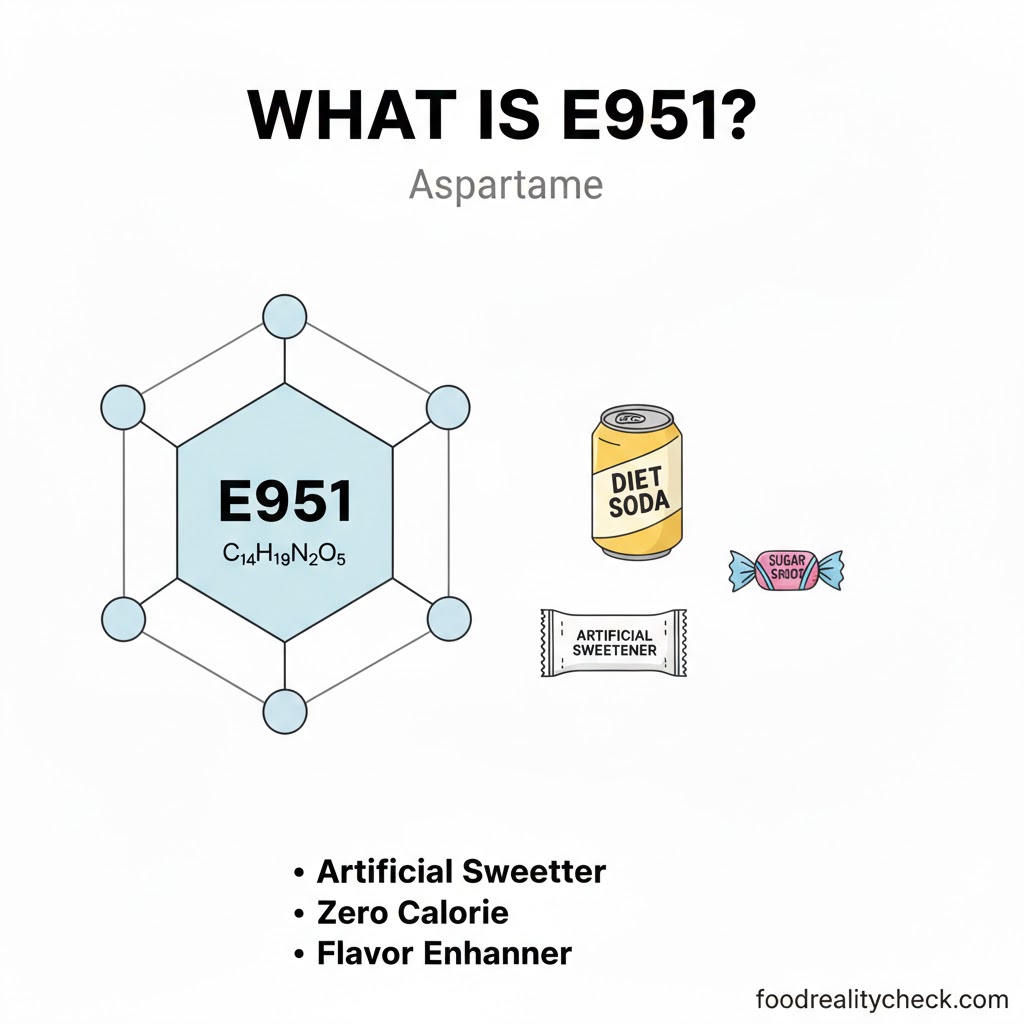
E951 is aspartame—an artificial, non-nutritive sweetener approximately 200 times sweeter than sugar, created by joining the amino acids phenylalanine and aspartic acid with a methyl ester group. It’s used in thousands of “sugar-free” and “light” products including diet sodas, yogurts, chewing gum, desserts, and as a table-top sweetener.
Unlike safe additives like citric acid or pectin, aspartame is one of the most controversial food additives ever approved. While regulatory authorities like the FDA and EFSA maintain it’s safe at current use levels, emerging research identifies multiple potential health concerns including neurological effects, metabolic disruption, cardiovascular risks, and potential cancer links—concerns that regulatory approval standards may not adequately capture.
Most critically, aspartame is dangerous for the 1 in 25,000 people with phenylketonuria (PKU), a genetic metabolic disorder, and the mounting evidence of adverse effects in the general population warrants significant caution, particularly for regular consumers and pregnant women.
📌 Quick Facts
- Category: Artificial sweetener, non-nutritive sugar substitute, flavor enhancer
- Composition: Dipeptide methyl ester (phenylalanine + aspartic acid + methanol)
- Found in: Diet sodas, sugar-free desserts, yogurts, chewing gum, pharmaceuticals, table-top sweeteners
- Safety Status: FDA approved, EFSA approved (ADI 40 mg/kg bw/day), but HIGH controversy despite approval
- Sweetness: 180-200 times sweeter than sugar; zero calories (in practical amounts)
- Controversy Level: VERY HIGH—most studied food additive; significant emerging health concerns
- Critical Safety Issue: Dangerous for PKU (1 in 25,000); contains phenylalanine
- Emerging Concerns: Neurological effects, metabolic disruption, cardiovascular risks, cancer links
What Exactly Is Aspartame?
Aspartame is a synthetic dipeptide methyl ester created by chemically joining two amino acids (phenylalanine and aspartic acid) with a methyl ester group. When metabolized, it breaks down into three components: phenylalanine, aspartic acid, and methanol.
Chemical composition: The molecular formula is C₁₄H₁₈N₂O₅. The structure is: L-aspartyl-L-phenylalanine methyl ester. When ingested, the digestive system hydrolyzes (breaks down) the compound into:
• Phenylalanine (40%)
• Aspartic acid (50%)
• Methanol (10%)
In simple terms: It’s an artificial sweetener made by linking two amino acids. Your body breaks it down into amino acids and methanol—which then enter normal metabolic pathways. The controversy centers on whether these breakdown products are safe at the levels aspartame provides.
Key properties:
• Extremely sweet: 180-200 times sweeter than sugar; only small amounts needed
• Zero calories: Contains calories but used in such small amounts they’re negligible
• Unstable at high temperature: Breaks down when heated, limiting use in baking
• Breaks down into amino acids: Metabolites enter normal biochemistry
• Controversial metabolite composition: Methanol production is concerning at high intakes
• Most-studied food additive: Over 100 regulatory agencies have assessed it; most remain approving but acknowledging concerns
⚠️ Critical Warning: Aspartame & Phenylketonuria (PKU)
Aspartame is DANGEROUS for people with phenylketonuria (PKU)—a genetic metabolic disorder affecting approximately 1 in 25,000 births worldwide.
PKU patients cannot properly metabolize phenylalanine. Aspartame breaks down to 40% phenylalanine. For PKU patients on a strict low-phenylalanine diet (the only treatment), aspartame consumption can cause:
• Elevated blood phenylalanine levels
• Neurological damage and brain dysfunction
• Intellectual disability if untreated
• Severe restrictions on safe beverages and foods
Critical problem: Food labels show “Contains Phenylalanine” but don’t quantify the amount, forcing PKU patients to avoid ALL aspartame-containing products. Recent research (2021) found 74% of PKU patients had accidentally consumed aspartame, with significant anxiety and dietary stress.
Where You’ll Find E951
Aspartame appears in thousands of “sugar-free” or “diet” products:
• Diet soda and cola beverages
• Sugar-free energy drinks
• Sugar-free yogurts and dairy desserts
• Sugar-free puddings and gelatin desserts
• Sugar-free chewing gum
• Breath mints
• Sugar-free candies and sweets
• Low-calorie hot chocolate and drink mixes
• Sugar-free jams and fruit spreads
• Flavored water and beverages
• Table-top sweeteners (Equal, NutraSweet)
• Pharmaceuticals (medications, antibiotics, vitamin supplements)
• Cough syrups and liquid medications
• Meal replacement shakes
• Low-calorie protein powders
How Is Aspartame Produced?
Aspartame is created through chemical synthesis:
Step 1: Starting Materials
Two amino acids are obtained: L-phenylalanine and L-aspartic acid. Historically, these were extracted from natural sources, but modern production typically synthesizes them through fermentation or chemical processes.
Step 2: Protection of Functional Groups
The amino groups and carboxyl groups are protected using chemical protecting groups to prevent unwanted reactions.
Step 3: Coupling Reaction
The two amino acids are joined together through a peptide bond formation using various chemical coupling reagents.
Step 4: Methylation
The carboxyl group of phenylalanine is methylated (adding a methyl group) to create the methyl ester form, which is critical for sweetening properties and stability.
Step 5: Deprotection
The protecting groups are removed, leaving the final aspartame molecule.
Step 6: Purification & Crystallization
The product is purified and crystallized to create the white powder form used in food.
Note: The synthesis is completely artificial; no part comes from natural sources. This is a purely synthetic chemical creation.
Functions of E951 in Food
Aspartame serves one primary function:
As an intense sweetener: Provides sweetness approximately 200 times that of sugar while contributing negligible calories. Used in “sugar-free,” “diet,” and “light” products to create a sweet taste without the calories and metabolic effects of sugar.
Secondary function as flavor enhancer: At very low concentrations, enhances fruity and sweet flavors in beverages.
Why manufacturers use it: Allows creation of products marketed as “healthier” alternatives to sugar-sweetened products, enabling consumers to enjoy sweetness without calories—though emerging research questions whether this benefit is genuine or illusory.
Is E951 Safe? The Regulatory vs Research Controversy
This is where aspartame’s story becomes complex and contentious: it’s approved as safe, but extensive emerging research identifies potential health concerns that regulatory approval doesn’t adequately address.
Regulatory Position (Approval-Based):
• FDA: Approved in 1974, briefly withdrawn, re-approved in 1981. Maintains GRAS (Generally Recognized As Safe) status
• EFSA: In 2013, conducted comprehensive re-evaluation and set ADI (Acceptable Daily Intake) at 40 mg/kg bodyweight/day. Concluded: “aspartame and its breakdown products are safe for human consumption at current levels of exposure”
• Position: Regulatory agencies assert that at approved use levels and typical consumption, aspartame is safe
Research Evidence (Emerging Concerns):
Despite regulatory approval, numerous peer-reviewed studies identify potential health risks:
Neurological & Behavioral Effects
• Neurodegenerative disease risk: 2021 review found research linking long-term aspartame use to increased risk of Parkinson’s disease, Alzheimer’s disease, and other neurodegenerative conditions
• Neuroinflammation: Studies show aspartame can cause neuroinflammation and alter neurotransmitter function
• Memory and cognition: Animal studies show impaired learning and memory
• Depression and mood disorders: Research links aspartame consumption to elevated corticosterone (stress hormone) and depression-like symptoms
• Behavioral changes: Long-term exposure correlates with behavioral modifications in animal models
• Autism risk: Limited research suggests maternal aspartame consumption during pregnancy correlates with autism in offspring
Metabolic & Cardiovascular Effects
• Glucose intolerance: A 2021 study associated aspartame with impaired glucose tolerance, despite being calorie-free
• Insulin resistance: Research suggests artificial sweeteners (including aspartame) may promote insulin resistance
• Cardiovascular disease: A 2023 review found artificial sweeteners linked to higher risk of heart disease, stroke, and hypertension
• Weight gain paradox: Despite zero calories, regular aspartame consumption correlates with weight gain and obesity—potentially due to metabolic disruption or increased appetite
• Type 2 diabetes: Observational studies link diet drink consumption (aspartame-sweetened) to increased diabetes risk
Cancer Concerns (Controversial)
• IARC classification (2023): The International Agency for Research on Cancer (IARC) classified aspartame as “Group 2B—possibly carcinogenic to humans” based on limited evidence in animals and humans
• Regulatory response: The FDA and EFSA maintain that the evidence is insufficient to warrant restriction
• Methanol concern: Aspartame produces methanol (10% of metabolite). At very high doses, methanol can form formaldehyde, which is carcinogenic
• Ongoing debate: Whether the cancer risk is real or an artifact of observational research remains contested
Other Documented Effects
• Headaches and migraines: Some individuals report triggering of headaches, though causality is disputed
• Seizure risk: Anecdotal reports and some research suggest potential seizure triggering, though regulatory agencies downplay this
• Contact dermatitis: High doses have been associated with skin reactions
• Allergic reactions: Rare but documented cases of true allergic responses
⚠️ Critical Gap: Regulatory Approval ≠ Proof of Safety
An essential distinction: Regulatory approval means aspartame is deemed “safe at current approved use levels” based on the risk assessment standards agencies use. But this doesn’t mean:
• The additive is proven harmless
• Long-term effects have been definitively ruled out
• All potential risks have been identified
• Vulnerable populations are protected
• Emerging evidence of harm will trigger immediate reassessment
Aspartame underwent its most comprehensive EFSA re-evaluation in 2013—12 years ago. New research continues to emerge identifying potential neurological, metabolic, and cardiovascular effects that weren’t thoroughly investigated in older assessments.
Health Effects & Side Effects
Documented side effects from aspartame consumption:
Acute effects (hours to days after consumption):
• Headaches and migraines (in sensitive individuals)
• Dizziness or lightheadedness
• Nausea
• Anxiety or nervousness
• Tremors or jitteriness (from methanol metabolism)
• Skin rashes or hives
• Joint or muscle pain
Chronic effects (from regular long-term consumption):
• Elevated corticosterone (stress hormone)
• Depression and mood disorders
• Memory and cognition changes
• Increased appetite (paradoxically, despite zero calories)
• Weight gain (despite calorie-free profile)
• Impaired glucose tolerance
• Elevated blood pressure
• Cardiovascular disease risk
• Neurological changes and potential neurodegenerative disease risk
High-risk populations experiencing greater effects:
• PKU patients: Dangerous due to phenylalanine content
• Pregnant women: Emerging evidence suggests fetal risk
• Children: Developing brains may be more vulnerable to neurological effects
• Migraine sufferers: May trigger or worsen migraines
• Those with mood disorders: May exacerbate depression or anxiety
• Diabetics: May impair glucose control despite being calorie-free
Aspartame Alternatives: Are They Better?
| Sweetener | Type | Sweetness | Key Concerns | Status |
|---|---|---|---|---|
| E951 Aspartame | Synthetic dipeptide | 200x sugar | Neurological, metabolic, cancer concerns; PKU danger | APPROVED but CONTROVERSIAL |
| E950 Acesulfame K | Synthetic potassium salt | 200x sugar | Potential genotoxicity; recent EFSA safety concerns | APPROVED; similar concerns |
| E954 Saccharin | Synthetic benzoate | 300x sugar | Cancer concerns (older); taste aftertaste | APPROVED; older safety data |
| E952 Cyclamate | Synthetic compound | 30x sugar | Banned in USA; approved in EU | APPROVED in EU only |
| E955 Sucralose | Chlorinated sucrose | 600x sugar | May disrupt gut bacteria; metabolic concerns | APPROVED; emerging concerns |
| Stevia | Natural plant extract | 250-300x sugar | Generally recognized safe; better safety profile | APPROVED; more natural alternative |
| Sugar (no substitute) | Natural carbohydrate | 1x (baseline) | Metabolic, dental, weight concerns | Natural but problematic in excess |
The Bottom Line
E951 (aspartame) is approved as safe by regulatory authorities but faces significant controversy due to emerging research identifying potential neurological, metabolic, cardiovascular, and possibly carcinogenic effects that regulatory approval standards may not adequately capture.
Key takeaways:
• Regulatory approval but emerging concerns: Approved by FDA and EFSA, but extensive research identifies potential health risks
• Most-studied food additive: Decades of research; still finding new concerns and limitations in older studies
• Dangerous for PKU patients: Contains phenylalanine; absolutely must be avoided by 1 in 25,000 people
• Neurological effects: Research links to Parkinson’s, Alzheimer’s, depression, memory impairment
• Metabolic paradox: Despite zero calories, correlates with weight gain and glucose intolerance
• Cardiovascular risk: Artificial sweeteners (including aspartame) linked to heart disease and stroke
• Cancer classification: IARC classified as “possibly carcinogenic” (Group 2B) in 2023; regulatory agencies dispute this
• Synthetic chemical: Completely artificial; not found in nature
• Regulatory gap: Last comprehensive re-evaluation was 2013; new research continues to emerge
Practical recommendation: Unlike safe additives like citric acid, pectin, or plant gums, aspartame is a controversial synthetic sweetener with mounting evidence of potential health risks. The safest approach is limiting consumption, particularly for pregnant women, children, and those with neurological or metabolic conditions. Rather than relying on aspartame-sweetened products for weight management, consider reducing overall sweet food/drink intake and using natural alternatives like stevia if sweetness is needed. If you must consume aspartame, awareness of the potential risks is critical—regulatory approval doesn’t guarantee safety or mean new risks won’t emerge.