What is E400?
Complete guide to understanding E400 (Alginic Acid) in your food
The Quick Answer
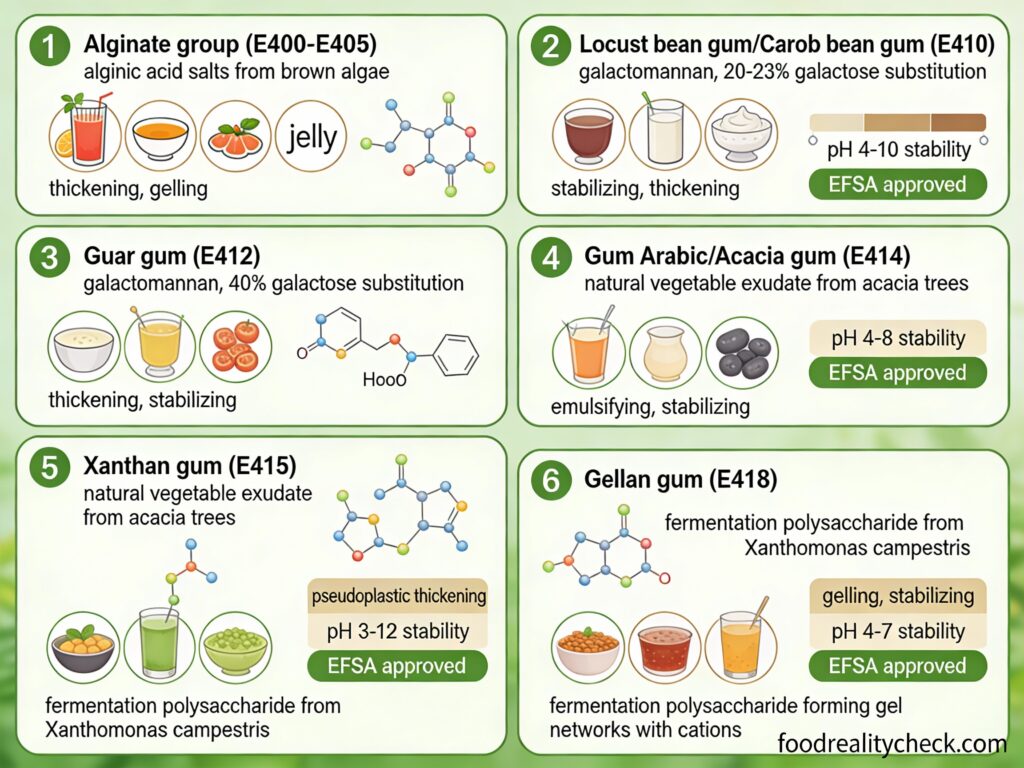
E400 is a naturally-derived polysaccharide (complex carbohydrate) extracted from brown seaweed that functions as a thickener, stabilizer, emulsifier, and gelling agent in foods.
It’s used in ice cream, yogurt, jams, salad dressings, beverages, and thousands of other food products to achieve desired texture and consistency.
It is one of the safest food additives available, with no documented adverse health effects at food-use levels. EFSA’s 2017 comprehensive re-evaluation concluded there is no need for a numerical ADI—one of the highest safety confidence ratings. E400 is completely natural (extracted from brown seaweed) and has been safely used for over 100 years.
📌 Quick Facts
- Category: Natural polysaccharide (thickener, stabilizer, gelling agent)
- Also Known As: Algin, alginic acid, sodium alginate (E401), potassium alginate (E402)
- Chemical Basis: Linear polymer of mannuronic and guluronic acid units
- Natural Source: Extracted from brown seaweed (Phaeophyceae) via alkaline extraction
- Found in: Ice cream, yogurt, jams, sauces, beverages, baked goods, processed meats, dietary foods
- Safety Status: FDA approved; EFSA approved; No numerical ADI required (safest rating); global approval
- Unique Characteristic: Forms viscous gel in water; absorbs 200-300× its weight in water; used medically for acid reflux
- Key Advantage: Completely natural; over 100-year history of safe use; no synthetic alternatives needed
What Exactly Is It?
E400 is alginic acid—a naturally-derived polysaccharide (complex carbohydrate) extracted from brown seaweed (Phaeophyceae species) that forms viscous gels when hydrated with water.
Alginic acid is a linear polymer consisting primarily of mannuronic acid and guluronic acid units linked via glycosidic bonds. These two sugar acids make up the structural component of brown seaweed cell walls, where they function as the algae’s support matrix.
Extraction process: Food-grade E400 is extracted from brown seaweed (particularly Laminaria and Macrocystis species) using alkaline extraction. The seaweed is treated with sodium carbonate, which dissolves the alginate, separating it from other seaweed components. The solution is then treated with acid, causing alginic acid to precipitate, which is then recovered, washed, and dried to produce the final white to yellowish-white powder.
Composition: E400 is typically 70-90% alginic acid by dry weight, with remaining components being minor impurities from the seaweed extraction process.
Functional mechanism: Alginic acid is hydrophilic (water-loving), forming viscous gels when mixed with water or other aqueous food systems. The gel formation is due to hydrogen bonding between water molecules and the carboxylic acid groups (-COOH) on the alginate polymer. Remarkably, alginic acid can absorb 200-300 times its own weight in water, forming a high-viscosity gel.
Where You’ll Find It
E400 appears in thousands of food products:
• Ice cream and frozen desserts
• Yogurt and yogurt drinks
• Jams, jellies, and preserves
• Salad dressings and mayonnaise
• Sauces and condiments
• Beverages (fruit juices, soft drinks)
• Baked goods (cakes, cookies, bread)
• Processed meats and sausages
• Cottage cheese and dairy products
• Instant desserts and puddings
• Soups and soup mixes
• Dietary and medical foods
• Cosmetics and skincare products
• Pharmaceuticals and supplements
E400 is one of the most universally used food additives due to its effectiveness at producing desired textures with minimal use levels.
Why Do Food Companies Use It?
E400 serves critical functional advantages:
Efficient thickening and gelling: Alginic acid is extremely potent—very small amounts (0.05-1%) achieve desired viscosity and gel texture. This makes it cost-effective compared to alternative thickeners.
Water binding and stabilization: Absorbs and holds water, preventing separation, sedimentation, and texture degradation during storage and transport.
Texture improvement: Produces smooth, creamy textures in ice cream, yogurt, and sauces that consumers prefer. Without alginates, these products would separate or become grainy.
Natural origin (marketing advantage): Unlike synthetic thickeners, E400 is extracted directly from seaweed—allowing marketing as a “natural” ingredient, which appeals to health-conscious consumers.
Film-forming properties: Creates thin, flexible films in some applications (candy coatings, coatings on meats).
Completely absorbed in digestion: Not absorbed unchanged; fermented by gut bacteria into short-chain fatty acids, providing potential prebiotic benefits.
Global regulatory approval: Approved in EU, USA, Canada, Australia, New Zealand with no usage restrictions.
Is It Safe?
Yes—E400 is one of the safest food additives available. EFSA’s comprehensive 2017 re-evaluation concluded there is no need for a numerical ADI (one of the highest safety confidence ratings), with no documented adverse health effects at food-use levels.
The FDA approved alginic acid as a food ingredient and considers it GRAS (Generally Recognized as Safe).
The EFSA’s 2017 comprehensive re-evaluation concluded: “There is no need for a numerical Acceptable Daily Intake (ADI) for alginic acid and its salts (E 400, E 401, E 402, E 403 and E 404), and there is no safety concern at the level of the refined exposure assessment for the reported uses.”
The JECFA (WHO Expert Committee) classifies alginate as safe with an ADI of “not specified” (same as no ADI required).
✓ GREEN SAFETY RATING – SAFEST CATEGORY: E400 has:
• No documented genotoxicity (DNA damage) at any tested dose
• No documented carcinogenicity; highest dose tested 37,500 mg/kg body weight in mice (far exceeds food exposure)
• No documented reproductive or developmental toxicity
• No organ toxicity at food-use levels; only adaptive caecal enlargement at very high doses (non-adverse)
• Very low acute toxicity
• No immunotoxicity or allergenic potential documented
• Completely natural; extracted from seaweed (not synthetic)
• Regulatory consensus: NO numerical ADI needed (EFSA, JECFA, FDA)
• Over 100-year history of safe use in food and pharmaceuticals
• Medically used for therapeutic purposes (acid reflux) without safety concerns
This is among the highest safety confidence possible for a food additive—combined with being completely natural and historically proven safe over a century of use.
What Are The Health Concerns?
E400 has no documented health concerns at food-use levels. However, some considerations exist at very high therapeutic doses:
No health concerns at food-use levels: EFSA, FDA, and JECFA all concluded no adverse effects at approved food use levels. Decades of safe use globally supports this.
High therapeutic dose gastrointestinal effects (NOT food-relevant): When used at high therapeutic doses (417-834 mg/kg body weight for acid reflux treatment in infants), some gastrointestinal side effects are reported (diarrhea, constipation, flatulence, rarely intragastric “bezoar” formation). However, food-use levels are 10-100× lower than therapeutic doses.
Special dietary formula concern: EFSA noted that exposure of infants in special medical dietary foods could approach therapeutic levels, requiring careful formulation to stay below levels where effects could occur.
Caecal enlargement in animals (adaptive, not adverse): At very high doses in animal studies, enlarged caeca (pouches of the intestine) were observed. EFSA concluded this is an adaptive process to the high dose of indigestible polysaccharide, not an adverse effect.
Potential prebiotic effects (beneficial): Alginic acid is not absorbed unchanged; it’s fermented by gut bacteria into short-chain fatty acids. These fermentation products may provide beneficial prebiotic effects supporting healthy microbiota.
No concerns for any population: E400 is safe for children, pregnant women, elderly, immunocompromised—all populations at food-use levels.
Medical Uses and Therapeutic Confirmation of Safety
E400’s safety is uniquely confirmed by its extensive medical use at therapeutic doses:
Acid reflux treatment (GERD): Sodium alginate is FDA-approved for treating gastroesophageal reflux disease. When consumed, alginic acid forms a viscous gel in the stomach that floats on top of stomach acid, providing a physical barrier protecting the esophagus during reflux episodes. This therapeutic use at 417-834 mg/kg doses (10-100× higher than food exposure) confirms safety at food-level exposure.
Wound care: Calcium alginate dressings are used medically for wound healing due to alginic acid’s water absorption properties and biocompatibility.
Controlled-release pharmaceuticals: Alginic acid’s gel-forming properties are used in drug delivery systems, demonstrating its biocompatibility and safety in intimate contact with tissues.
Natural vs Synthetic Version
E400 is entirely natural—extracted directly from brown seaweed via alkaline extraction.
There is no synthetic form of alginic acid; it is purely a naturally-derived ingredient.
The extraction and purification processes make E400 more concentrated and consistent than simply crushing seaweed, which is standard food manufacturing practice.
Natural Alternatives
E400 IS already a natural ingredient.
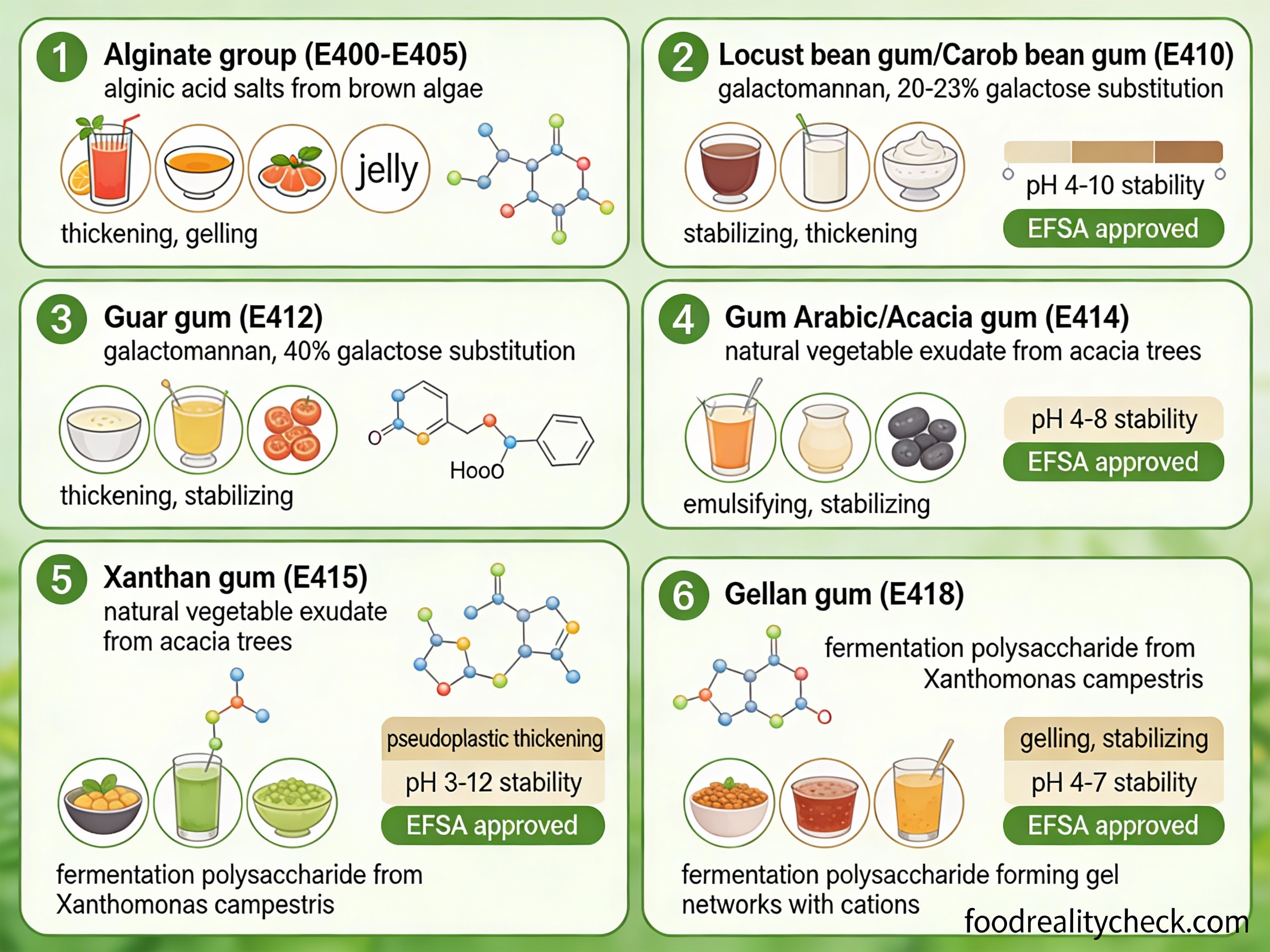
Other thickening/gelling alternatives include:
• Guar gum (E412) – natural polysaccharide from guar seeds
• Xanthan gum (E415) – naturally-derived (fermentation product)
• Pectin (E440) – natural polysaccharide from fruits
• Gelatin – animal-derived protein
• Agar (E406) – natural polysaccharide from red seaweed
• Carrageenan (E407) – natural polysaccharide from red seaweed
• Accept different textures – without thickeners, products naturally separate or become watery
The Bottom Line
E400 (Alginic Acid) is a naturally-derived polysaccharide extracted from brown seaweed that functions as a thickener, stabilizer, and gelling agent. EFSA’s comprehensive 2017 re-evaluation concluded no need for a numerical ADI (one of the highest safety confidence ratings), with no documented adverse health effects at food-use levels. E400 has over 100 years of safe use and is medically used for acid reflux, confirming its safety.
Regulatory Safety Conclusion: EFSA explicitly concluded “no safety concern” at food-use levels; no numerical ADI needed (highest confidence rating). FDA GRAS; JECFA approved globally.
Completely Natural: Extracted directly from brown seaweed via alkaline extraction—not synthetic. Over 100-year history of safe use demonstrates real-world safety across millions of humans.
Medical Confirmation of Safety: Sodium alginate is FDA-approved for treating acid reflux and is used at doses 10-100× higher than food exposure, confirming safety at food-use levels.
Zero Absorption: Not absorbed unchanged; completely fermented by gut bacteria into short-chain fatty acids with potential prebiotic benefits. Does not accumulate in body or organs.
High Safety Confidence at Very High Doses: Animal studies at 37,500 mg/kg body weight (far exceeds possible food exposure) showed no carcinogenicity. Only adaptive changes observed at extreme doses.
No Genotoxicity Documented: Comprehensive assessment found no DNA damage at any tested dose.
Therapeutic Dose Considerations: Gastrointestinal side effects (diarrhea, constipation) occur only at therapeutic doses (417-834 mg/kg) used medically for reflux, approximately 10-100× higher than food exposure.
Recommendation: E400 is one of the safest food additives available. It is NOT something to avoid. Being completely natural and having been safely used for over a century in food and medicine, E400 represents an ideal food additive: effective at low use levels, naturally derived, completely safe at food-use levels, and even beneficial at therapeutic doses. Its role in ice cream, yogurt, and other foods is purely functional—improving texture and preventing separation without any documented health risk.