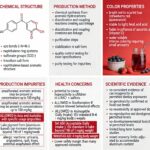
What is E558?
Complete guide to understanding E558 (Bentonite) in your food
The Quick Answer
E558 is bentonite (also called bentonite clay or bentonite-montmorillonite), a naturally occurring colloidal clay mineral composed primarily of montmorillonite (a type of aluminum silicate)—used as an anti-caking agent to prevent clumping in powdered and granular foods, and as a clarifying agent in beverages.
It’s a naturally mined mineral clay material with exceptional water absorption capacity and surface area, used in salt, spices, dried milk powder, and other powdery products to maintain flowability, and in wines and beverages to remove suspended particles and clarify appearance.
E558 bentonite is a naturally-derived mineral additive with regulatory approval across multiple jurisdictions, functioning as an excellent anti-caking agent and clarifying agent with well-established safety profile from extensive use in foods, pharmaceuticals, cosmetics, and industrial applications.
📌 Quick Facts
- Category: Natural Mineral, Anti-caking Agent, Clarifying Agent
- Source: Mined from naturally occurring clay deposits; formed from weathered volcanic ash; primary component is montmorillonite (aluminum silicate)
- Found in: Table salt, spices, dried milk powder, icing sugar, non-dairy creamer, instant soup, grated cheese, wines and beverages
- Safety: EFSA approved; FDA GRAS approved; JECFA approved; ADI “not necessary” (deemed acceptable by EFSA)
- Natural or Synthetic: Natural mineral origin; mined from earth; no chemical synthesis required
- Vegan/Vegetarian: Yes (mineral-derived)
- Key Advantage: Natural origin; excellent water absorption capacity (swells up to 8x with water); extensive safety database from cosmetic/pharmaceutical use; extremely effective anti-caking; environmentally abundant
- Key Concern: Aluminum content (unproven dementia concern); dust inhalation hazard for workers; specification variability in montmorillonite content requires control
- Chemical Composition: Primarily montmorillonite (Al₂O₃·4SiO₂·H₂O approximate formula); colloidal clay with high surface area
The Critical Context—Natural Mineral With Strong Safety Profile
E558 bentonite is a naturally occurring mineral clay composed primarily of montmorillonite extracted through mining from weathered volcanic deposits, approved by EFSA (with ADI deemed “not necessary” reflecting high safety confidence), FDA, and JECFA, functioning as an excellent anti-caking and clarifying agent with safety validated through extensive cosmetic and pharmaceutical applications beyond food use.
What Exactly Is It?
E558 is bentonite, a naturally occurring colloidal and plastic clay material composed largely of montmorillonite, a dioctahedral smectite mineral (aluminum phyllosilicate) with approximate formula Al₂O₃·4SiO₂·H₂O.
Bentonite typically forms from the weathering and alteration of volcanic ash in ancient seawaters or through hydrothermal circulation through volcanic rock beds. The volcanic glass in ash (obsidian) undergoes devitrification (crystallization), converting the amorphous silica into clay minerals over geological time scales. Large fractions of amorphous silica (up to 40-50%) dissolve and leach away during formation, leaving bentonite deposits in place.
The mineral was named after Benton Shale near Rock River, Wyoming, where significant deposits were discovered in the mid-19th century near Fort Benton, Montana. Bentonite is now mined globally from diverse deposits in the USA, Europe, Asia, and other regions.
Physically, bentonite appears as a light-colored clay ranging from white to pale blue or green in fresh exposures, weathering to cream, yellow, red, or brown colors as iron oxidizes. When ground for food use, it appears as a fine pale powder. The mineral has one extraordinary property: its ability to absorb large quantities of water, expanding (swelling) up to 8 times its original volume—making it a powerful desiccant and moisture absorbent.
Chemically, bentonite functions through two mechanisms: (1) as an anti-caking agent through its enormous surface area (montmorillonite has microscopic platy grain structure with extremely large total surface area) that physically absorbs water, preventing moisture accumulation and clump formation, and (2) as a clarifying agent through its colloidal and adsorptive properties that bind suspended particles, proteins, and color compounds, removing them from liquids through filtration.
Where You’ll Find It
E558 bentonite appears in numerous food categories where moisture control or clarification is needed:
• Table salt (primary application)
• Ground and powdered spices (black pepper, garlic powder, onion powder)
• Dried milk powder and milk replacements
• Instant soups and dried soup mixes
• Icing sugar and powdered sugar
• Non-dairy creamers
• Grated hard cheeses (parmesan, romano)
• Powdered vitamins and supplements
• White wine (clarification agent)
• Beer (limited use)
• Juices and beverages (clarification)
• Edible oils (decolorization and purification)
• Baked goods (limited use)
• Spice blends and seasonings
E558 is particularly prevalent in salt products—most table salts contain bentonite as the primary anti-caking agent. Consumers using table salt, seasoning salt, or spices regularly encounter bentonite, though it remains invisible and unfamiliar to most.
Why Do Food Companies Use It?
E558 bentonite performs multiple critical commercial functions with specific advantages:
Superior water absorption and anti-caking through unmatched surface area: Bentonite’s montmorillonite structure creates microscopic platy particles with enormous total surface area. This exceptional surface area allows bentonite to absorb water molecules before they can cause particle agglomeration and clumping. At 0.5-2% concentrations in salt and spices, bentonite prevents the “caking” problem that affects all powdery and granular products exposed to ambient humidity. The compound works through physical absorption of atmospheric moisture, not through chemical reaction.
Wine and beverage clarification through colloidal adsorption: Bentonite’s colloidal properties and strong adsorptive capacity for proteins, colorants, and suspended particles make it an excellent clarifying agent in wines, juices, and other beverages. The material binds unwanted compounds and can be filtered out, leaving clear liquid behind. White wine winemakers use bentonite extensively to prevent protein haze that would otherwise occur during aging.
Why bentonite over alternatives: E558 is selected over other anti-caking agents (talc, silicon dioxide, calcium silicate) because of superior water absorption capacity, natural origin, established use history, low cost, and proven effectiveness. For wine clarification, bentonite’s protein-binding capacity exceeds alternatives, making it the preferred choice in enology.
Is It Safe?
E558’s safety status is APPROVED with exceptionally strong safety profile—EFSA determined that an Acceptable Daily Intake (ADI) is “not necessary,” reflecting the highest level of safety confidence.
Regulatory Status—Strong Safety Credentials:
• EFSA (Europe): Approved; ADI deemed “not necessary” (highest safety classification) based on extensive safety database
• FDA (USA): GRAS (Generally Recognized As Safe) approved; direct food use authorized
• JECFA (WHO/FAO): Approved with appropriate specifications
• Additional approvals: Bentonite approved for use in cosmetics (European Cosmetics Directive), pharmaceuticals (as excipient), and animal feed (EFSA FEEDAP approval for 2% maximum in animal feeds)
• No genotoxicity: EFSA found no evidence of genotoxic potential
• No carcinogenicity: No evidence of carcinogenic effects at food-use levels
• Aluminum content: Bentonite contains aluminum; Food-Detektiv website mentions speculative concerns about aluminum and dementia, but this is UNPROVEN and not supported by EFSA safety assessment; EFSA does not cite dementia concern as safety issue
• Absorption low: Bentonite’s montmorillonite structure is not absorbed through the gastrointestinal tract; material passes through intestines largely unchanged, with minimal absorption of constituent elements
• Dust inhalation hazard: EFSA and FEEDAP Panels note that bentonite dusts pose occupational hazard to workers handling the additive; inhalation of fine bentonite dust can cause respiratory irritation; relevant for manufacturing/handling, not consumer exposure through food
• Specification importance: EFSA emphasizes that bentonite specifications must ensure minimum montmorillonite content (70% recommended for feed use) and exclude contaminating impurities; variable-quality bentonite could present risks if specifications not met
• Long-term use: Cosmetic industry has used bentonite for decades in face masks, powders, and other products; extensive safety history supports food-use safety
• Pharmaceutical use: Bentonite approved as pharmaceutical excipient (ingredient in medicines); medical use at high doses demonstrates safety profile exceeding food-use exposure
Documented safety findings:
• No genotoxicity at food levels: Animal and in vitro studies show no genotoxic potential
• No organ toxicity: Long-term feeding studies in animals show no adverse organ effects at food-use levels
• Not absorbed systemically: Montmorillonite particles remain largely in the gastrointestinal tract; no significant systemic absorption documented
• Cosmetic safety: Bentonite approved for cosmetic use (face masks, body powders, deodorants) providing additional safety evidence from widespread consumer exposure
• Pharmaceutical excipient: Listed in pharmacopeias as acceptable excipient for pharmaceutical preparations, indicating high purity standards and safety validation
• Allergy/Sensitivity: No documented food allergy or food sensitivity; bentonite is not a common allergen
• Specifications critical: Safety depends on meeting specifications for purity, montmorillonite content, and absence of contaminating heavy metals or asbestos (some clay deposits contain asbestos; proper sourcing and specification essential)
• Aluminum absorption: While bentonite contains aluminum, absorption is minimal because montmorillonite structure is not broken down in the GI tract; aluminum bioavailability is very low
Natural Origin and Mining
E558 bentonite is extracted through mining from naturally occurring deposits formed from ancient weathered volcanic ash:
Bentonite is mined from deposits worldwide—the USA (Wyoming, Mississippi, Texas), Europe, Asia, and other regions. Major producers include China, USA, India, Turkey, and other countries. Mining involves extraction of the clay material, which is then dried, ground, and processed for food use. The material is washed and sometimes treated to remove impurities and ensure specification compliance (montmorillonite content, heavy metal limits, absence of asbestos-contaminated deposits).
The extraction is straightforward surface mining without complex chemical processing. Bentonite’s natural origin and abundance make it an extremely sustainable and inexpensive anti-caking agent compared to synthetic alternatives.
Production Method
E558 bentonite production involves mining, processing, and purification:
1. Bentonite-rich clay deposits are mined through surface excavation or underground mining
2. Extracted raw bentonite is transported to processing facilities
3. Material is dried (typically sun-dried or kiln-dried) to reduce moisture content
4. Dried bentonite is ground/milled to desired particle size (fine powder for food use)
5. Grinding typically occurs in enclosed systems with dust collection
6. Ground bentonite is sieved to ensure consistent particle size
7. Material may be treated to remove impurities (washing, drying, selective activation)
8. Final product is tested for specification compliance: montmorillonite content, heavy metals (arsenic, cadmium, lead, mercury), microbial contamination, and absence of asbestos
9. Approved product is packaged for distribution
Production is entirely natural mineral processing with no chemical synthesis or additives required (though some bentonite may undergo “activation” treatment involving acid or heat).
Comparison with Other Anti-Caking Agents
E558 bentonite competes with multiple anti-caking alternatives in food applications:
• E551 (Silicon dioxide): Synthetic silica; highly effective; different mechanism (absorbs water); widespread use; similar safety profile
• E552 (Calcium silicate): Natural mineral; good water absorption; less effective than bentonite for some applications; more expensive
• E553b (Talc): Natural mineral; hydrated magnesium silicate; effective anti-caker; concerns about talc contamination with asbestos (in some geological deposits) limit use
• E554 (Sodium aluminium silicate): Synthetic; approved for specific uses; different mechanism; some regulatory limitations
• E558 (Bentonite): Natural mineral; excellent water absorption (swells 8x with water); most effective for high-humidity applications; lowest cost; natural origin appeal; specifications critical for purity
Bentonite’s superior water absorption capacity (swelling up to 8x volume) makes it particularly effective for products exposed to humid storage conditions. This unique property often makes E558 the preferred anti-caking choice for salt and spices.
Wine and Beverage Clarification Application
E558 bentonite has specialized application in wine production as a clarifying agent:
White wine winemakers use bentonite to remove suspended proteins that would otherwise cause haze to develop during aging and storage. The bentonite’s colloidal properties bind proteins, and the material precipitates to the bottom of the container (or is filtered out) during fining. This application is so effective that bentonite is standard practice in white winemaking. The bentonite treatment typically occurs during production and is filtered before bottling, so most consumers never encounter the additive in finished wine (the specification for residual bentonite in wine is typically zero or near-zero).
Specification Variability and Quality Control
Critical for safety is ensuring bentonite specifications control for montmorillonite content and absence of contaminants:
Bentonite deposits vary in montmorillonite percentage (the active component). Food-grade bentonite should meet specifications ensuring minimum montmorillonite content (at least 70% is standard for feed use; food-use specifications should be similarly rigorous). Additionally, specifications must establish maximum limits for heavy metals (arsenic, cadmium, lead, mercury) and ensure absence of asbestos (some clay geological deposits contain asbestos fibers; proper sourcing from asbestos-free deposits is critical). Variable-quality bentonite from uncontrolled sources could present risks; EFSA and regulatory authorities emphasize the importance of meeting specifications.
Environmental and Sustainability
E558 bentonite production has positive sustainability characteristics: the mineral is abundantly available globally, mining requires minimal processing, no petroleum inputs are required, and the material is completely biodegradable/environmentally inert (clay minerals are natural components of soil). The sustainability advantage compared to synthetic alternatives is significant—bentonite represents a naturally occurring, renewable resource extraction rather than energy-intensive chemical synthesis.
Consumer Actions Regarding E558
For consumers concerned about bentonite:
• Natural mineral origin appeals to those seeking minimal synthetic additives
• EFSA’s “ADI not necessary” determination provides strong safety endorsement reflecting exceptional confidence
• Extensive cosmetic and pharmaceutical use provides additional safety validation
• Aluminum content concern is SPECULATIVE and not substantiated by EFSA safety assessment
• Complete avoidance of bentonite is impractical—virtually all table salt contains E558; would require seeking specialty “anti-caking agent-free” salt (rare and expensive)
• Dietary exposure is minimal compared to potential benefits of preventing moisture-induced clumping and improving product usability
• Dust inhalation concern is occupational (factory workers) rather than consumer exposure through food
The Bottom Line
E558 (bentonite) is a naturally occurring mineral clay composed primarily of montmorillonite extracted through mining from weathered volcanic deposits, approved by EFSA (with ADI determination of “not necessary” reflecting exceptional safety confidence), FDA, and JECFA, functioning as an extremely effective anti-caking agent and beverage clarifying agent with natural origin, sustainability advantage, extensive safety database from food/cosmetic/pharmaceutical applications, and exceptionally low dietary risk from food exposure, though specifications controlling for montmorillonite content and heavy metal/asbestos contamination are essential for quality and safety assurance.
E558 is a colloidal and plastic clay mineral with extraordinary water absorption capacity (swelling up to 8 times its volume with water). It functions as an anti-caking agent through its enormous surface area (microscopic platy grain structure of montmorillonite) that absorbs atmospheric moisture before it can cause particle clumping. It also functions as a clarifying agent in beverages through colloidal and adsorptive properties that bind suspended proteins, colorants, and particles.
The critical distinction of E558 is that it represents one of the oldest and most extensively used natural food additives with exceptional safety credentials (EFSA’s “ADI not necessary” determination) combined with unique technical properties (8x water-swelling capacity) that make it superior to synthetic alternatives for specific anti-caking applications. The mineral’s natural origin, abundance, and low cost make it economically compelling and sustainable compared to synthetically-produced anti-caking agents.
The aluminum content concern circulating online is speculative and not supported by EFSA safety assessment. Bentonite’s montmorillonite structure is poorly absorbed through the gastrointestinal tract, minimizing bioavailability of constituent elements. The long history of cosmetic use (bentonite in face masks for decades) and pharmaceutical approval (as excipient in medicines) provide additional evidence of safety at exposure levels exceeding typical food use.
The documented occupational hazard is dust inhalation during manufacturing/handling, not consumer exposure through food. This distinction is important—factory workers handling dry bentonite powder require respiratory protection, but food consumers are not exposed to dust inhalation risk.
Specification compliance is essential for safety: bentonite must meet standards ensuring adequate montmorillonite content and exclusion of heavy metal contaminants and asbestos. EFSA emphasizes specification importance in both food and feed use assessments.
For consumers, E558 represents a natural, safe, and effective anti-caking agent found primarily in salt and spices. The widespread use and invisible presence in everyday foods reflect both practical necessity (salt without anti-caking agent would clump in humid conditions) and exceptional safety profile (EFSA’s highest confidence determination).