Skip to content
Food Reality Check

What Food Companies Don't Want You to Know

  • E-Numbers & Additives
  • How Food is Made
  • Food Safety & Health
  • Emerging Tech
  • Meat & Seafood
  • Sweets & Baking
  • Novel Products

Posts by frc

  • Home
  • frc
  • Page 47
About frc
Posted inE-Numbers & Additives

What is E1102? – Complete guide to understanding Glucose Oxidase – the enzymatic antioxidant for food preservation

What is E1102? Complete guide to understanding E1102 (Glucose Oxidase) – the enzymatic antioxidant for food preservation The Quick Answer E1102 is glucose oxidase—a naturally occurring enzyme (also known as…
Read More
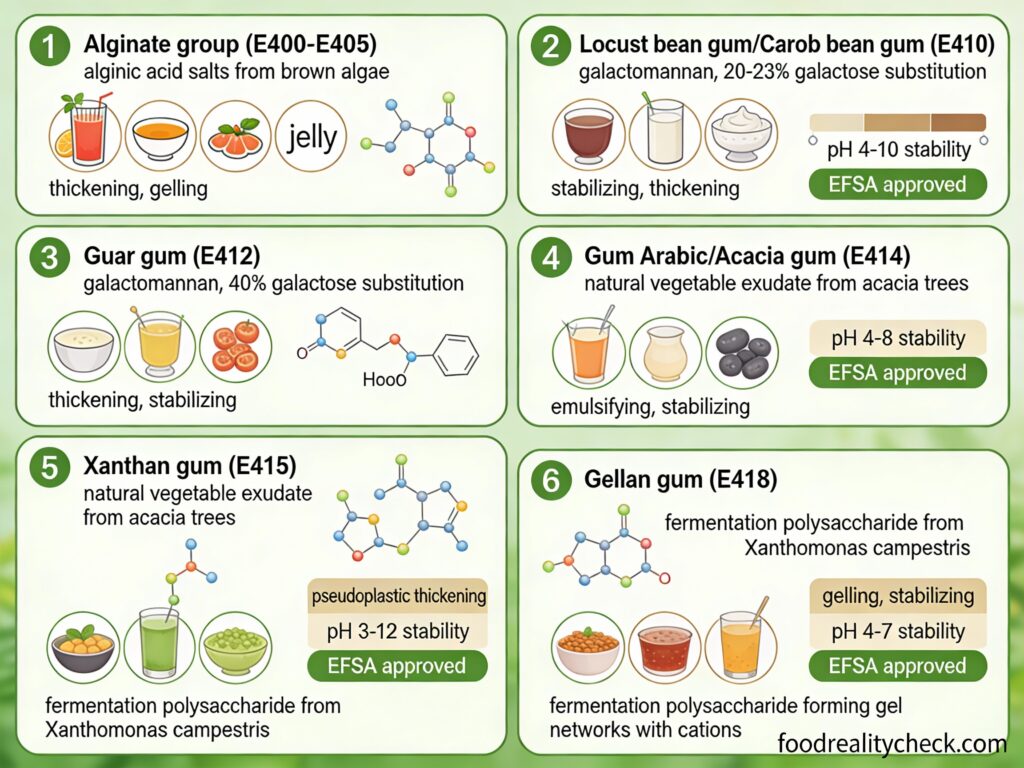
E400-E418 Natural Gums
Posted inE-Numbers & Additives

What is E400? – Complete guide to understanding Alginic Acid in your food

What is E400? Complete guide to understanding E400 (Alginic Acid) in your food The Quick Answer E400 is a naturally-derived polysaccharide (complex carbohydrate) extracted from brown seaweed that functions as…
Read More
Posted inE-Numbers & Additives

What is E465? – Complete guide to understanding ethyl methyl cellulose in your food

What is E465? Complete guide to understanding ethyl methyl cellulose in your food The Quick Answer E465 is ethyl methyl cellulose, a plant-based thickener and stabilizer derived from cellulose. It's…
Read More
what is e305
Posted inE-Numbers & Additives

What is E305? – Complete guide to understanding Ascorbyl Stearate in your food

What is E305? Complete guide to understanding E305 (Ascorbyl Stearate) in your food The Quick Answer E305 is a fat-soluble form of vitamin C created by chemically binding ascorbic acid…
Read More
what is e304
Posted inE-Numbers & Additives

What is E304? – Complete guide to understanding Ascorbyl Palmitate and Stearate in your food

What is E304? Complete guide to understanding E304 (Ascorbyl Palmitate and Stearate) in your food The Quick Answer E304 is a fat-soluble form of vitamin C created by chemically binding…
Read More
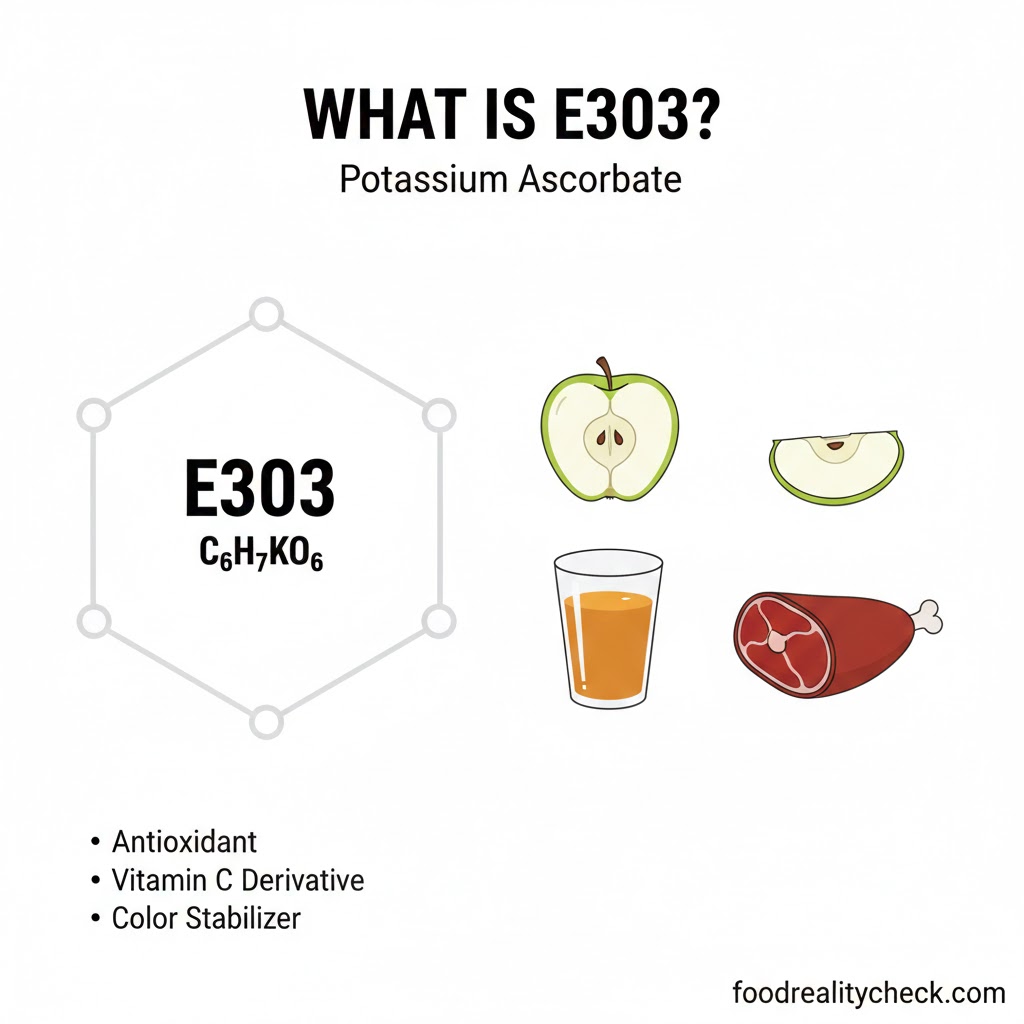
What is E303
Posted inE-Numbers & Additives

What is E303? – Complete guide to understanding Potassium Ascorbate in your food

What is E303? Complete guide to understanding E303 (Potassium Ascorbate) in your food The Quick Answer E303 is the potassium salt of vitamin C (ascorbic acid)—an essential nutrient that functions…
Read More
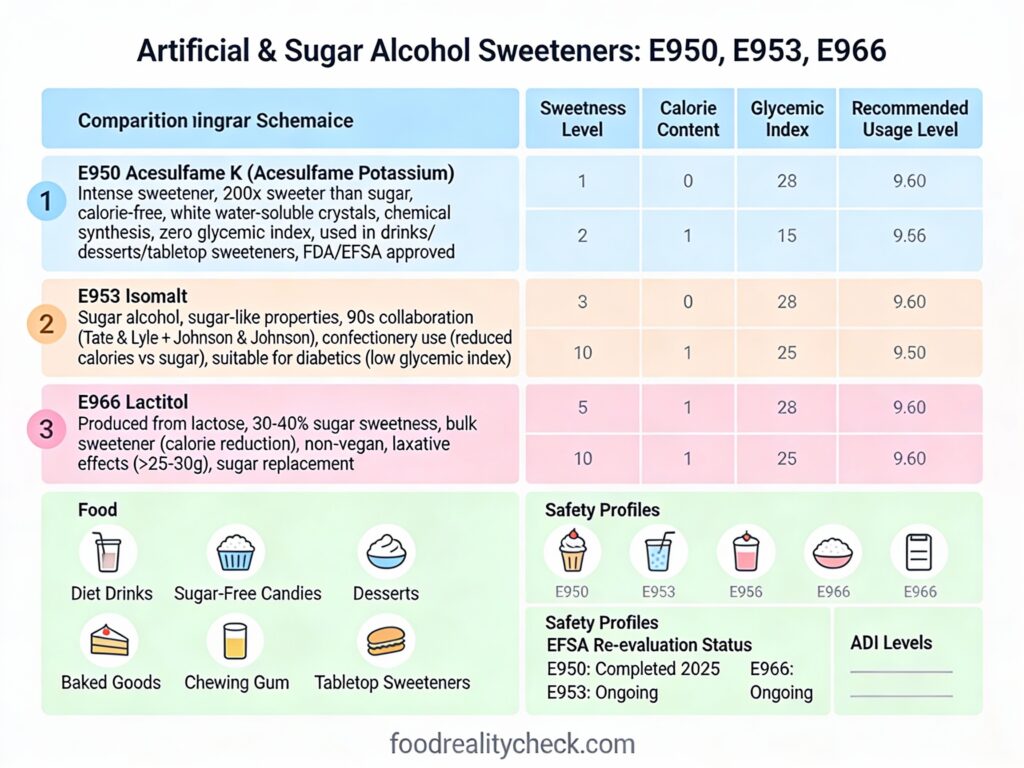
E950, E953, E966 - Sweeteners
Posted inE-Numbers & Additives

What is E950? – Complete guide to understanding Acesulfame Potassium in your food

What is E950? Complete guide to understanding E950 (Acesulfame Potassium) in your food The Quick Answer E950 is a synthetic artificial sweetener 200 times sweeter than sugar with zero calories,…
Read More
Posted inHow Food is Made

How Tuna Is Canned: Cooking, Packing & Sterilization

Tuna canning involves rapid freezing after catch, cooking, machine deboning, packing, and high-temperature sterilization—creating shelf-stable seafood products. Understanding tuna canning reveals complex preservation technology ensuring safety of protein-rich perishable seafood.…
Read More
Posted inHow Food is Made

How Coffee Roasts Develop: Light, Medium, Dark Roasts

Coffee roasting stages (light, medium, dark) represent progressive Maillard reaction development—each stage creates distinct flavor profiles by controlling reaction intensity and duration. Understanding roast stages reveals that coffee flavor is…
Read More
Posted inHow Food is Made

How Canned Fruit Is Made: Heating & Sealing

Canning preserves fruit by sterilizing through heat and creating hermetic seals—eliminating microbes while creating vacuum seals that prevent recontamination. Understanding canning mechanics reveals one of humanity's oldest and most reliable…
Read More

Posts pagination

Previous page 1 … 45 46 47 48 Next page
Advertise here

Recent Posts

  • High-Pressure Processing (HPP): The New Way to Preserve Seafood
  • How Palm Oil Is Made: Mechanical & Chemical Extraction
  • Fermented Salami: Ancient Technique Meets Modern Food Safety
  • What is E901? – Complete guide to understanding Beeswax – the natural glazing agent from honeybees
  • Soy Lecithin in Chocolate: Why It’s There & What It Does

Categories

  • E-Numbers & Additives
  • Emerging Tech
  • Food Safety & Health
  • How Food is Made
  • Meat & Seafood
  • Novel Products
  • Sweets & Baking
Resources
  • PROCESSING METHODS COMPARED: A Complete Guide to How Food Is Treated and What It Means for Your Health
  • INGREDIENT RED FLAGS CHECKLIST: A Shopper’s Guide to Avoiding Harmful Additives
  • MEAT GRADING & CERTIFICATION DECODER: The Complete Guide
  • HOW TO READ EU NUTRITION LABELS: The Complete Guide
  • ADDITIVES RISK LADDER: Your Visual Guide to Food Additive Safety Levels
  • E-Numbers Banned in the US but Legal in the EU
Hubs
  • E-Numbers & Additives Complete Guide
  • EMERGING TECH: The Complete Hub
  • FOOD SAFETY & HEALTH: The Complete Hub
  • HOW FOOD IS MADE: The Complete Hub
  • MEAT & SEAFOOD: The Complete Hub
  • NOVEL PRODUCTS: The Complete Hub
  • SWEETS & BAKING: The Complete Hub
  • Home
  • Blog
  • Disclaimer
  • Terms
  • Privacy Policy
  • Sitemap
Copyright 2026 — Food Reality Check. All rights reserved.
Scroll to Top