Skip to content

Food Reality Check

What Food Companies Don't Want You to Know

  • E-Numbers & Additives
  • How Food is Made
  • Food Safety & Health
  • Emerging Tech
  • Meat & Seafood
  • Sweets & Baking
  • Novel Products

Blog

  • Home
  • Blog
  • Page 17
Posted inSweets & Baking

Why Sourdough Takes 24 Hours: Fermentation Science Explained

Sourdough's distinctive flavor and digestibility come from extended fermentation (12-48+ hours), allowing slow-acting wild bacteria and yeast to transform dough. Understanding what happens during this time reveals why slow is…
Read More
Posted inSweets & Baking

How Commercial Yeast Is Made: From Brewer’s Waste to Baking

Commercial baker's yeast (Saccharomyces cerevisiae) is cultivated in large fermentation tanks, harvested, and processed into forms sold for baking. Understanding yeast production, from cultivation through drying or freezing, reveals why…
Read More
E133 - Brilliant Blue FCF
Posted inE-Numbers & Additives

What is E133? – Complete guide to understanding Brilliant Blue FCF in your food

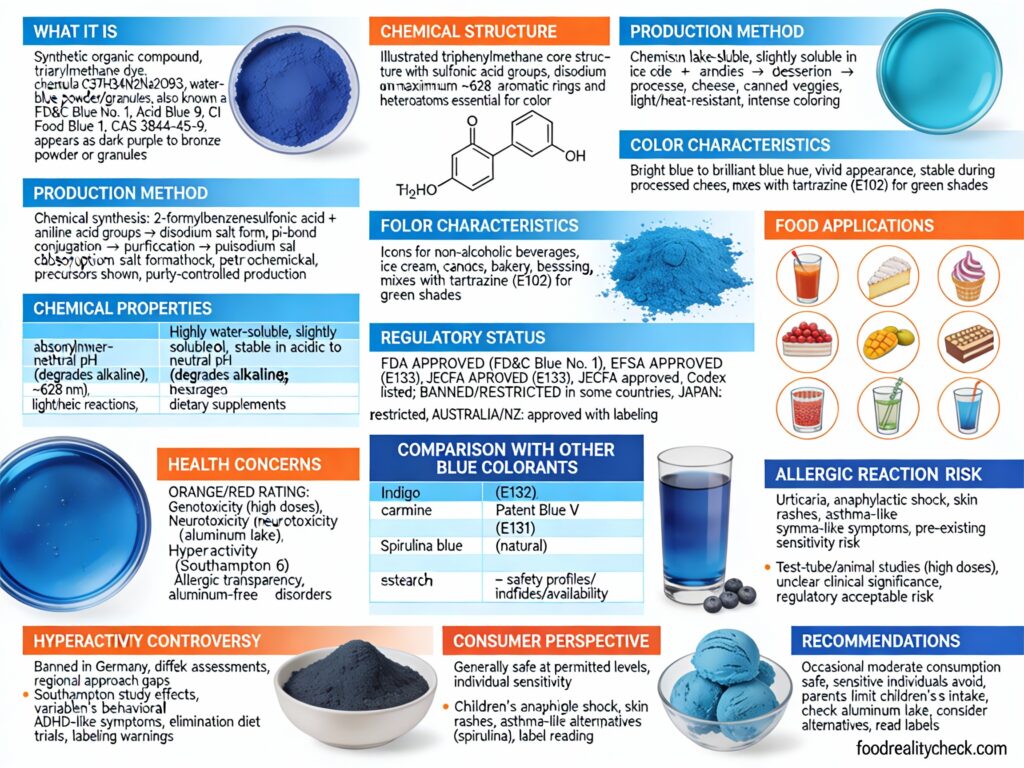
What is E133? Complete guide to understanding E133 (Brilliant Blue FCF) in your food The Quick Answer E133 is a synthetic bright blue triarylmethane dye used to color foods and…
Read More
Posted inSweets & Baking

Why Bread Dough Needs Oxidation: The Bleaching Agent Debate

Oxidation strengthens dough gluten, enabling better rise and crumb structure. Commercial bakers use bleaching agents (potassium bromate, ascorbic acid) to accelerate oxidation. Understanding what oxidation accomplishes, why it matters, and…
Read More
Posted inE-Numbers & Additives

What is E243? – Complete guide to understanding Ethyl Lauroyl Arginate

What is E243? Complete guide to understanding E243 (Ethyl Lauroyl Arginate) — a novel amino acid-based preservative with regulatory controversy ✅ Safety Status: E243 (Ethyl Lauroyl Arginate) is approved globally…
Read More
Posted inSweets & Baking

Why Bread Goes Stale: Retrogradation & Storage Science

Bread staling—loss of softness, increased crumbiness, and unpleasant texture—results from starch retrogradation and moisture loss. Understanding the chemistry behind staling and how storage conditions affect the process reveals why bread…
Read More
Posted inSweets & Baking

Whole Grain vs. Refined Flour: Nutrient Loss in Milling

Whole grain flour contains the entire wheat kernel (bran, germ, endosperm), while refined flour removes bran and germ, keeping only the starchy endosperm. Understanding what milling removes, nutrient loss, and…
Read More
Posted inSweets & Baking

Vanillin vs. Vanilla Extract: Natural, Synthetic & Beaver Glands

Vanilla flavoring comes from multiple sources: real vanilla extract (from vanilla orchid pods), synthetic vanillin (chemically identical to vanilla's primary flavor compound), and castoreum (from beaver glands). Understanding these sources,…
Read More
Posted inSweets & Baking

Why Fondant Isn’t Icing: Sugar Paste Chemistry Explained

Fondant is a sugar paste (sugar, water, corn syrup, gelatin) distinct from icing (powdered sugar, butter/liquid, flavorings). Understanding fondant's composition, crystal structure, and properties explains why it creates smooth finishes…
Read More
Posted inSweets & Baking

Why Buttercream Needs Fat: Emulsification in Frostings

Buttercream's smooth texture and ability to hold shape depend on emulsifying fat (butter, shortening) with water-based ingredients. Understanding emulsification, fat's role, and why excessive or insufficient fat creates problems reveals…
Read More

Posts pagination

Previous page 1 … 15 16 17 18 19 … 47 Next page

Recent Posts

  • What is E901? – Complete guide to understanding Beeswax – the natural glazing agent from honeybees
  • Soy Lecithin in Chocolate: Why It’s There & What It Does
  • Mono- & Diglycerides in Cake Mix: What Are They & Why?
  • How Is Maple Syrup Made? Complete Process Explained
  • How to Read Food Labels Like an Expert

Categories

  • E-Numbers & Additives
  • Emerging Tech
  • Food Safety & Health
  • How Food is Made
  • Meat & Seafood
  • Novel Products
  • Sweets & Baking
Resources
  • PROCESSING METHODS COMPARED: A Complete Guide to How Food Is Treated and What It Means for Your Health
  • INGREDIENT RED FLAGS CHECKLIST: A Shopper’s Guide to Avoiding Harmful Additives
  • MEAT GRADING & CERTIFICATION DECODER: The Complete Guide
  • HOW TO READ EU NUTRITION LABELS: The Complete Guide
  • ADDITIVES RISK LADDER: Your Visual Guide to Food Additive Safety Levels
  • E-Numbers Banned in the US but Legal in the EU
Hubs
  • E-Numbers & Additives Complete Guide
  • EMERGING TECH: The Complete Hub
  • FOOD SAFETY & HEALTH: The Complete Hub
  • HOW FOOD IS MADE: The Complete Hub
  • MEAT & SEAFOOD: The Complete Hub
  • NOVEL PRODUCTS: The Complete Hub
  • SWEETS & BAKING: The Complete Hub
  • Home
  • Blog
  • Disclaimer
  • Terms
  • Privacy Policy
  • Sitemap
Copyright 2026 — Food Reality Check. All rights reserved.
Scroll to Top