Skip to content

Food Reality Check

What Food Companies Don't Want You to Know

  • E-Numbers & Additives
  • How Food is Made
  • Food Safety & Health
  • Emerging Tech
  • Meat & Seafood
  • Sweets & Baking
  • Novel Products

Blog

  • Home
  • Blog
  • Page 18
Posted inE-Numbers & Additives

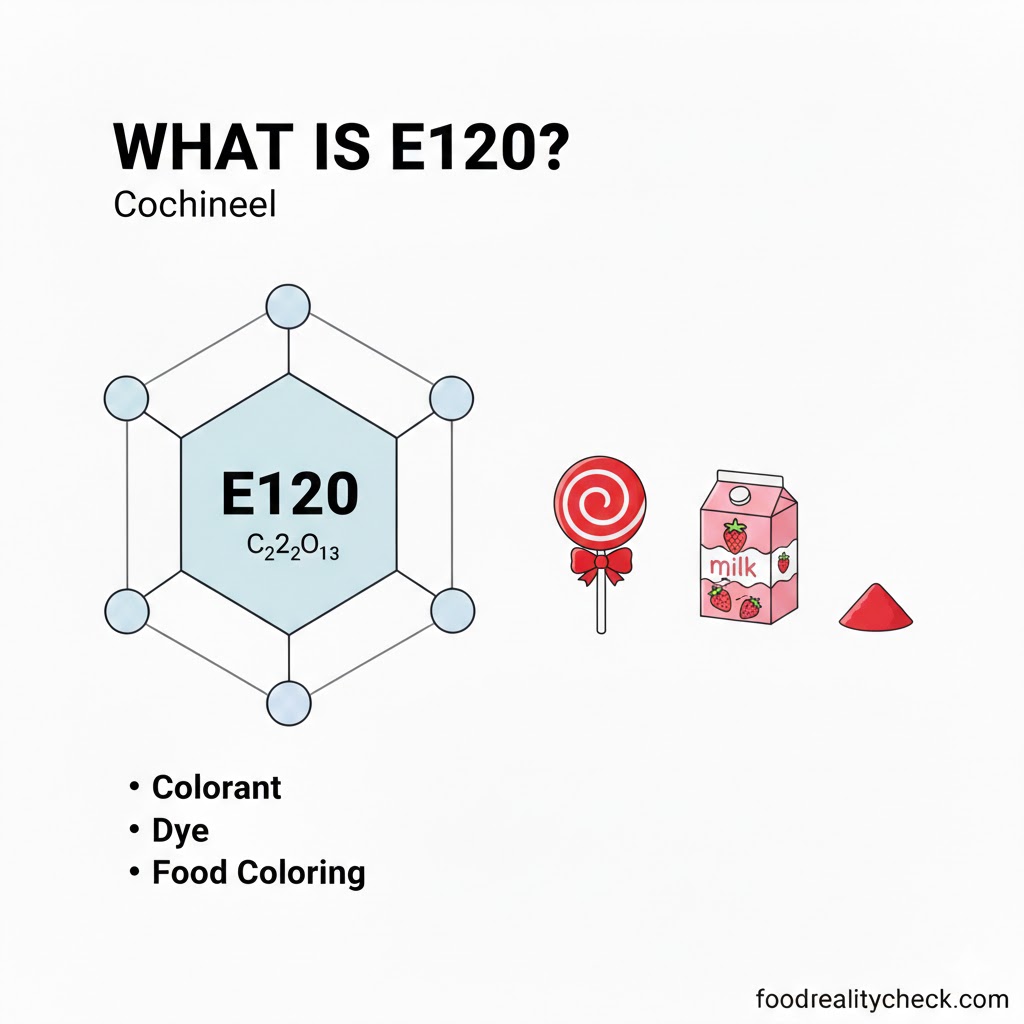
What is E120? – Complete guide to understanding Carmine/Cochineal in your food

What is E120? Complete guide to understanding E120 (Carmine/Cochineal) in your food The Quick Answer E120 is a natural deep red colorant extracted from female cochineal insects. It's used in…
Read More
Posted inSweets & Baking

What’s “Cake Improver”? Enzymes & Additives in Commercial Baking

"Cake improver" or "dough conditioner" is a blend of enzymes, emulsifiers, and other additives designed to enhance cake volume, crumb structure, and shelf life. Understanding the components and their functions…
Read More
Posted inSweets & Baking

Cross-Contamination: Why Nut Traces Are in Chocolate Factories

Cross-contamination occurs when allergens (nuts, sesame, milk) transfer from one product to another through shared equipment, surfaces, or airborne particles. Understanding contamination routes, why complete prevention is difficult, and labeling…
Read More
Posted inSweets & Baking

Why Sesame Is Now a Major Allergen in Baked Goods

Sesame recently joined the list of major food allergens in the USA, EU, and other regions. Understanding sesame's allergen properties, where it hides in foods, cross-contamination risks, and labeling changes…
Read More
Posted inSweets & Baking

Milk Protein in Dark Chocolate: Why “Dairy-Free” Labels Matter

Dark chocolate often contains trace milk proteins despite lacking milk ingredients, resulting from cross-contamination in shared facilities. Understanding how milk contamination occurs, what "dairy-free" labeling means, and detection limits reveals…
Read More
Posted inE-Numbers & Additives

What is E1505? – Complete guide to understanding triethyl citrate in your food

What is E1505? Complete guide to understanding triethyl citrate in your food The Quick Answer E1505 is triethyl citrate, a food additive used in Europe. It's used in food to…
Read More
Posted inE-Numbers & Additives

What is E123? – Complete guide to understanding Amaranth in your food

What is E123? Complete guide to understanding E123 (Amaranth) in your food The Quick Answer E123 is a synthetic red azo dye used to color foods deep red. It was…
Read More
Posted inSweets & Baking

Is Honey Better Than Sugar? Fructose vs. Glucose Metabolism

Honey and sugar both contain fructose and glucose, but in different ratios. Understanding how the body metabolizes fructose versus glucose reveals why honey has no significant metabolic advantage over sugar…
Read More
Posted inSweets & Baking

Resistant Starch in Whole Grain Bread: Why It’s Better for Blood Sugar

Resistant starch is a form of starch that resists digestion, acting more like fiber than conventional starch. Whole grain bread contains more resistant starch than refined bread, resulting in better…
Read More
Posted inSweets & Baking

Allulose: The “Rare Sugar” That Tastes Like Sugar But Isn’t Metabolized

Allulose is a sugar alcohol that structurally resembles glucose but the body cannot metabolize it for energy. It provides approximately 90% of sugar's sweetness with 10% of the calories, without…
Read More

Posts pagination

Previous page 1 … 16 17 18 19 20 … 47 Next page

Recent Posts

  • What is E901? – Complete guide to understanding Beeswax – the natural glazing agent from honeybees
  • Soy Lecithin in Chocolate: Why It’s There & What It Does
  • Mono- & Diglycerides in Cake Mix: What Are They & Why?
  • How Is Maple Syrup Made? Complete Process Explained
  • How to Read Food Labels Like an Expert

Categories

  • E-Numbers & Additives
  • Emerging Tech
  • Food Safety & Health
  • How Food is Made
  • Meat & Seafood
  • Novel Products
  • Sweets & Baking
Resources
  • PROCESSING METHODS COMPARED: A Complete Guide to How Food Is Treated and What It Means for Your Health
  • INGREDIENT RED FLAGS CHECKLIST: A Shopper’s Guide to Avoiding Harmful Additives
  • MEAT GRADING & CERTIFICATION DECODER: The Complete Guide
  • HOW TO READ EU NUTRITION LABELS: The Complete Guide
  • ADDITIVES RISK LADDER: Your Visual Guide to Food Additive Safety Levels
  • E-Numbers Banned in the US but Legal in the EU
Hubs
  • E-Numbers & Additives Complete Guide
  • EMERGING TECH: The Complete Hub
  • FOOD SAFETY & HEALTH: The Complete Hub
  • HOW FOOD IS MADE: The Complete Hub
  • MEAT & SEAFOOD: The Complete Hub
  • NOVEL PRODUCTS: The Complete Hub
  • SWEETS & BAKING: The Complete Hub
  • Home
  • Blog
  • Disclaimer
  • Terms
  • Privacy Policy
  • Sitemap
Copyright 2026 — Food Reality Check. All rights reserved.
Scroll to Top