Skip to content
Food Reality Check

What Food Companies Don't Want You to Know

  • E-Numbers & Additives
  • How Food is Made
  • Food Safety & Health
  • Emerging Tech
  • Meat & Seafood
  • Sweets & Baking
  • Novel Products

Sweets & Baking

  • Home
  • Blog
  • Sweets & Baking
Posted inSweets & Baking

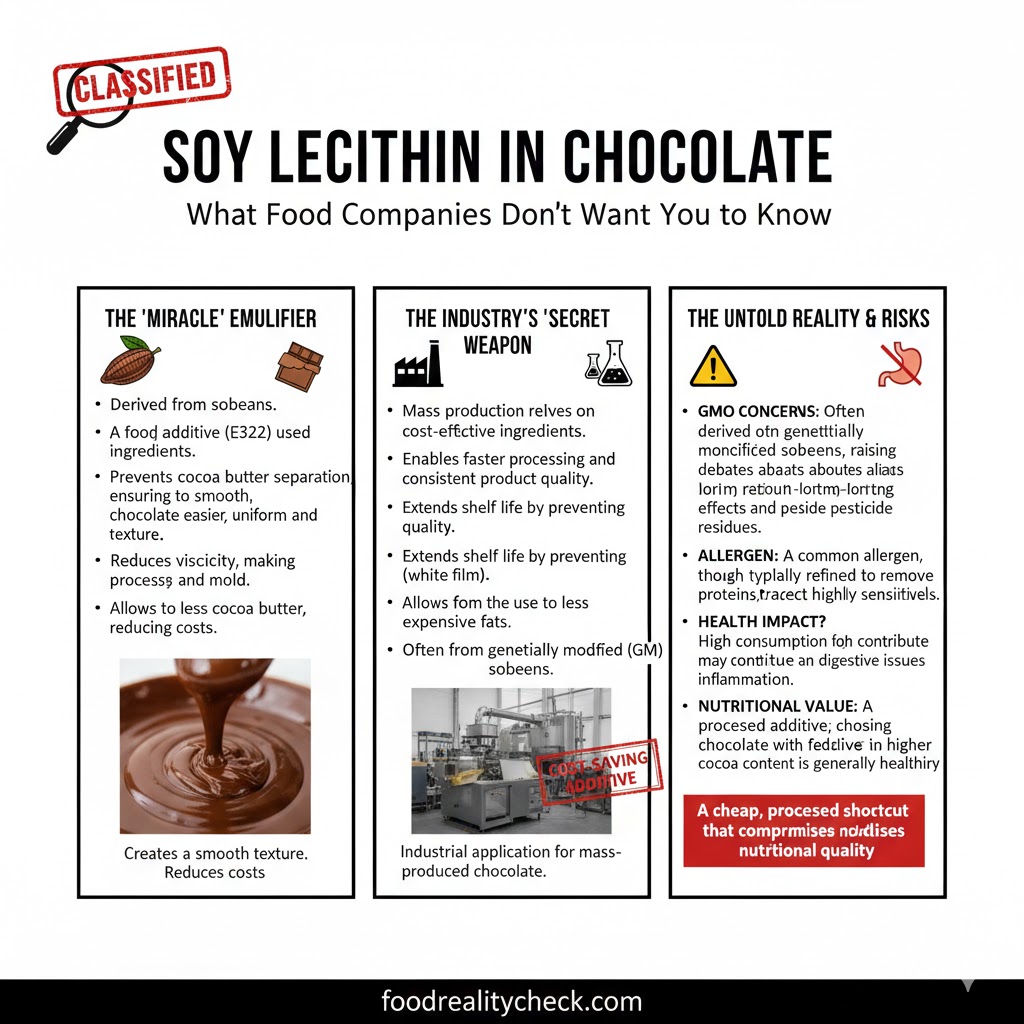
Soy Lecithin in Chocolate: Why It’s There & What It Does

Soy lecithin—a natural emulsifier—reduces chocolate viscosity and improves flow properties without adding fat. Understanding lecithin's emulsifying mechanism explains why it's essential in commercial chocolate and why premium chocolates typically use…
Read More
Posted inSweets & Baking

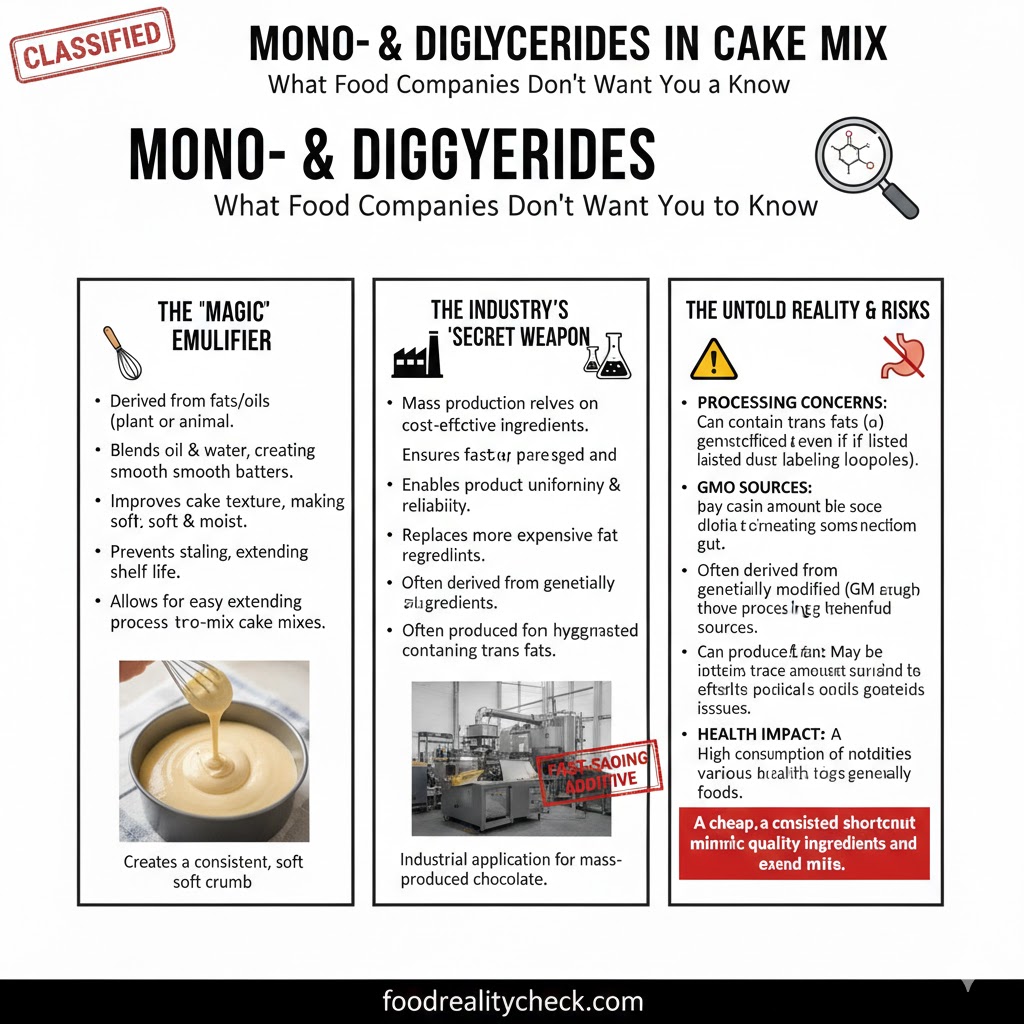
Mono- & Diglycerides in Cake Mix: What Are They & Why?

Mono- and diglycerides are emulsifiers derived from fats or oils, used in cake mixes to improve batter stability, increase volume, and create finer crumb structure. Understanding their emulsifying function explains…
Read More
cookies
Posted inSweets & Baking

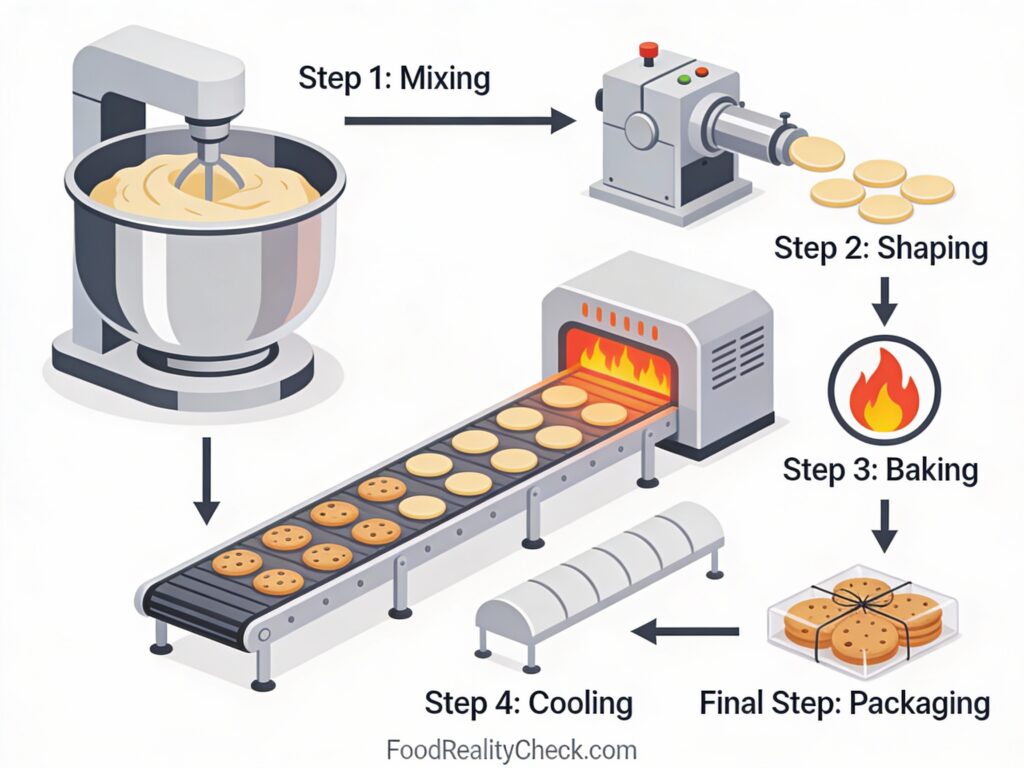
How Are Cookies Made? Complete Process Explained

How Are Cookies Made? From flour and butter to bakery shelves through mixing, shaping, and precise baking. The Overview Cookies are made by combining flour, fat (butter or oil), sugar,…
Read More
Posted inSweets & Baking

Can Chocolate Go Moldy? Mold Risk in Cocoa Products

Chocolate is relatively resistant to mold due to low water content and lack of natural nutrients, but prolonged storage in high-humidity conditions creates mold risk. Understanding when chocolate is vulnerable…
Read More
Posted inSweets & Baking

Xanthan Gum in Gluten-Free Baking: How It Replaces Gluten Structure

Xanthan gum—a bacterial polysaccharide—mimics gluten's structural properties in gluten-free baking, creating elasticity, moisture retention, and texture similar to wheat-based products. Understanding xanthan gum's chemistry and proper usage explains why gluten-free…
Read More
Posted inSweets & Baking

How Is Candy Made? Complete Process Explained

How Is Candy Made? From sugar syrup to sweet treats through cooking, molding, and precise temperature control. The Overview Candy encompasses diverse confections—hard candy, chocolate, gummies, taffy—each made through different…
Read More
Posted inSweets & Baking

How Yeast Ferments Dough: The Biology Behind Rising Bread

Bread dough rises through yeast fermentation—living microorganisms consuming sugars and producing carbon dioxide and alcohol. Understanding this biology explains why fermentation time matters, why temperature control is critical, and why…
Read More
Posted inSweets & Baking

Cream of Tartar in Baking: What It Is & Why It Stabilizes Egg Whites

Cream of tartar (potassium bitartrate) is an acid byproduct of wine production with multiple baking applications: stabilizing whipped egg whites, activating baking soda, and adjusting pH in recipes. Understanding its…
Read More
Posted inSweets & Baking

Why Does Baking Powder Work Twice? Understanding Double-Acting Formulas

Double-acting baking powder contains two different acids that activate at different temperatures, providing leavening at two distinct stages: when liquid is added, and again during baking. This two-stage process gives…
Read More
Posted inSweets & Baking

Is Aluminum in Baking Powder Dangerous? Dose & Safety Data

Some baking powders contain aluminum compounds (sodium aluminum sulfate) as acids. Concerns about dietary aluminum are widespread but based more on precaution than established health risk. Understanding aluminum sources, exposure…
Read More

Posts pagination

1 2 3 … 5 Next page

Recent Posts

  • What is E901? – Complete guide to understanding Beeswax – the natural glazing agent from honeybees
  • Soy Lecithin in Chocolate: Why It’s There & What It Does
  • Mono- & Diglycerides in Cake Mix: What Are They & Why?
  • How Is Maple Syrup Made? Complete Process Explained
  • How to Read Food Labels Like an Expert

Categories

  • E-Numbers & Additives
  • Emerging Tech
  • Food Safety & Health
  • How Food is Made
  • Meat & Seafood
  • Novel Products
  • Sweets & Baking
Resources
  • PROCESSING METHODS COMPARED: A Complete Guide to How Food Is Treated and What It Means for Your Health
  • INGREDIENT RED FLAGS CHECKLIST: A Shopper’s Guide to Avoiding Harmful Additives
  • MEAT GRADING & CERTIFICATION DECODER: The Complete Guide
  • HOW TO READ EU NUTRITION LABELS: The Complete Guide
  • ADDITIVES RISK LADDER: Your Visual Guide to Food Additive Safety Levels
  • E-Numbers Banned in the US but Legal in the EU
Hubs
  • E-Numbers & Additives Complete Guide
  • EMERGING TECH: The Complete Hub
  • FOOD SAFETY & HEALTH: The Complete Hub
  • HOW FOOD IS MADE: The Complete Hub
  • MEAT & SEAFOOD: The Complete Hub
  • NOVEL PRODUCTS: The Complete Hub
  • SWEETS & BAKING: The Complete Hub
  • Home
  • Blog
  • Disclaimer
  • Terms
  • Privacy Policy
  • Sitemap
Copyright 2026 — Food Reality Check. All rights reserved.
Scroll to Top