Natural Additives vs Synthetic Additives
Which one is better?
The Quick Answer
It depends on whether you prioritize a short, “clean-label” ingredient list and consumer perception, or maximum shelf life, cost-efficiency, and performance in processed foods.
Natural additives are better for products that target health-conscious or organic shoppers who value minimally processed, recognizable ingredients and are willing to pay a bit more.
Synthetic additives are better for large-scale manufacturing where long shelf life, consistent color or flavor, and lower production costs are critical.
Natural Additives — The Details
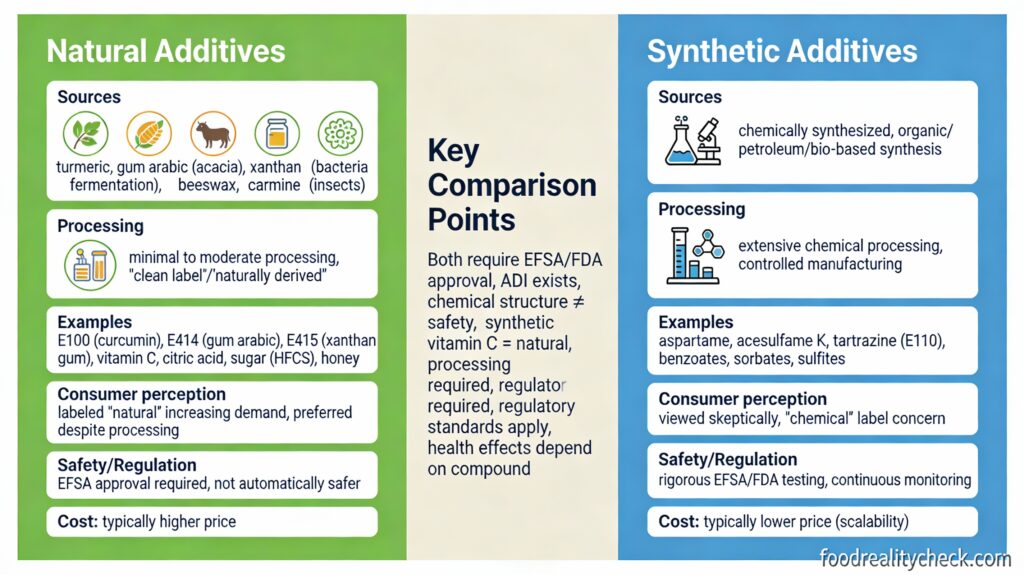
What it is: Natural food additives are substances used to color, preserve, thicken, or flavor food that are directly derived from plants, animals, or minerals with relatively minimal processing.
Made from: Common examples include beet juice or paprika extract for color, rosemary extract or tocopherols for preservation, and pectin or agar for gelling and thickening.
Best for: Branding that emphasizes “natural” or organic, shorter supply chains, and products where a slightly shorter shelf life is acceptable in exchange for a cleaner label.
Cost: Typically more expensive because they depend on agricultural production, variable harvests, and more complex extraction steps.
Synthetic Additives — The Details
What it is: Synthetic food additives are chemically synthesized substances not normally found in foods in their manufactured form, designed to mimic or enhance the effects of natural additives.
Made from: Often produced from petrochemical or other industrial chemical feedstocks and precisely formulated to deliver specific color, flavor, preservation, or textural functions.
Best for: Ultra-processed or shelf-stable foods needing long storage, uniform appearance and taste across batches, and lower ingredient costs at industrial scale.
Cost: Generally cheaper and more predictable in price, with high stability and efficiency that reduce waste and manufacturing losses.
Head-to-Head Comparison
| Factor | Natural Additives | Synthetic Additives |
|---|---|---|
| Safety | Regulated and generally recognized as safe at approved doses, but “natural” does not automatically mean risk-free or non-allergenic. | Strictly regulated; strong toxicological data, but some synthetic chemicals are under scrutiny for possible long-term health effects. |
| Effectiveness | Can offer added nutritional or functional benefits (e.g., natural antioxidants or fibers), but may be less powerful per gram than synthetic versions in some uses. | Highly effective for color, preservation, and texture; often more potent and consistent but usually chosen for technological performance rather than added nutrition. |
| Cost | Usually higher ingredient cost, which can raise final product price. | Typically cheaper per unit of function and better for tight-margin, high-volume products. |
| Taste Impact | May contribute more complex or variable flavors and colors that change with seasons or source. | Designed for neutral or highly controlled flavor and color impact, giving very consistent results. |
| Shelf Life | Can extend shelf life, but often less than synthetic preservatives; better suited to moderately shelf-stable or chilled products. | Usually provide the longest shelf life and highest stability, especially in ultra-processed foods and challenging storage conditions. |
Pros & Cons
Natural Additives:
✓ Align with “clean-label” and organic positioning, which many consumers associate with better health and transparency.
✓ Often come with additional plant compounds such as antioxidants or fibers that may support a more wholesome image.
✗ Higher cost, more variability, and generally shorter shelf life compared with synthetic options.
Synthetic Additives:
✓ Lower cost, strong stability, and very consistent performance in industrial processing and distribution.
✓ Enable vibrant colors, intense flavors, and long shelf life that help maintain food quality and reduce spoilage.
✗ Public perception is often negative, and some synthetic chemicals are being investigated for possible links to chronic disease with long-term, high exposure.
🏆 The VerdictNatural additives win if your priority is consumer trust, simple ingredient lists, and alignment with organic or minimally processed branding, even at a higher price and with somewhat shorter shelf life.
Synthetic additives win if you need long-lasting, visually appealing products with tight cost control and highly consistent performance across large batches.
For most people, a balanced approach makes sense: focus on overall diet quality, choose products with shorter ingredient lists when possible, and remember that both natural and synthetic additives approved by regulators are considered safe at normal intake levels.