What is E214?
Complete guide to understanding E214 (Ethyl p-hydroxybenzoate/Ethylparaben) in your food
The Quick Answer
E214 is ethyl p-hydroxybenzoate (ethylparaben), a synthetic preservative from the paraben family used to inhibit growth of mold, yeast, and some bacteria in foods and cosmetics.
It’s used to extend shelf life and prevent spoilage in baked goods, dairy products, beverages, processed meats, and confectionery—functioning as a broad-spectrum antimicrobial with a similar safety profile to other approved parabens.
Most people consuming processed foods occasionally encounter E214, though it remains largely invisible—functioning as a preservative with official regulatory approval but facing ongoing consumer concerns about potential endocrine disruption and cumulative paraben exposure, similar to other parabens in the E218-E219 range discussed earlier.
📌 Quick Facts
- Category: Synthetic Preservative, Paraben Family, Antimicrobial Agent
- Source: Fully synthetic—ethyl ester of 4-hydroxybenzoic acid (paraben family)
- Found in: Baked goods, dairy products, beverages, processed meats, confectionery, cosmetics
- Safety: FDA approved; EFSA approved; JECFA approved; part of paraben group with GROUP ADI restrictions
- Natural or Synthetic: Fully synthetic (though similar compounds occur naturally in berries)
- Vegan/Vegetarian: Yes
- Key Concern: Part of controversial paraben family; potential endocrine disruption; cumulative exposure concerns; phasing out in some applications despite regulatory approval
- Chemical Formula: C₉H₁₀O₃; ethyl ester of 4-hydroxybenzoic acid
The Critical Context
E214 ethylparaben is part of the paraben family (E218-E219 methylparaben, E214 ethylparaben, E216-E217 propylparaben, E214 discussed here) that we covered earlier regarding E219 (methylparaben sodium). E214 faces similar safety concerns and regulatory scrutiny as other parabens—characterized by potential endocrine disruption, cumulative exposure concerns, and industry phase-out despite continued regulatory approval. E214 is less commonly discussed than methylparaben (E219) and propylparaben (E216) but presents identical safety considerations.
What Exactly Is It?
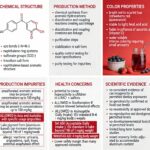
E214 is ethyl p-hydroxybenzoate (ethylparaben), the ethyl ester of 4-hydroxybenzoic acid with molecular formula C₉H₁₀O₃ and molecular weight of 166.17 g/mol.
E214 is a member of the paraben family—organic compounds consisting of 4-hydroxybenzoic acid with different alkyl ester chains attached. The ethyl group (C₂H₅) makes E214 the second-smallest paraben (after methylparaben E218, which has a methyl group). Like all parabens, E214 is created through esterification of 4-hydroxybenzoic acid with ethanol.
Physically, E214 appears as a white crystalline powder. It is slightly soluble in water (approximately 0.2 g/100 mL at 20°C) and soluble in alcohols and oils. This solubility profile allows use in water-based and oil-based food formulations. The compound is heat-stable and maintains preservative activity across wide pH ranges (pH 3-8).
Chemically, E214 functions similarly to all parabens: it enters microbial cells and disrupts cellular processes by inhibiting DNA/RNA synthesis or disrupting metabolic enzymes. The antimicrobial spectrum increases with increasing chain length among parabens—ethylparaben (E214) is more effective than methylparaben (E218) but less effective than propylparaben (E216).
Where You’ll Find It
E214 appears in a wide range of foods and beverages:
• Baked goods (bread, cakes, pastries, biscuits)
• Dairy products (cheese, yogurt, milk products)
• Beverages (soft drinks, fruit juices)
• Processed meats (sausages, cured meats, deli products)
• Confectionery (candies, jams, preserves)
• Seafood products
• Sauces and condiments
• Prepared meals and ready-to-eat foods
• Food supplements
• Cosmetics (creams, lotions, shampoos)
• Pharmaceuticals (tablets, creams, lotions)
• Personal care products
E214 is less commonly used in foods compared to methylparaben (E218) and propylparaben (E216), reflecting its intermediate antimicrobial potency and regulatory classification in some markets.
Why Do Food Companies Use It?
E214 performs one critical function similar to other parabens:
Broad-spectrum antimicrobial preservation: E214 inhibits mold, yeast, and some bacteria growth—extending shelf life and preventing spoilage. The compound functions across wide pH ranges, making it useful in diverse food formulations. However, E214 is being phased out in many applications despite regulatory approval, as manufacturers shift toward “paraben-free” positioning and alternative preservatives.
Why it’s used less than methylparaben (E219) and propylparaben (E216): E214 has intermediate antimicrobial potency between methylparaben (least potent) and propylparaben (most potent). Manufacturers often select methylparaben for cost reasons or propylparaben for better efficacy, leaving E214 in a middle position with less clear competitive advantage.
Is It Safe?
E214’s safety status is officially approved but faces similar concerns as other parabens—endocrine disruption potential and cumulative exposure concerns, despite regulatory assertions of safety at approved levels.
Regulatory Status:
• FDA (USA): Approved as indirect food additive (similar to E219)
• EFSA (Europe): Approved as direct food additive (E214); part of paraben group with combined restrictions
• JECFA (WHO/FAO): Approved; ADI established for paraben group
⚠️ IDENTICAL CONCERNS TO OTHER PARABENS—ENDOCRINE DISRUPTION POTENTIAL: E214 faces identical concerns as E219 (methylparaben sodium) and other parabens:
• Estrogenic activity documented: Research demonstrates E214 can bind to estrogen receptors, potentially mimicking estrogen activity in the body
• Endocrine disruption concern: Debate about whether food-level exposure creates meaningful endocrine-active levels, with regulatory agencies arguing exposure is negligible
• Tissue bioaccumulation: Some research suggests potential accumulation in tissues with chronic exposure, though absorption/excretion studies suggest limited accumulation
• Cumulative exposure uncertainty: Combined exposure from foods, cosmetics, and pharmaceuticals may approach or exceed safe levels for some populations
• Regulatory approval vs. consumer concern: Official approval persists despite documented estrogenic binding and consumer distrust
• Industry phase-out: Despite regulatory approval, manufacturers voluntarily shift to “paraben-free” positioning, indicating recognition of consumer concerns independent of regulatory action
Documented findings for parabens (E214 shares same properties):
• Estrogenic binding: Documented in vitro; mechanism understood but human relevance at food levels debated
• Allergenicity: Rare but documented; paraben allergy rates 0.6-0.8% (lower than some alternatives)
• Acute toxicity: Very low; no documented acute toxic effects at food levels
• Carcinogenicity: Not demonstrated at food-use levels; no evidence of direct carcinogenic potential
• Reproductive effects: No demonstrated reproductive toxicity at food-use levels; concerns raised about endocrine activity
• Developmental effects: No demonstrated developmental toxicity; concerns about potential endocrine effects during critical windows
Paraben Family Context
E214 ethylparaben is one of several parabens in the E-number system:
• E218 (Methylparaben): Smallest paraben; least antimicrobially potent; most commonly used; lowest cost
• E219 (Sodium methylparaben): Sodium salt of methylparaben; water-soluble form
• E214 (Ethylparaben): Intermediate potency; middle-sized alkyl chain; less commonly used
• E215 (Sodium ethylparaben): Sodium salt of ethylparaben; water-soluble form
• E216 (Propylparaben): Larger alkyl chain; highest antimicrobial potency; most frequently used for stronger antimicrobial effect
• E217 (Sodium propylparaben): Sodium salt of propylparaben; water-soluble form
All share identical safety concerns; propylparaben (E216) shows strongest estrogenic effects and highest regulatory restriction (concentrations reduced from 0.4% to 0.19% for propyl and butyl parabens).
Production Method
E214 ethylparaben is produced through chemical synthesis:
1. 4-Hydroxybenzoic acid is synthesized or sourced (typically from petroleum-derived precursors)
2. The carboxylic acid group (-COOH) is esterified with ethanol under acidic catalysis, creating ethyl ester (ethylparaben)
3. The product is crystallized, filtered, and dried
4. The final product is purified and standardized for purity
All production is fully synthetic—no natural extraction. While paraben structures occur in trace amounts in some natural products, commercial E214 is entirely synthetically produced.
Natural vs Synthetic Version
E214 is fully synthetic—there is no natural version.
While paraben-like structures occur naturally in trace amounts in some berries and natural products, commercial food-grade E214 is entirely synthetically produced. All E214 is created through chemical synthesis.
Regulatory Trend—Declining Use Despite Approval
Like E219 (methylparaben), E214 faces declining use despite continued regulatory approval:
EFSA reduced maximum safe concentrations for propyl and butylparabens in 2010 (from 0.4% to 0.19%) based on emerging safety evidence. While E214 concentrations were not reduced, the trend reflects regulatory acknowledgment of paraben concerns. Industry-wide shift to “paraben-free” marketing, even in jurisdictions where parabens remain approved, indicates market-driven safety preference independent of regulatory action.
Environmental and Sustainability
E214 ethylparaben production through chemical synthesis carries environmental costs. The compound is partially biodegradable but can persist in some environmental contexts. Environmental impact is similar to other synthetic parabens—moderate concern compared to more persistent contaminants but not trivial.
Natural Alternatives
Want to avoid E214? Alternatives for food preservation include:
• E234 (Nisin): Natural bacteriocin; excellent safety; antibacterial focus
• E235 (Natamycin): Natural antifungal; good safety; antifungal focus
• Sorbic acid/E200-E202: Broader spectrum; different mechanism; increasingly preferred
• Benzoic acid/E210-E212: Similar to E214 in function; different family; different regulatory considerations
• Essential oils: Natural antimicrobials; variable efficacy; sensory impact
• No chemical preservative: Accept shorter shelf life; faster distribution models
Consumer Actions to Minimize E214 Exposure
For consumers concerned about paraben exposure (similar to E219 concerns):
• Choose “paraben-free” products explicitly (manufacturer positioning indicates E214 avoidance)
• Select foods preserved with sorbates, benzoates, or natural preservatives instead
• Reduce processed food consumption generally (reduces cumulative paraben exposure)
• Limit cosmetic use (significant paraben exposure source; food is secondary source)
• Understand that paraben-free alternatives may use less proven preservatives—accept trade-offs
• Support manufacturers transparent about paraben presence and amounts
The Bottom Line
E214 (ethyl p-hydroxybenzoate/ethylparaben) is a fully synthetic preservative approved by FDA, EFSA, and JECFA but faces identical safety concerns as other parabens—potential endocrine disruption through estrogenic binding, cumulative exposure concerns, and industry phase-out despite continued regulatory approval.
E214 is the ethyl ester of 4-hydroxybenzoic acid, functioning as a broad-spectrum antimicrobial preservative with intermediate potency among the paraben family. It inhibits mold, yeast, and some bacteria across wide pH ranges, extending shelf life in baked goods, dairy products, beverages, and processed foods.
The critical distinction of E214 is its position within the controversial paraben family. While officially approved and considered safe at food-use levels by regulatory agencies, documented estrogenic binding activity, combined with cumulative exposure from multiple sources (food, cosmetics, pharmaceuticals), has driven industry-wide voluntary phase-out and “paraben-free” marketing—even in jurisdictions where E214 remains approved.
E214 has intermediate antimicrobial potency among parabens—more effective than methylparaben (E218) but less effective than propylparaben (E216). This intermediate position has reduced competitive advantage compared to other parabens, explaining lower usage prevalence.
Like other parabens, E214 is metabolized and excreted without significant systemic accumulation at food-use levels. Paraben allergy rates (0.6-0.8%) are lower than many alternative preservatives, providing documented advantage in allergenicity terms.
For consumers, E214 represents the same paraben family concerns as E219 (methylparaben sodium) discussed earlier—officially approved but with documented potential for endocrine disruption that distinguishes parabens from most other additives. The market-driven shift to “paraben-free” indicates that manufacturers and consumers increasingly question paraben safety independent of regulatory approval.