The Quick Answer
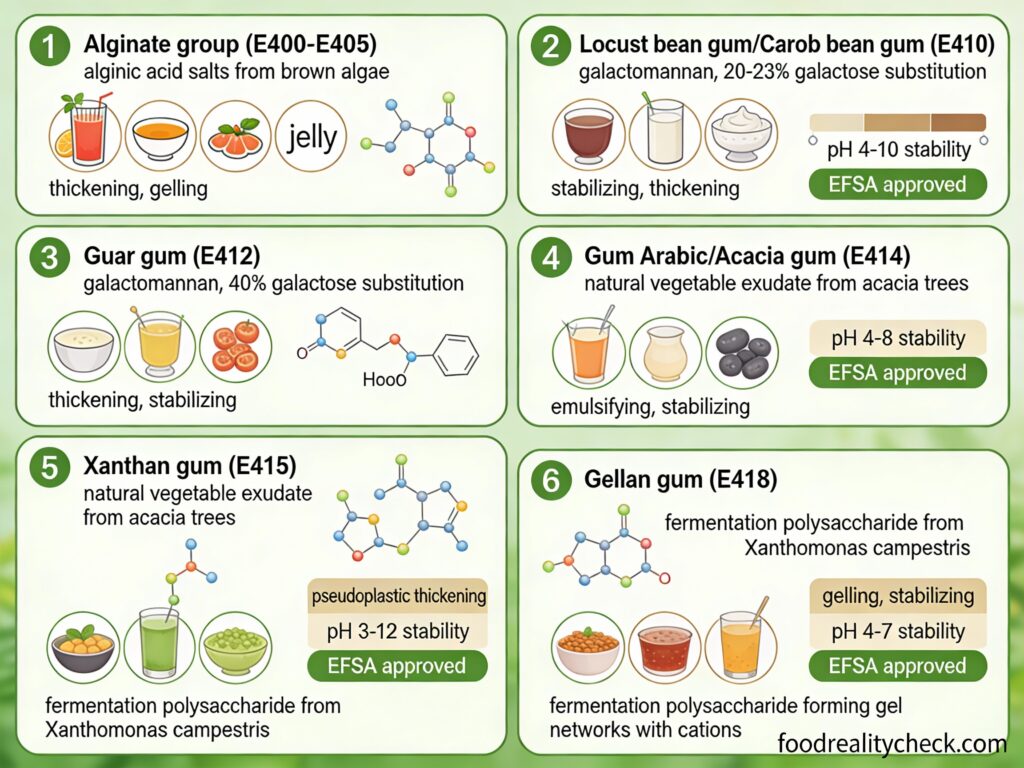
E410 is locust bean gum—also called carob gum or carob bean gum—a natural thickener and stabilizer extracted from the seeds of the carob tree (Ceratonia siliqua). It’s a soluble dietary fiber used in thousands of processed foods to create smooth, stable textures.
Unlike controversial additives, locust bean gum is a genuinely safe, natural plant-based ingredient that may provide digestive health benefits through prebiotic effects and soluble fiber content.
It’s vegan, vegetarian, gluten-free, and has been approved by all major food safety authorities worldwide with an excellent safety record.
📌 Quick Facts
- Category: Thickener, stabilizer, gelling agent, texturizer, dietary fiber
- Source: Seeds of the carob tree (Ceratonia siliqua)—natural plant source
- Found in: Ice cream, yogurt, salad dressings, sauces, mayonnaise, frozen foods, dairy products, soups, meat products
- Safety Status: FDA GRAS approved, EFSA approved, ADI “Not Specified” (highest safety rating)
- Dietary Status: 100% vegan, vegetarian, gluten-free, kosher, non-GMO, suitable for all major diets
- Chemical Name: Galactomannan (a polymer of galactose and mannose sugars)
- Controversy Level: NONE—universally considered safe and beneficial
- Health Potential: May support digestive health, prebiotic effects, blood sugar regulation, weight management
What Exactly Is Locust Bean Gum?
Locust bean gum is a galactomannan—a polysaccharide (complex carbohydrate) polymer of galactose and mannose sugars. It’s extracted from the endosperm (interior) of carob tree seeds.
Chemical composition: The primary component is a galactomannan with a mannose-to-galactose ratio of approximately 4:1. The gum also contains small amounts of proteins, cellulose, and minerals like calcium, magnesium, and potassium.
In simple terms: It’s a soluble dietary fiber derived from a plant seed. When mixed with water, it creates a thick, viscous gel—similar to guar gum but from a different plant source.
Key properties:
• Natural and plant-based: Derived solely from carob tree seeds
• Soluble fiber: Dissolves in water to create a viscous gel
• Acid-stable: Doesn’t break down in acidic foods (vinegars, acidic beverages)
• Heat-stable: Maintains thickening properties at temperatures above 85°C
• Synergistic: Works particularly well when combined with other gelling agents like agar, carrageenan, or xanthan gum
• Prebiotic potential: May feed beneficial gut bacteria
Where You’ll Find E410
Locust bean gum appears in a wide variety of foods:
• Ice cream and frozen desserts
• Yogurt and cultured dairy products
• Chocolate milk and milkshakes
• Salad dressings and mayonnaise
• Sauces and gravies (ketchup, tomato sauce)
• Soups and broths (instant dried soups)
• Processed and cured meats
• Cheese and cheese products
• Puddings and custards
• Jams and preserves
• Baked goods and pastries
• Pet foods
• Nutritional supplements and meal replacement drinks
• Whipped cream and toppings
• Diet and low-fat foods
• Canned fruits and vegetables
Any food that needs to be smooth, creamy, or stable—especially frozen or shelf-stable products—likely contains locust bean gum or a similar hydrocolloid.
How Is Locust Bean Gum Produced?
Locust bean gum extraction is a relatively straightforward, natural process:
Step 1: Harvesting
Carob pods are harvested from mature carob trees. The pods contain about 10-15% of their weight in seeds, making them a valuable source of the gum.
Step 2: Seed Separation
The seeds are separated from the carob pod flesh (which is used separately for carob powder, a cocoa substitute).
Step 3: Cleaning & Drying
Seeds are cleaned to remove debris and dried to preserve them.
Step 4: Mechanical Processing
The dried seeds are mechanically cracked or crushed. The seed coat and germ are separated from the endosperm (the interior soft material containing most of the gum).
Step 5: Endosperm Grinding
The endosperm is finely ground into a powder. This crude powder contains the galactomannan and other seed components.
Step 6: Purification (Optional)
In some cases, the powder is further processed using water extraction and precipitation to isolate a higher-purity gum, removing more protein and other impurities.
Step 7: Final Drying & Milling
The gum is dried to remove moisture and milled to the desired particle size for food use.
Note: The entire process uses only mechanical and optional water extraction methods. No synthetic chemicals or solvents are involved (unlike the extraction of some other hydrocolloids). It’s one of the most “natural” food additives on the market.
Functions of E410 in Food
Locust bean gum serves multiple practical functions in food manufacturing:
As a thickener: Increases viscosity and creates a smooth, creamy mouthfeel. Used in sauces, dressings, and gravies to replace flour or cornstarch without affecting taste or adding calories.
As a stabilizer: Prevents separation of ingredients. In mayonnaise, salad dressings, and emulsified foods, it keeps oil and water mixed together. In ice cream, it prevents ice crystal formation during storage.
As a gelling agent: When combined with carrageenan, agar, or gellan gum, it increases gel strength and creates firm, sliceable textures in puddings and jellies.
As a texture modifier: Creates a specific mouthfeel desired in products. Different concentrations and combinations with other gums produce different textures—smooth, creamy, or slightly grainy.
As a bulking agent: In low-fat or diet foods, it adds volume and body without adding significant calories, providing satiety and preventing the “thin” mouthfeel of reduced-fat products.
As a dietary fiber: Since locust bean gum is a soluble dietary fiber, it contributes to the fiber content of foods—a potential health benefit.
Is E410 Safe?
Yes. Locust bean gum is one of the safest food additives available, with unanimous regulatory approval and no scientific controversy.
Regulatory Approvals:
• FDA: Generally Recognized As Safe (GRAS). Approved for use as an emulsifier, stabilizer, thickener, and texturizer with no numerical limits.
• EFSA (European Food Safety Authority): Approved as E410. In a 2016 re-evaluation, EFSA concluded: “There is no need for a numerical ADI for locust bean gum (E 410), and that there is no safety concern for the general population at the refined exposure assessment for its reported uses as a food additive.”
• JECFA (Joint FAO/WHO Committee): Assigned an ADI of “Not Specified”—a designation indicating no safety concern whatsoever.
Why is the safety so strong?
1. Natural plant source: Locust bean gum is simply ground carob seed endosperm—a food component humans have consumed for centuries.
2. Not metabolized: Locust bean gum is a soluble fiber that isn’t absorbed by the human body. It passes through the digestive system largely unchanged.
3. No toxicity: Extensive regulatory and independent testing shows no toxic effects at any reasonable consumption level.
4. Long history of use: The carob tree has been used for over 2,000 years in Mediterranean cuisines, with zero reports of harm.
5. EFSA caveat for vulnerable populations: EFSA noted that “infants and young children consuming foods for special medical purposes may show higher susceptibility to gastrointestinal effects” due to their underlying medical condition—not because the gum is toxic, but because their digestive systems are more sensitive.
Health Benefits of Locust Bean Gum
🌟 Digestive & Health Benefits
- Supports digestive health: As a soluble dietary fiber, it promotes regular bowel movements and alleviates constipation
- Prebiotic effects: Feeds beneficial gut bacteria (Bifidobacterium, Lactobacillus), supporting a healthy microbiome
- Improves gut barrier function: May strengthen the intestinal lining and reduce intestinal permeability
- Anti-inflammatory: Research suggests it reduces inflammatory markers and may help manage inflammatory bowel diseases (IBD, Crohn’s disease)
- Regulates blood sugar: Slows gastric emptying and nutrient absorption, moderating post-meal blood glucose spikes
- Promotes satiety: High fiber content creates a sense of fullness, potentially supporting weight management
- Improves cholesterol profile: May help reduce LDL cholesterol through fiber’s effects on fat absorption
- Supports healthy bowel flora: Short-chain fatty acids (SCFAs) produced by bacterial fermentation of locust bean gum reduce inflammation
Research highlights: A 2022 study published in Frontiers in Microbiology found that locust bean gum hydrolysate dramatically alleviated colonic damage in a colitis model, suppressed pro-inflammatory factors, increased tight junction proteins, and promoted growth of beneficial bacteria.
Side Effects & Digestive Considerations
Locust bean gum is very well tolerated by most people, but some effects can occur with excessive intake or individual sensitivity:
Common side effects (mild, from excessive intake):
• Bloating and gas
• Abdominal cramping or discomfort
• Diarrhea or loose stools (due to laxative fiber effect)
• Constipation (paradoxically, in some individuals)
• Nausea (rare)
Important: Delayed Gastric Emptying
Research shows that locust bean gum, due to its viscous nature, slows the rate at which food leaves the stomach (gastric emptying). A study using ultrasound imaging found that adding just 6g of locust bean gum to a meal delayed gastric emptying by about 11%.
Practical implication: This isn’t harmful—in fact, it’s beneficial for blood sugar control and satiety. However, people with gastroparesis (impaired gastric emptying) or functional dyspepsia (persistent indigestion) should consult their doctor before consuming high amounts of locust bean gum.
Rare allergic reactions:
Occupational asthma and allergic sinusitis have been reported in a small number of workers with heavy, daily exposure to locust bean gum dust (industrial handling). Food consumption poses no such risk.
Infants and young children:
EFSA noted that infants and young children consuming foods specifically formulated for medical purposes (like special infant formula or medical nutrition) might experience digestive effects. This is because their developing digestive systems are more sensitive, not because the gum is toxic.
Locust Bean Gum vs Other Thickeners
| Thickener | Source | Safety Profile | Health Effects |
|---|---|---|---|
| E410 Locust Bean Gum | Carob tree seeds | ✓ Excellent—ADI “Not Specified” | ✓ Beneficial—prebiotic, fiber-rich, supports gut health |
| E412 Guar Gum | Guar plant seeds | ✓ Safe—ADI “Not Specified” | ✓ Similar benefits to locust bean gum; may cause bloating |
| E407 Carrageenan | Red seaweed | ~ Approved but controversial | ⚠️ May damage gut barrier, increase inflammation, increase cancer risk |
| E406 Agar | Red seaweed | ✓ Excellent—ADI “Not Limited” | ✓ Beneficial—high fiber, digestive support, safe long history |
| E466 CMC (Cellulose) | Cellulose from wood/plants | ✓ Safe | ~ Some studies suggest possible microbiome effects; limited long-term data |
| Cornstarch (natural) | Corn kernels | ✓ Safe | ~ Pure carbohydrate; less health benefit than fiber-based thickeners |
Who Should Avoid or Limit Locust Bean Gum?
Locust bean gum is safe for most people. Consider limiting if you have:
• Gastroparesis (delayed gastric emptying): The delayed gastric emptying effect could worsen symptoms; consult your doctor
• Functional dyspepsia: Sensitivity to viscous foods may trigger symptoms
• Acute intestinal obstruction: Avoid during acute episodes; consult your doctor
• Occupational asthma or severe allergies: Rare, but occupational exposure to gum dust has triggered respiratory reactions
• Severe dietary fiber intolerance: Some people have difficulty with high-fiber foods; introduce gradually
General recommendation: For most people, locust bean gum is beneficial. If you experience digestive discomfort, it’s usually mild and temporary, and often resolves by introducing it gradually into your diet.
The Bottom Line
E410 (locust bean gum) is one of the safest, most natural, and most beneficial food additives available. It’s a plant-based, fiber-rich thickener with a centuries-long history of safe use.
Key takeaways:
• Universally safe: ADI “Not Specified”—the highest safety rating; approved by all major authorities
• Natural plant source: Extracted from carob tree seeds using simple mechanical and water-based methods
• No controversy: Zero scientific debate about safety or health effects
• Health benefits: Prebiotic fiber, supports digestive health, may improve blood sugar control, promotes beneficial gut bacteria
• Minimal side effects: Only mild digestive effects with excessive consumption; typically resolves with gradual introduction
• Vegan & clean: Plant-based, gluten-free, non-GMO, no synthetic chemicals involved in production
• Works better combined: Often used with other gelling agents (agar, carrageenan) for synergistic effects
Practical recommendation: If you’re concerned about food additives, locust bean gum should be among your last concerns. Unlike controversial additives like carrageenan or sucralose, locust bean gum is genuinely safe and may offer health benefits through its fiber and prebiotic properties. It’s one of the few additives you can feel confident consuming.