What is E414?
Complete guide to understanding E414 (Gum Arabic/Acacia Gum) in your food
The Quick Answer
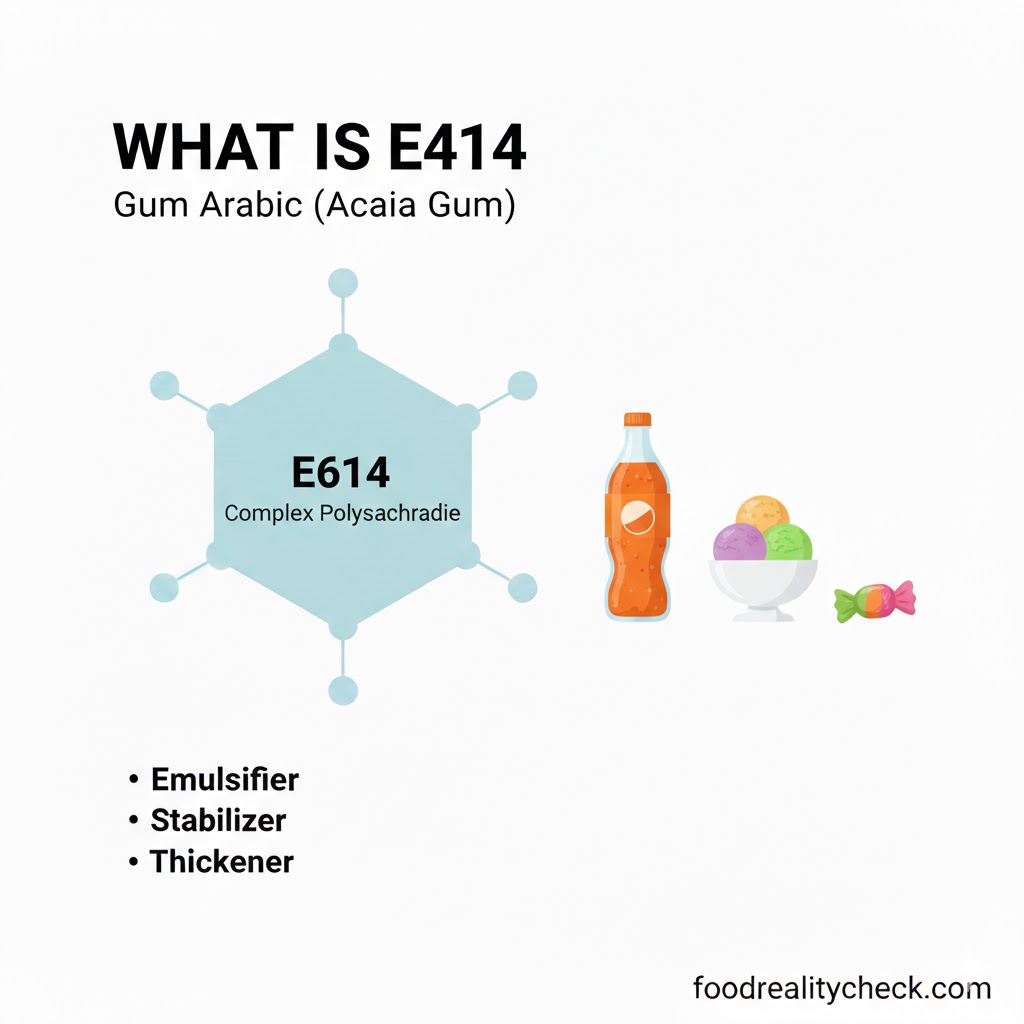
E414 is gum arabic (also called acacia gum), a natural thickener, stabilizer, and emulsifier extracted from the sap of acacia trees native to Africa, with thousands of years of documented use.
It’s used in food to prevent ingredients from separating, improve texture, prevent crystallization, and stabilize complex mixtures—particularly valuable in soft drinks, confectionery, and beverages.
Most people consume it multiple times per week in soft drinks, candies, ice cream, and processed foods, though it’s often unnoticed due to its colorless appearance and neutral flavor.
📌 Quick Facts
- Category: Emulsifier, Stabilizer, Thickener, Gelling Agent, Texturizer, Binder
- Source: Sap exudation of acacia trees (Acacia senegal, Acacia seyal), primarily from Sudan and other African regions
- Found in: Soft drinks, confectionery, ice cream, chocolate, jams, table-top sweeteners, beer, processed cereals, baby foods
- Safety: FDA GRAS approved; EFSA approved with no numerical ADI needed; JECFA “not specified” since 1989
- Natural or Synthetic: 100% natural—extracted directly from acacia tree sap
- Vegan/Vegetarian: Yes
- Key Advantage: Prebiotic fiber supporting gut health; minimal caloric content; no known toxicity
- Global Production: Sudan is the world’s largest producer (historically ~50% of global supply)
- Historical Use: Documented use for thousands of years in African and Middle Eastern cultures
What Exactly Is It?
E414 is gum arabic (also known as acacia gum, gum acacia, or gum sudani), a natural polysaccharide mixture extracted from the dried sap that exudes from acacia trees, primarily Acacia senegal and Acacia seyal, native to arid and semi-arid regions of Africa.
Chemically, gum arabic is a complex mixture of polysaccharides and glycoproteins with the primary monomeric units being D-galactose (32.5-35.0%), L-arabinose (31.7-53.1%), L-rhamnose (2.7-16.3%), D-glucuronic acid (5.3-14.0%), and 4-O-methyl-glucuronic acid (0.8-5.2%), along with protein (1.5-3.0%). The molecular weight typically ranges from 250,000 to 1,000,000+ Daltons.
Physically, gum arabic appears as a white to pale yellowish powder that is completely odorless and tasteless. It dissolves readily in water (both cold and hot) to form a viscous, colloidal solution. The key property of gum arabic is its exceptional ability to form stable emulsions—it’s an exceptionally effective natural emulsifier, allowing oil and water to mix stably without separating.
Unlike many thickeners that simply increase viscosity, gum arabic is a complex emulsifier-stabilizer that works by positioning itself at the oil-water interface, preventing droplet coalescence through steric hindrance and adsorption. This dual functionality (both emulsifying and thickening) makes it uniquely valuable in foods with complex ingredient systems.
Where You’ll Find It
E414 appears in a very wide range of processed foods and beverages:
• Soft drinks and carbonated beverages (“cloud agent” stabilizing suspended particles)
• Confectionery and candy (crystallization prevention, texture control)
• Ice cream and frozen desserts
• Chewing gum
• Jams, jellies, marmalades, and fruit spreads
• Chocolate and cocoa products
• Table-top sweeteners and sugar substitutes
• Beer and malt beverages (foam stabilizer, clarification)
• Processed cereals and grain-based foods
• Baby foods and infant cereals (approved uses)
• Baked goods and bread
• Sauces and condiments
• Salad dressings and mayonnaise
• Dairy products (milk, yogurt)
• Foods for special medical purposes
• Pharmaceutical products and syrups
• Cosmetics and skincare products
• Industrial applications (printing inks, lithography, textiles, adhesives)
If you consume soft drinks, candies, ice cream, or processed foods regularly, you’ve consumed E414 multiple times this week.
Why Do Food Companies Use It?
E414 performs six critical functions:
1. Natural emulsification and stabilization: Gum arabic is one of the best natural emulsifiers, preventing oil-water separation in complex food systems. It’s particularly valued in beverages where it stabilizes flavors, colors, and oils that would otherwise separate.
2. Crystallization prevention: It prevents sugar and water crystallization in ice cream, candy, and confectionery products, maintaining smooth texture during storage. It’s specifically used in gomme syrup (sugar and gum arabic solution) in cocktails for this property.
3. Cloud and suspension stabilization: In soft drinks, fruit juices, and beverages, gum arabic keeps suspended particles (flavors, colors, fruit pulp) uniformly distributed—creating the “cloud” that consumers expect while preventing settling or separation.
4. Foam formation and stability: In beer and carbonated beverages, it helps create and stabilize foam, improving consumer perception of product quality and creaminess.
5. Flavor encapsulation and fixation: In spray-dried flavor applications, gum arabic forms a protective film around flavor particles, preserving volatile flavor compounds and extending shelf life of powdered flavorings in dry-mix products (puddings, cake mixes, instant desserts).
6. Prebiotic fiber benefit: Unlike most additives which are chemically neutral, gum arabic provides soluble dietary fiber that ferments in the colon, supporting beneficial gut microbiota—a genuine health benefit rather than merely functional.
Without E414, soft drinks would separate, candies would crystallize, and many complex food systems would be impossible to formulate with stable shelf life.
Is It Safe?
E414 is considered extremely safe by all major regulatory authorities with no identified health concerns.
FDA (USA): Designated as GRAS (Generally Recognized As Safe) with no usage restrictions. Approved for unlimited use in all food categories where not otherwise restricted.
EFSA (Europe): 2017 re-evaluation concluded “there is no need for a numerical ADI for acacia gum (E 414), and there is no safety concern for the general population at the refined exposure assessment of acacia gum (E 414) as a food additive.” The Panel documented that humans tolerated oral daily intake up to 30,000 mg acacia gum per person (approximately 430 mg/kg body weight) for 18 days with only mild, harmless flatulence in some individuals.
JECFA (WHO/FAO): ADI “not specified” since 1989, indicating safety at any practical consumption level.
Rare hypersensitivity reactions: Very rare cases of occupational sensitization (from inhalation exposure in workers) have been documented, causing allergic rhinitis, asthma, and urticaria. However, these are workplace inhalation exposures, not food consumption effects. A single case of life-threatening anaphylactic shock was documented in an individual using beta-blockers in eye drops simultaneously—this is exceptionally rare and may represent individual sensitivity or drug interaction rather than general population risk.
Documented side effects at food levels: At normal consumption levels, no adverse effects are documented. At extreme doses (>30g/person/day), some individuals experience harmless flatulence from microbial fermentation in the colon—this is a beneficial effect indicating prebiotic activity rather than toxicity.
Special populations: Gum arabic is safe for infants, young children, pregnant women, and people with medical conditions. It’s approved for use in baby foods and infant cereals in limited quantities. No population-specific restrictions have been identified.
Historical Context and Traditional Use
Gum arabic has one of the longest documented histories of human use of any food additive. Archaeological evidence suggests it has been used for thousands of years in African and Middle Eastern cultures. Traditional uses included treating wounds, digestive ailments, and as a food thickener in arid regions where other sources of starch were limited. The name “gum arabic” reflects its historical use in the Arab world, though the substance is primarily produced in Sudan and neighboring African countries.
Production and Agricultural Context
Gum arabic is harvested by making small incisions in the acacia tree bark, allowing the tree’s protective sap to exude naturally. The sap dries into hard nuggets that are collected, sorted, cleaned, dried, and ground into powder. The harvesting process is labor-intensive and sustainable—one acacia tree yields approximately 1-2 kilograms of gum annually and continues producing for decades. The process causes minimal damage to the tree, which regenerates naturally.
Sudan has historically been the world’s largest producer, accounting for approximately 50% of global supply. Other significant producers include Senegal, Mali, Nigeria, and other arid Sahel region countries. The commodity is economically important for rural farmers in these regions.
Natural vs Synthetic Version
E414 is entirely natural—there is no synthetic version.
Gum arabic is collected directly from acacia tree sap exudates through traditional harvesting methods. The dried material is then sorted, cleaned, dried further, and ground into a powder for food use. No chemical synthesis is involved—it is a purely natural extraction and processing.
There is no laboratory-created or synthetic alternative—E414 is harvested from nature, making it one of the few food additives that is genuinely 100% natural in origin and unchanged since human use began thousands of years ago.
Health Benefits Beyond Basic Function
Prebiotic fiber: Gum arabic functions as a prebiotic—a substance that feeds beneficial gut bacteria. Unlike probiotics (which are living bacteria), prebiotics are fermentable carbohydrates that stimulate the growth of beneficial microbiota. Consuming gum arabic promotes growth of Bifidobacterium and Lactobacillus species, supporting colonic health.
Low caloric content: While providing thickness and mouthfeel similar to fattier foods, gum arabic contributes minimal calories (approximately 2-4 calories per gram vs. 4 calories for regular carbohydrates)—making it valuable in reduced-calorie products.
Anti-caries potential: Some research suggests gum arabic in formulation with other agents (like sodium fluoride in toothpaste) may have anti-cavity effects, though this research is preliminary.
Soluble fiber content: Gum arabic is approximately 90% soluble fiber, providing benefits comparable to oat fiber for satiety and some evidence of modest cholesterol reduction effects.
Non-Food Industrial Uses
Beyond food applications, gum arabic is used extensively in:
• Lithography and printing: Traditional use in printing inks and lithography (one of the oldest applications)
• Textile manufacturing: Sizing agent for threads and fabrics
• Ceramics: Binder and deflocculant in ceramic glazes
• Adhesives: Natural adhesive for paper products
• Cosmetics: Mascaras, eyeliners, creams, moisturizers
• Pharmaceuticals: Binding agent in tablets, suspending agent in syrups
• Water treatment: Clarifying agent for turbid water
Environmental and Sustainability
Acacia trees are native to arid and semi-arid African regions where they play important ecological roles in dry ecosystems. Gum harvest is sustainable—trees produce for decades and regenerate naturally. The harvesting process causes minimal tree damage. Environmental concerns relate more to geopolitical factors (conflict in Sudan affecting supply) and potential climate change impacts on arid regions rather than harvesting practices themselves. Acacia farming is being expanded in some regions as a sustainable livelihood for rural communities.
Natural Alternatives
Want to avoid E414? Food companies sometimes use these alternatives:
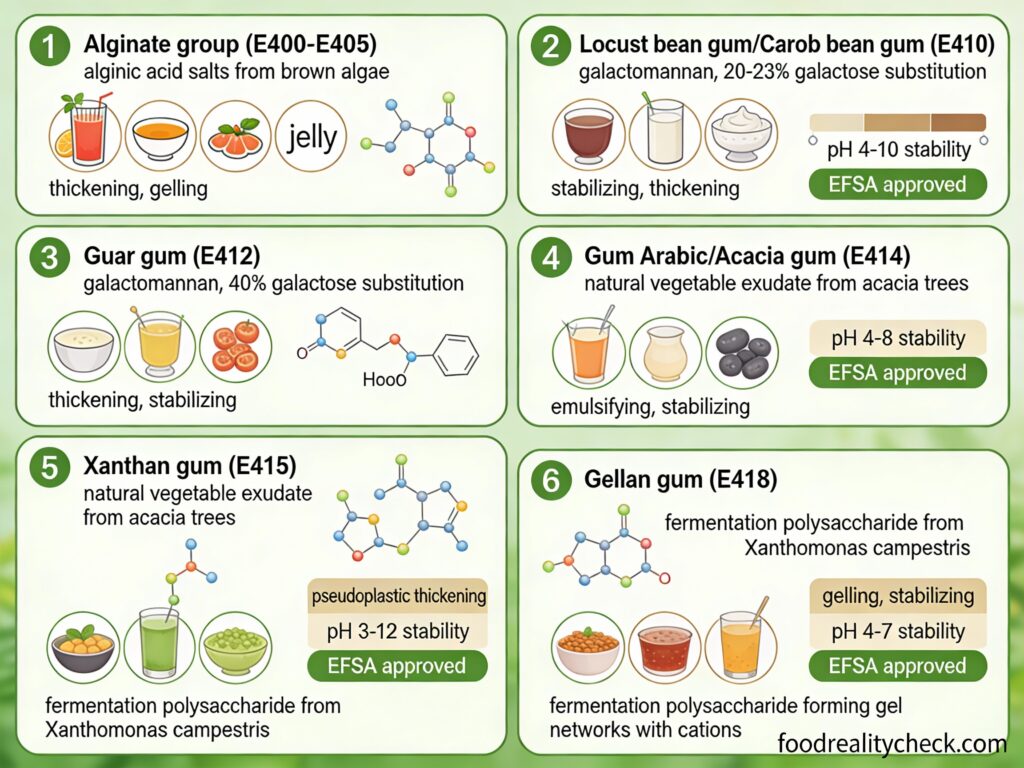
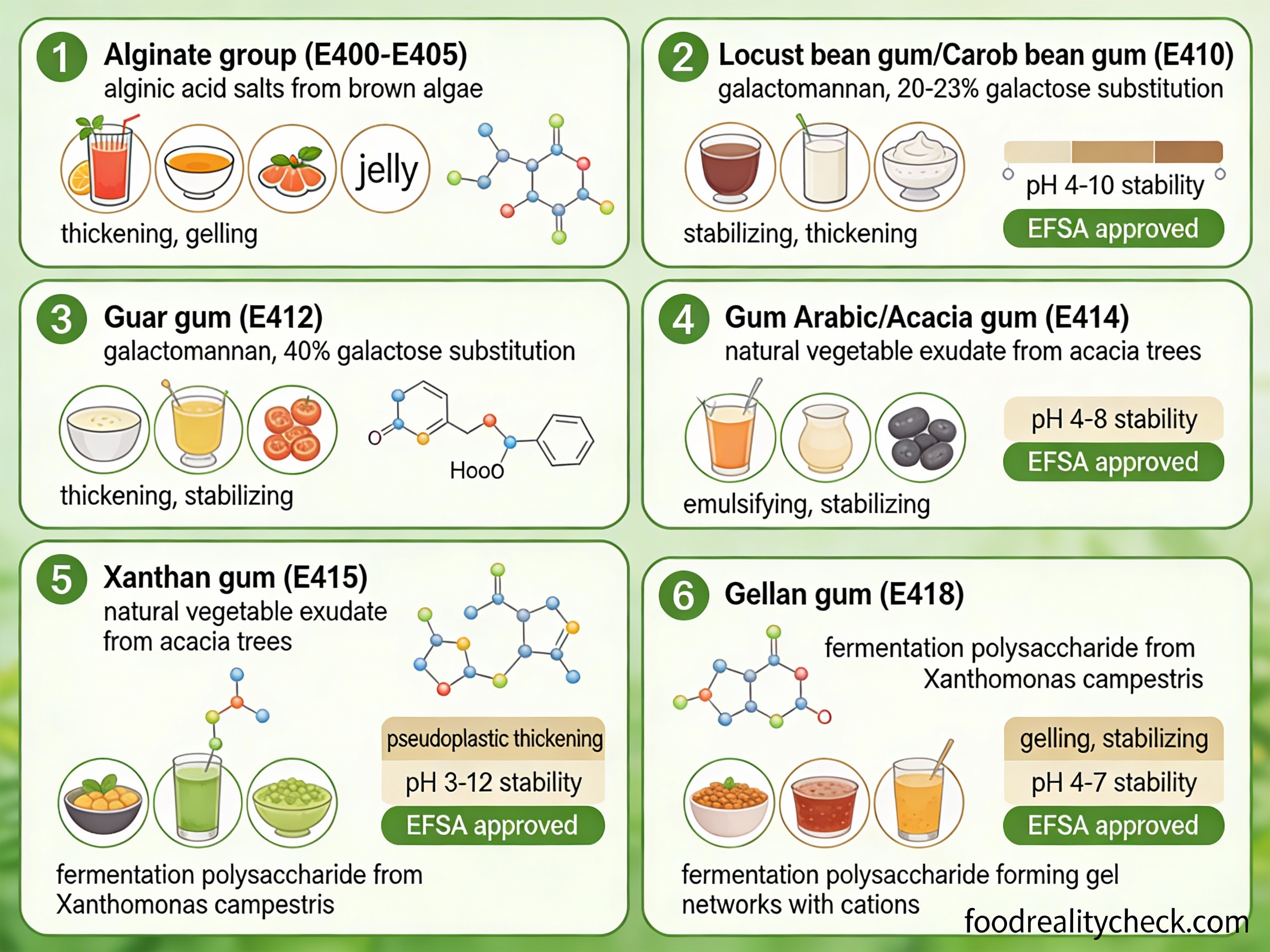
• E412 (Guar gum): Cold-water soluble, but less effective as emulsifier
• E410 (Locust bean gum): Different texture properties; heat-activated rather than cold-soluble
• E415 (Xanthan gum): Fermentation-derived, stable but different mouthfeel
• E413 (Tragacanth): Superior but more expensive alternative
• Modified starch: Less effective emulsifier
• Gelatin: Animal-derived (not suitable for vegans)
• Lecithin: Limited applications compared to gum arabic
For emulsification and stabilization in complex beverages and soft drinks, gum arabic remains difficult to replace—no single alternative combines its emulsifying power, cost-effectiveness, and flavor neutrality.
The Bottom Line
E414 (gum arabic) is a natural food additive extracted from acacia tree sap with thousands of years of documented use, an exceptional safety record, and genuine health benefits as a prebiotic fiber.
It has been FDA GRAS approved, EFSA approved with no numerical ADI needed, and JECFA “not specified” since 1989—all designations indicating the highest confidence in safety. Gum arabic is not digested or absorbed, passes through the GI tract unchanged, and has demonstrated no toxicity, carcinogenicity, or reproductive harm at any tested dose level. Humans tolerated daily intake up to 30,000 mg for 18 days with only mild, harmless flatulence—indicating an exceptional safety margin.
E414 appears in most processed foods, particularly soft drinks, candies, ice cream, and complex beverage systems where its unique emulsifying properties are essential. It is suitable for vegans, vegetarians, gluten-free diets, and offers identified health benefits as prebiotic fiber supporting gut health. Beyond its functional role in food formulation, gum arabic has a unique status as an additive with documented wellness benefits and a safety history spanning thousands of years of human use—making it one of the safest and most thoroughly proven natural additives available.