The Quick Answer
E440 is pectin—a naturally occurring soluble dietary fiber found in the cell walls of fruits and vegetables, most abundantly in apples and citrus fruits. Commercially extracted from apple pomace and citrus peels, it’s used as a gelling agent, thickener, and stabilizer in thousands of foods.
Unlike many food additives, pectin is not synthetic—it’s literally the same compound that naturally gels jam when fruit is cooked. One of the safest and most beneficial food additives available, pectin offers genuine health benefits including cholesterol reduction, blood sugar regulation, prebiotic effects, and potential cancer prevention.
It’s approved by all major food authorities with no numerical ADI limit and is recommended by health professionals as a valuable dietary fiber source.
📌 Quick Facts
- Category: Gelling agent, thickener, stabilizer, emulsifier, soluble dietary fiber
- Source: Apple pomace and citrus peels (100% natural plant material)
- Found in: Jams, jellies, marmalades, fruit juices, yogurt, ice cream, baked goods, sauces, desserts
- Safety Status: FDA approved, EFSA approved, ADI “Not Specified” (highest safety rating)
- Dietary Status: 100% vegan, vegetarian, gluten-free, kosher, non-GMO
- Chemical Name: Polysaccharide composed of galacturonic acid (65%+) and other sugars
- Controversy Level: NONE—universally considered safe and beneficial
- Health Benefits: Cholesterol reduction, blood sugar control, prebiotic effects, potential cancer prevention
What Exactly Is Pectin?
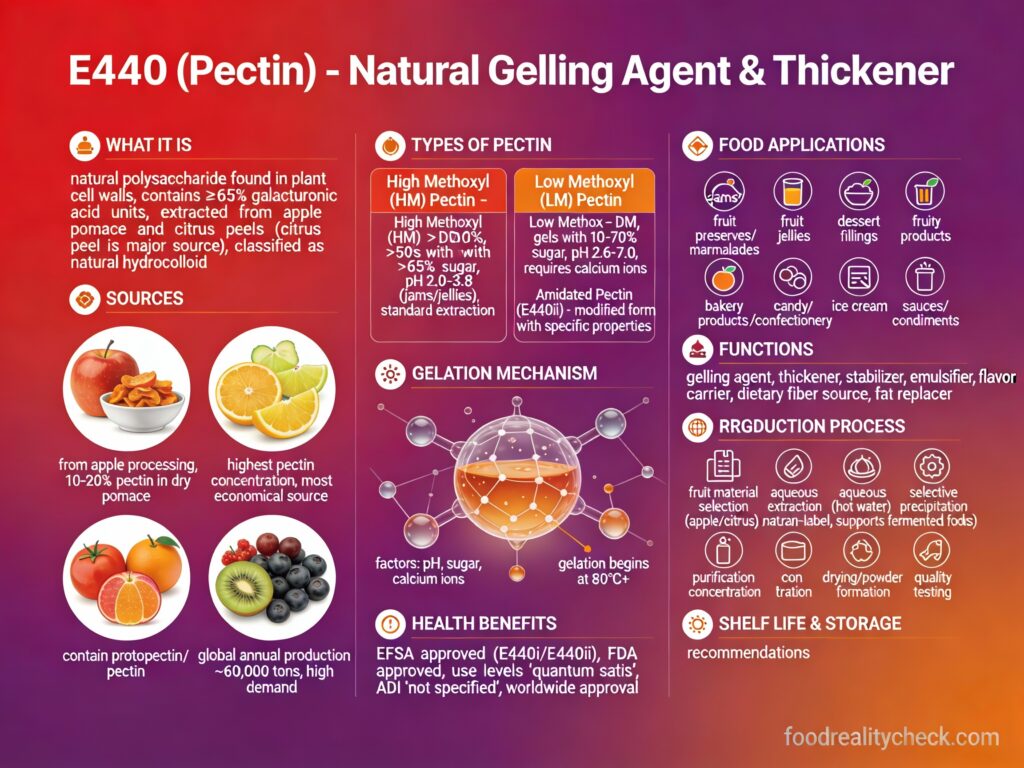
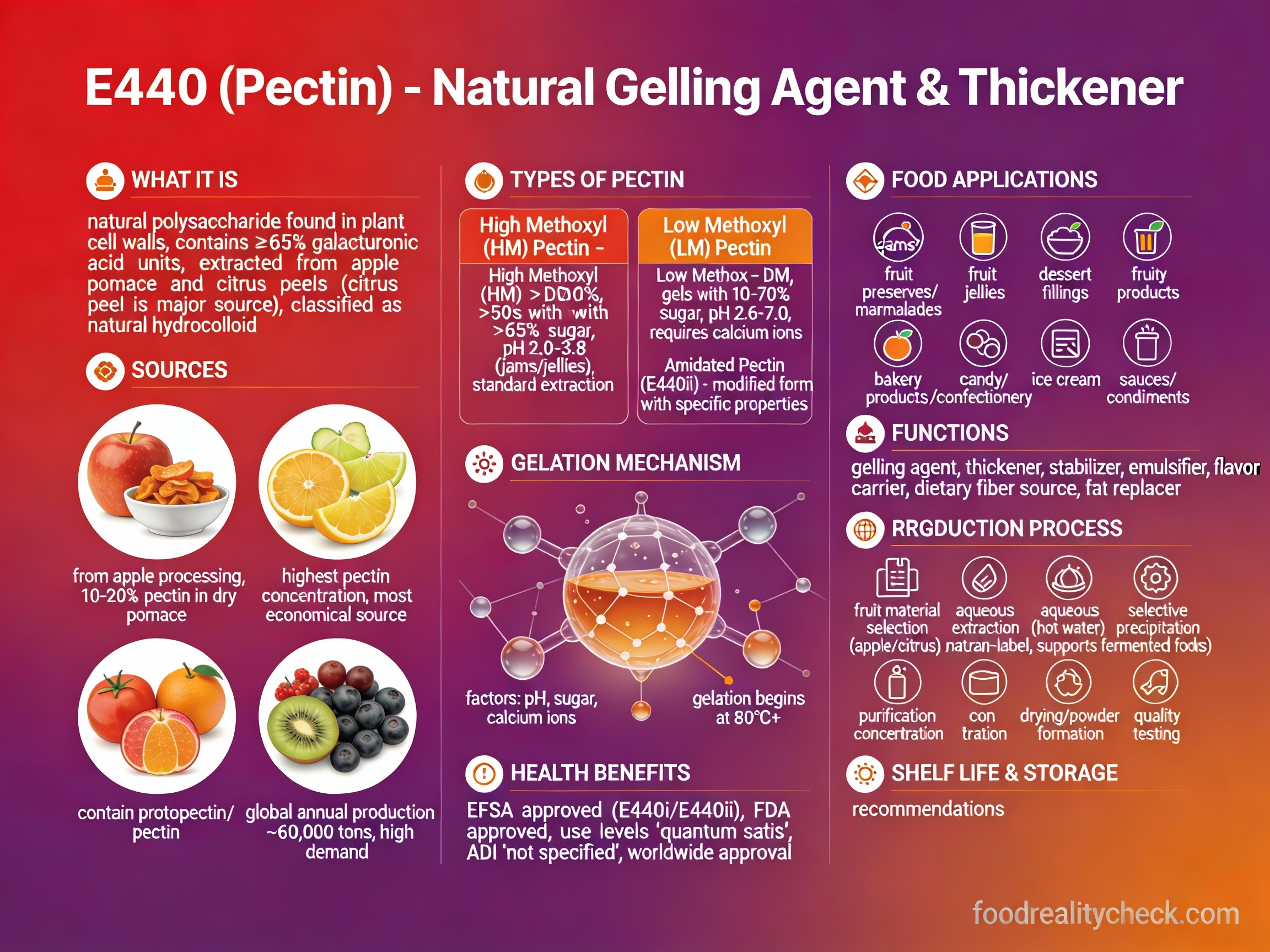
Pectin is a naturally occurring complex carbohydrate (polysaccharide) found in the cell walls of fruits and vegetables. It’s composed primarily of galacturonic acid units linked together, with smaller amounts of other sugars (galactose, rhamnose, arabinose).
Chemical composition: Food-grade pectin consists of more than 65% galacturonic acid, with the remainder being other polysaccharides and monosaccharides. The carboxyl groups on the galacturonic acid residues are partially methylated, which affects the gelling properties.
In simple terms: It’s the natural fiber that makes fruit thick and sticky. When you cook apples or citrus fruit with sugar and acid, the pectin naturally gels. Commercially extracted pectin is simply a concentrated, purified version of this same fiber.
Key properties:
• Natural plant fiber: Exists in all fruits; extracted and concentrated for food use
• Acid-dependent gelling: Forms gels only in acidic conditions (pH <4), making it ideal for fruit products
• Sugar-dependent: Gel formation requires sufficient sugar and acid for proper texture
• Soluble fiber: Dissolves in water and ferments in the colon, feeding beneficial bacteria
• Colorless and flavorless: Doesn’t affect taste or appearance of foods
• Prebiotic potential: Fermented by gut bacteria to produce beneficial short-chain fatty acids
Where You’ll Find E440
Pectin appears in a wide variety of foods:
• Jams, jellies, marmalades, and fruit preserves
• Fruit juices, nectars, and concentrates
• Yogurt and cultured dairy products
• Ice cream and frozen desserts
• Baked goods (cakes, pastries, muffins)
• Confectionery and candies
• Dessert fillings and toppings
• Sauces and condiments
• Puddings and custards
• Low-fat and diet foods
• Beverages (some juices and drinks)
• Pharmaceutical preparations
• Dietary supplements (as a health ingredient)
Pectin is so common in processed foods that most people consume it daily, usually without realizing it’s present.
How Is Pectin Produced?
Pectin extraction is a simple, natural process using water and mild processing:
Step 1: Raw Material Collection
Apple pomace (the solid residue left after juice extraction) or citrus peels (primarily oranges and lemons) are collected. These are byproducts of the juice and food industries.
Step 2: Preliminary Extraction
The apple pomace or citrus peels are treated with hot water (typically 50-85°C) to extract the pectin. The pectin dissolves into the water solution.
Step 3: Filtration
The liquid containing dissolved pectin is filtered to remove solid plant material.
Step 4: Precipitation
Ethanol or isopropanol is added to the pectin solution, causing the pectin to precipitate (separate) as a solid.
Step 5: Separation & Washing
The precipitated pectin is separated using filtration or centrifugation, then washed to remove residual solvents and impurities.
Step 6: Drying
The wet pectin is dried using spray drying or freeze drying to remove moisture and create a dry powder.
Step 7: Standardization & Milling
The dried pectin is standardized for gel strength and milled to the desired particle size for food use.
Note: The entire process uses only water, heat, and food-grade solvents. No synthetic chemicals are created in the extraction—it’s purely a concentration and purification of a naturally occurring plant compound.
Functions of E440 in Food
Pectin serves multiple practical functions in food manufacturing:
As a gelling agent: The classic function. In fruit products, pectin forms a three-dimensional network that traps water, creating the desired gel texture in jams, jellies, and marmalades.
As a thickener: In sauces, puddings, and beverages, increases viscosity without creating a gel—important in products that need to pour but have body.
As a stabilizer: Prevents separation and degradation in processed foods. In yogurt and ice cream, prevents water from separating and improves texture stability during storage.
As an emulsifier: Helps blend oil and water phases in products like mayonnaise and salad dressings.
As a bulking agent: In low-fat and diet foods, adds volume and mouth-feel without calories.
As a source of dietary fiber: Unlike most additives, pectin actually contributes to dietary fiber intake and provides prebiotic benefits.
Is E440 Safe?
Yes. Pectin is one of the safest food additives available, with universal regulatory approval and no scientific controversy whatsoever.
Regulatory Approvals:
• FDA: Approved as a food additive. Pectin is so safe that it was traditionally available over-the-counter for fruit canning without oversight.
• EFSA (European Food Safety Authority): Approved as E440. In comprehensive safety assessments, the EFSA concluded: “There is no need to establish an ADI for pectin (E 440i) and amidated pectin (E 440ii). No safety concern for the general population.”
• JECFA (Joint FAO/WHO Committee): Assigned an ADI of “Not Specified”—the highest possible safety rating.
Why is the safety so overwhelming?
1. Natural and ancestral: Humans have consumed pectin in fruits for thousands of years. The extracted form is identical to the natural form.
2. Not absorbed: Pectin passes through the digestive system largely intact, being fermented by beneficial gut bacteria rather than absorbed into the bloodstream.
3. No toxicity: Extensive regulatory and independent testing shows zero toxic effects at any reasonable consumption level.
4. Therapeutic use: Pectin is used medicinally in supplements for cholesterol reduction and digestive health—proof of its safety profile.
5. Byproduct use: Pectin is extracted from fruit processing waste (apple pomace, citrus peels), making it environmentally beneficial as a waste reduction strategy.
Health Benefits of Pectin
🌟 Documented Health Benefits (Strong Scientific Evidence)
- Cholesterol reduction: Meta-analysis of 67 studies in 2,990 adults found pectin reduced LDL (“bad”) cholesterol by 5-16%. A 15g daily dose reduced LDL by 7% in one study. Works by binding cholesterol in the digestive tract and preventing reabsorption
- Blood sugar regulation: Slows carbohydrate digestion and absorption, reducing post-meal glucose spikes—beneficial for diabetics and blood sugar management
- Weight management support: Creates satiety through delayed gastric emptying, promoting fullness and potentially supporting weight loss efforts
- Prebiotic effects: Fermented by beneficial gut bacteria to produce short-chain fatty acids (butyrate, propionate, acetate). Promotes growth of Agathobacillus and Lachnospira species while inhibiting harmful bacteria like Clostridium and pathogenic Bacteroides
- Diarrhea reduction: In children 5-12 months with acute diarrhea, pectin shortens duration and reduces need for replacement fluids
- Intestinal barrier support: Forms a protective coating around the gut lining, potentially preventing harmful bacteria from entering the bloodstream
- Anti-cancer potential: Test-tube studies show pectin kills colon cancer cells. Binds with galectin-3 (high levels associated with increased cancer risk), potentially reducing colon cancer risk
- Heavy metal detoxification: Modified citrus pectin (MCP) binds lead and other heavy metals in the digestive tract, promoting excretion—children with lead poisoning showed decreased blood lead and increased urinary lead after MCP treatment
Side Effects & Digestive Considerations
Pectin is extremely well tolerated with minimal side effects:
Transient digestive effects (rare, typically from high supplemental doses):
• Mild gas or bloating (sign of bacterial fermentation; typically resolves)
• Loose stools or diarrhea (dose-dependent laxative effect)
• Mild abdominal discomfort
• Rare nausea
At typical food levels: Pectin in jams, jellies, and processed foods is unlikely to cause any digestive effects. These effects occur primarily with supplemental doses (5-15+ grams daily).
Important note: Methanol content:
Natural pectin is esterified with methanol. When pectin is consumed, some of this methanol is released during digestion. However, studies show the amount is minimal and far below any safety concern. For context, whole fruits naturally contain more methanol than the released amount from added pectin.
Medication interactions:
Pectin can slow absorption of certain medications (similar to all soluble fibers). If taking medications, separate pectin consumption by 1-2 hours from medication dosing.
Food allergies:
Avoid pectin if allergic to apples or citrus fruits (though actual allergies are extremely rare, as pectin is a purified extract).
Occupational respiratory concern:
Workers handling pectin dust (in manufacturing) may develop asthma or respiratory irritation from dust inhalation. Food consumption poses no respiratory risk.
Pectin Types & Variants (E440 Subtypes)
| Type | Chemical Form | Gel Properties | Primary Use |
|---|---|---|---|
| E440(i) – Pectin (HMP) | High-methylated pectin | High methyl ester (>50%); requires sugar and acid to gel | Traditional jams, jellies, fruit preserves |
| E440(ii) – Amidated Pectin | Pectin with amide groups | Gels at lower sugar levels; more flexible gelling | Lower-sugar jams, dietary products |
| E440(iii) – Low-methylated Pectin (LMP) | Pectin with <50% methyl ester | Gels with calcium instead of sugar | Sugar-free and reduced-sugar products |
| Modified Citrus Pectin (MCP) | Partially degraded citrus pectin | Lower molecular weight; therapeutic supplement form | Health supplements; heavy metal detoxification |
Who Should Increase Pectin Intake?
Pectin is beneficial for most people, especially those with:
• High cholesterol: 5-15g daily shows significant LDL reduction
• Type 2 diabetes or prediabetes: Helps regulate blood sugar and reduce post-meal glucose spikes
• Poor digestive health: Prebiotic effects support beneficial bacteria and gut barrier function
• Constipation: Soluble fiber promotes regular bowel movements
• Weight management goals: Increases satiety without calories
• Lead or heavy metal exposure: Modified citrus pectin shows evidence for detoxification
• General wellness: Excellent dietary fiber source with documented health benefits
Caution: If taking medications that are sensitive to fiber absorption (certain antibiotics, medications for seizures), separate pectin consumption by 1-2 hours.
The Bottom Line
E440 (pectin) is one of the safest, most natural, and most beneficial food additives available. Unlike synthetic additives, pectin is literally the same soluble fiber found in fruits—just extracted and concentrated.
Key takeaways:
• Universally safe: ADI “Not Specified”—the highest safety rating; approved by all major authorities
• 100% natural: Extracted from fruit byproducts (apple pomace, citrus peels) using simple water extraction
• No controversy: Zero scientific debate about its safety or health benefits
• Proven health benefits: Cholesterol reduction, blood sugar regulation, prebiotic effects, potential cancer prevention, heavy metal detoxification
• Excellent source of dietary fiber: Contributes to soluble fiber intake with prebiotic effects
• Minimal side effects: Virtually no adverse effects at food levels; occasional mild digestive effects from high supplemental doses resolve quickly
• Environmentally beneficial: Extracts value from fruit processing waste
Practical recommendation: Pectin is one of the rare food additives that actually provides genuine health benefits alongside its functional purpose. If you’re eating jam or processed fruit products, the pectin present is beneficial, not harmful. If you have high cholesterol, poor digestive health, or metabolic concerns, actively increasing pectin intake through food sources or supplements is a science-backed health strategy recommended by nutritionists and cardiologists.